
Brief Summary
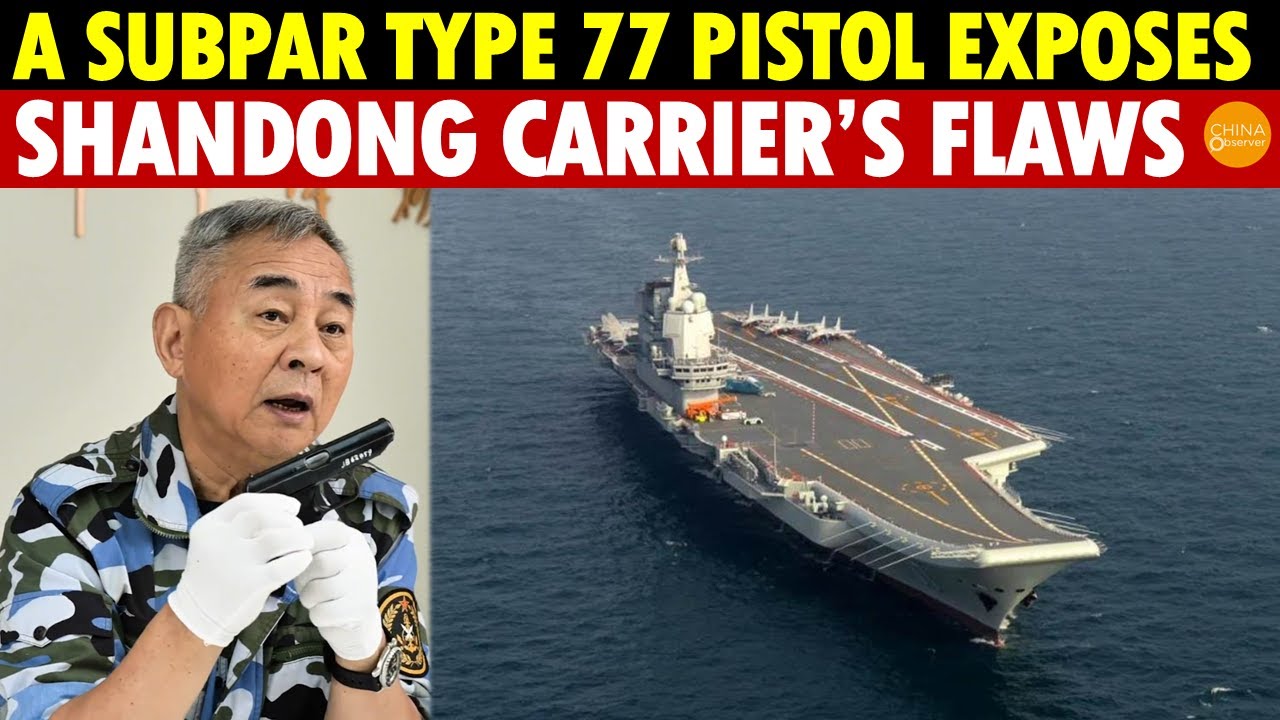
The presence of the outdated and unreliable Type 77 pistol among pilots on the Shandong aircraft carrier exposes significant flaws in China's naval systems. The pistol's design flaws, combined with logistical and systemic issues, highlight a lack of focus on pilot survival and overall combat readiness. This contrasts sharply with the layered defence strategies employed by the US and Russia, which prioritise pilot survival through reliable weaponry and comprehensive survival systems. The continued use of the Type 77 reflects a broader problem within the Chinese military: a focus on platform development over essential supporting systems and a reluctance to address past failures.
- The Type 77 pistol is unreliable and prone to malfunctions, making it unsuitable for high-risk environments like aircraft carriers.
- The Chinese military prioritises platform development over essential supporting systems, leading to outdated equipment for pilots.
- A modernised military system should prioritise pilot survival with reliable weaponry and comprehensive survival systems.
Introduction: The Type 77 Pistol and the Shandong Aircraft Carrier
The Type 77 pistol carried by pilots on the Shandong aircraft carrier reveals a critical deficiency in the carrier's capabilities. The pistol, often unloaded due to safety concerns, raises questions about its effectiveness as a self-defence tool. Regardless of the image's authenticity, it highlights a broader issue: China's rapid aircraft carrier construction may not translate to genuine combat effectiveness due to outdated and unreliable equipment like the Type 77 pistol, known for jamming and misfires. This points to a lack of a comprehensive naval system, not just the use of old models.
The Flaws of the Type 77 Pistol
The Type 77 pistol is not only old but also poorly designed. Created by a worker without formal firearm design training, it lacks systematic engineering and rigorous testing. The pistol has significant flaws, including the slide cutting fingers during loading, a safety mechanism that pinches the user's hand, and a tendency to misfire. These issues make it dangerous, especially for high-value personnel like aircraft carrier pilots. The weak firing pin can even fly backward and hit the shooter in the face, compromising safety.
Design and Historical Context of the Type 77
The Type 77 pistol's weak firing pin often leads to failures, and the firing pin can fly backward, injuring the shooter. The single-handed loading feature requires significant force and often fails, and if the pilot forgets to load the gun after chambering, it could misfire. The design lacks a locking function, potentially injuring the shooter's finger during recoil. The magazine latch frequently loosens, and the recoil spring design often causes the slide to get stuck, preventing a second shot. The difficulty in loading, combined with the risk of injury, has led some to use their shoe soles to chamber the pistol, highlighting its absurdity. The design is inspired by the early 20th-century Lignum pistol, but its numerous issues have made it unsuitable for self-defence.
Modifications and Inherent Flaws
Despite several modifications to the Type 77 pistol, the core design flaws remain. The single-handed loading mechanism still pinches fingers, the risk of misfiring persists, and the ergonomics are still poor. The design cannot be fixed because it was inherently flawed from the start. A complete redesign would be needed, but this would require a new project, testing, production lines, and training. Admitting the failure of the Type 77 would mean acknowledging past flawed decisions, so the military continues to stubbornly improve it.
Why the Type 77 Should Never Be on an Aircraft Carrier
The purpose of a pilot's sidearm is to prevent harm from wild animals or avoid capture after landing, requiring reliability. Aircraft carriers are high-risk platforms, and the Type 77's proneness to misfires introduces additional risk. A misfire in a confined space could cause significant problems. While pilots rarely need to use their sidearms, it is crucial that the weapon works perfectly when needed. China has new guns available, like the QSZ11, but they are not being issued.
Logistical and Systemic Issues
The continued use of the Type 77 pistol on the Shandong aircraft carrier suggests a breakdown in logistics, procurement cycles, and distribution systems. New guns are used in training, but old guns are issued in actual deployment. The Navy's logistic system is indifferent to replacing small equipment. There is a focus on appearance over substance, with emphasis on platforms but not on supporting equipment. The use of old footage of the Type 77 in propaganda suggests that either new equipment hasn't been rolled out or they're afraid to show it.
Pilot Survival Systems and Generational Gaps
A modernised military system would never repeatedly feature infamous old guns on its aircraft carrier pilots. Pilot sidearms, survival kits, ejection seats, and rescue support form an integrated system crucial for pilot safety. The US and Russia employ layered protection strategies, with reliable handguns and long survival weapons in ejection seat survival kits. The Type 77 doesn't even pass the first layer of reliability, highlighting a generational gap in system layers. The Shandong aircraft carrier footage shows little about the pilot survival chain, raising questions about the integration of locator beacons, radios, and rescue operations.
Structural Issues and Political Factors
The recurring issue of slow chambering highlights structural problems within the Chinese military, where small arms procurement is given low priority. Integrating small items is difficult due to a lack of a single responsible department. While China can produce good firearms, political correctness dictates that the military must use domestically designed products. China excels at building platforms but struggles with developing the systems around them.
The Real Measure of Combat Capability
The real measure of an aircraft carrier's combat capability is the full system supporting the pilot, from takeoff to rescue. The Type 77 pistol highlights that the Chinese Navy system has yet to mature in this area. The biggest risk to the Shandong aircraft carrier's modernisation lies in whether it has true naval standard systems in place, including zero tolerance for deadly risks, individual gear standardisation, strict logistics, and a modern approach to propaganda.
A Hypothetical Scenario and the Consequences
In a conflict scenario, a pilot shot down in the Taiwan Strait could face dire consequences due to the Type 77 pistol's flaws. The pilot could cut his finger, fail to load the gun, get his hand pinched, and experience jams, leading to capture or death. A reliable QSZ11 pistol could provide crucial escape time. A faulty weapon undermines the entire aircraft carrier's operational credibility, affecting commanders' willingness to send aircraft into high-risk areas and pilots' confidence. The presence of the Type 77 pistol on board the aircraft carrier essentially tells pilots, "Your life isn't that valuable."

