
Brief Summary
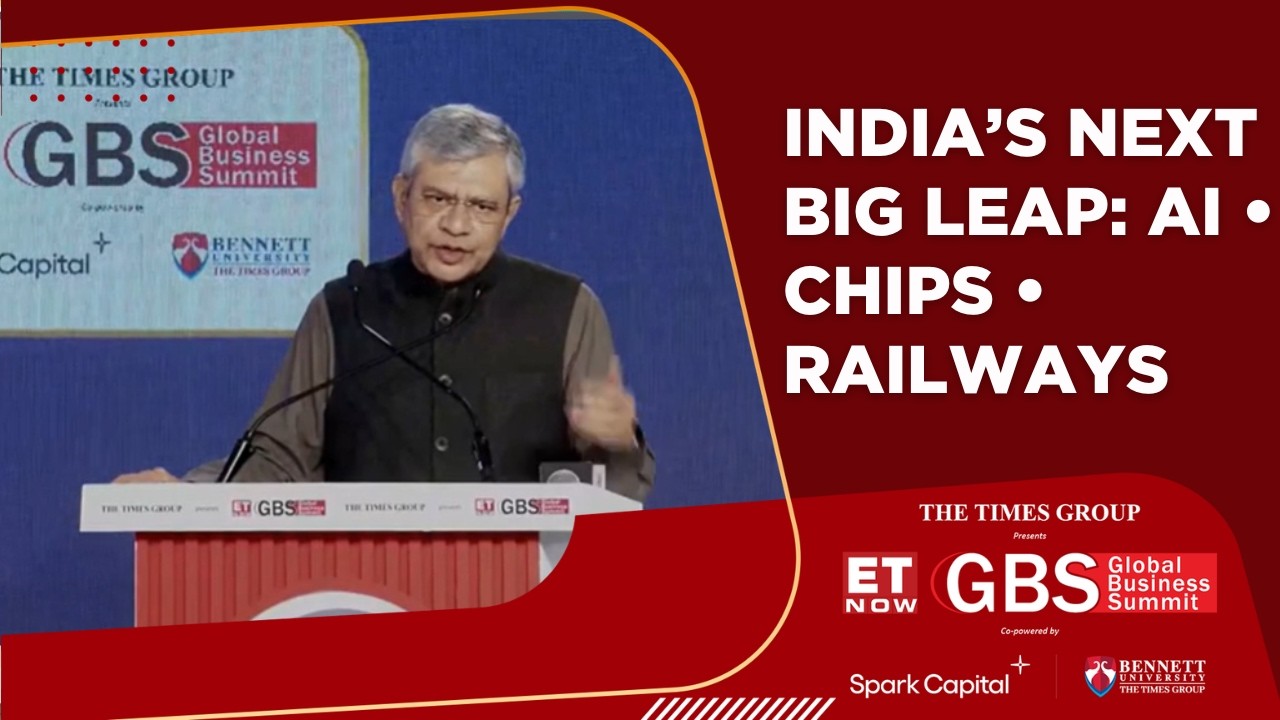
The speaker covers four main topics: the upcoming AI summit in India, advancements in the semiconductor industry, growth in electronics manufacturing, and progress in railway infrastructure, particularly the bullet train project. Key points include India hosting the largest AI summit, significant strides in semiconductor design and manufacturing, substantial growth in electronics exports, and advancements in high-speed rail technology.
- India is set to host the largest AI summit globally, focusing on the impact of AI, sovereign models, and AI governance.
- The semiconductor industry in India has seen remarkable progress, with major global companies designing advanced chips in India and a growing talent pipeline.
- Electronics manufacturing has grown sixfold in the last decade, with exports increasing eightfold, positioning India as a trusted partner in the global electronics value chain.
- The Mumbai-Ahmedabad bullet train project is progressing well, with the first section expected to launch in 2027, and plans for seven new bullet train corridors to transform transportation.
Introduction
The speaker outlines the four key areas to be discussed: the AI summit, semiconductors, electronics manufacturing, and railways. These topics highlight India's advancements and future strategies in technology and infrastructure.
AI Summit
India is hosting the AI summit, which is expected to be the largest ever held globally, with over 20 heads of state and more than 100 global leaders confirming their participation. The summit will focus on the impact of AI, particularly its role in driving the fifth industrial revolution. The speaker emphasises the need for industries and students to prepare for this rapid transformation, highlighting India's work across all five layers of the AI stack. The IT industry is adapting to provide AI services, bridging the gap between technology and organisational understanding. India will launch its own suite of sovereign AI models during the summit, which have shown promising test results, outperforming models like OpenAI and Gemini Pro. The focus will be on ensuring that people, society, students, and industries benefit from AI technology, protecting data through sovereign models, and promoting consensual AI governance.
Semiconductors
Significant progress has been made in the semiconductor industry, with a notable shift in global perception towards India's capabilities. Major companies like Nvidia, AMD, Qualcomm, Broadcom, ARM, and Marvel are designing advanced chips in India. A substantial talent pipeline has been created through training programs in 315 universities, positioning India to become a global hub for semiconductor design. The next phase, Semicon 2.0, will focus on fostering deep tech companies and encouraging global talent to contribute to India's semiconductor ecosystem. The country is strategically advancing from 28 nanometers to 2 nanometers in semiconductor technology, with the first commercial production from approved manufacturing units set to commence soon. The speaker addresses concerns raised by the opposition regarding India's data strategy, emphasising that the IT industry relies on the free flow of global data and that the semiconductor program is foundational for a data-based economy.
Electronics Manufacturing
Electronics manufacturing has experienced substantial growth, increasing sixfold in the last decade, with exports growing eightfold. The ecosystem for electronics manufacturing is now well-established, with India manufacturing not only final products but also modules, sub-modules, and components. Within the next two years, over 50% of the demand for certain components will be met domestically, with India becoming a global supplier. Electronics is now among the top three exported goods, and soon it will be among the top two. The European Union seeks electronics products from India as part of the EU FTA, highlighting India's emergence as a trusted partner that respects intellectual property and resolves issues through negotiation and multilateral institutions.
Railways
The Mumbai-Ahmedabad bullet train project is progressing well, with the first section expected to launch in 2027. Indian engineers and designers have successfully navigated the complexities of high-speed train technology, achieving self-sufficiency in this area. Seven new bullet train corridors have been announced to connect major parts of the country, significantly reducing travel times. The government is standardising the system with Indian designs and specifications, encouraging industry participation to boost exports. Complex components like propulsion systems are already being exported to countries like Switzerland, Germany, Poland, Italy, and the US. Additionally, 52 reforms are planned for the railways in 2026, with a focus on safety and improving services for low-income and middle-income families. The goal is to achieve global benchmarks in safety and cargo carrying capacity, with India already the second-largest cargo-carrying railway in the world.

