
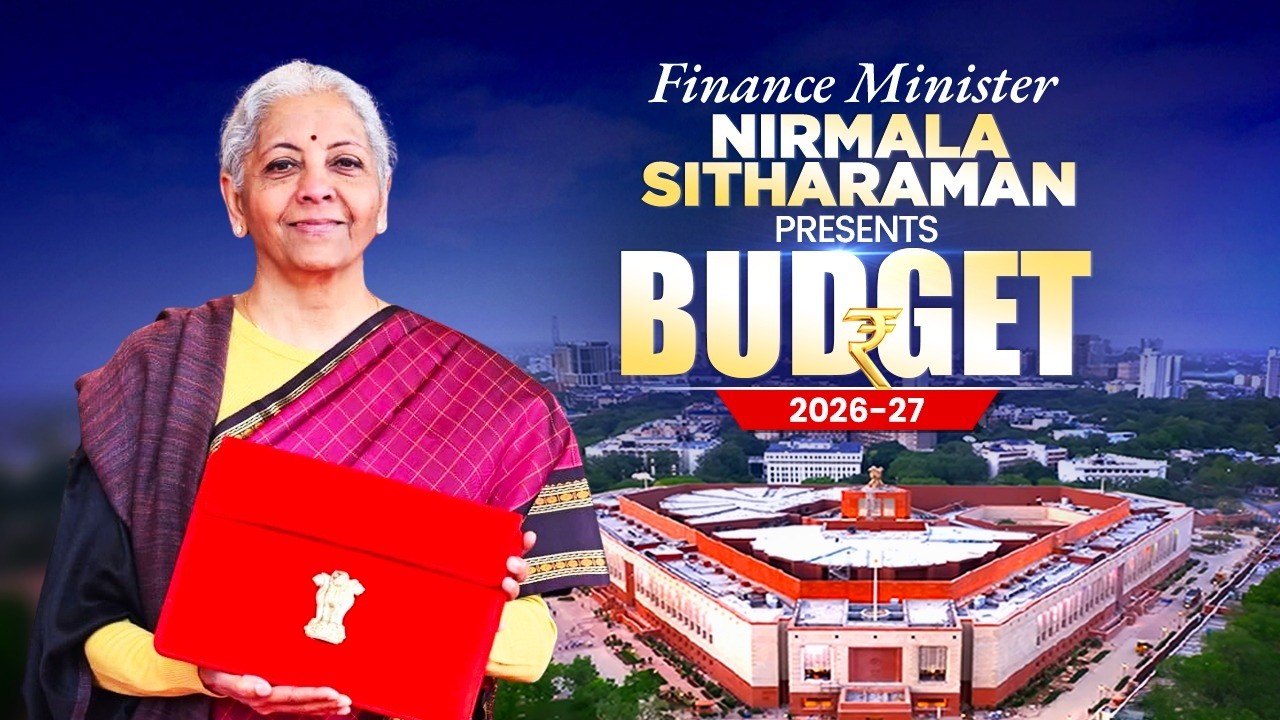
Brief Summary
This budget for 2026-2027 focuses on accelerating economic growth, fulfilling citizens' aspirations, and ensuring inclusive access to resources and opportunities. Key proposals include scaling up manufacturing in strategic sectors, rejuvenating legacy industries, supporting MSMEs, boosting infrastructure, ensuring energy security, and developing city economic regions. The budget also addresses financial sector reforms, emerging technologies, and improvements to healthcare, education, and tourism. It aims to reduce poverty, enhance farmer incomes, empower marginalised groups, and promote sustainable development, while maintaining fiscal discipline and simplifying the tax system.
- Focus on economic growth, citizen empowerment and equal access to opportunities.
- Scaling up manufacturing, infrastructure development and energy security.
- Financial sector reforms, technology adoption and improvements in healthcare, education and tourism.
- Tax simplification, fiscal consolidation and support for farmers, marginalised groups and sustainable development.
Introduction
The speaker presents the budget for the year 2026-2027, highlighting that India's economic trajectory over the past 12 years has been marked by stability, fiscal discipline, sustained growth, and moderate inflation. The government has prioritised action over ambivalence, reform over rhetoric, and people over populism, pursuing structural reforms, fiscal prudence, and monetary stability while investing in public infrastructure. The focus has been on building domestic manufacturing capacity, energy security, and reducing import dependencies, ensuring that citizens benefit from government actions through employment generation, agricultural productivity, and universal services.
Three Kartavyas
The government's sankulp (pledge) is to focus on the poor, underprivileged, and disadvantaged, inspired by three kartavyas (duties). The first kartavya is to accelerate and sustain economic growth by enhancing productivity and competitiveness and building resilience to volatile global dynamics. The second is to fulfil the aspirations of the people and build their capacity, making them strong partners in India's path to prosperity. The third kartavya, aligned with the vision of "Sapka, Sapka Vikas" (Everyone's Growth), is to ensure that every family, community, region, and sector has access to resources, amenities, and opportunities for meaningful participation.
Scaling Up Manufacturing
The budget proposes interventions in six areas to accelerate and sustain economic growth, starting with scaling up manufacturing in seven strategic and frontier sectors. The Biofarma Shakti initiative, with an outlay of ₹10,000 crores over the next 5 years, aims to develop India as a global biofarma manufacturing hub, focusing on biologics and bio similars. This includes establishing a biofarma-focused network with new national institutes of pharmaceutical education and research (NIPERs) and upgrading existing ones, as well as creating a network of accredited clinical trials sites. The India Semiconductor Mission (ISM) 2.0 will be launched to produce equipment and materials, design full-stack Indian IP, and fortify supply chains, with a focus on industry-led research and training centres.
Rare Earth Magnets and Chemical Production
Building on a scheme for rare earth permanent magnets launched in 2025, the budget proposes supporting mineral-rich states like Odisa, Kerala, Andhra Pradesh, and Tamil Nadu to establish dedicated rare earth corridors to promote mining, processing, research, and manufacturing. To enhance domestic chemical production and reduce import dependency, a scheme will be launched to support states in establishing three dedicated chemical parks through a challenge route on a cluster-based plug-and-play model.
Capital Goods and Textile Sector
To build strong capital goods capabilities, high-tech tool rooms will be established by central public sector enterprises at two locations as digitally enabled automated service bureaus. A scheme for enhancement of construction and infrastructure equipment will be introduced to strengthen domestic manufacturing of high-value and technologically advanced CIE. For the labour-intensive textile sector, an integrated program with five sub-parts is proposed, including the national fibre scheme, textile expansion and employment scheme, national handloom and handicraft program, text echo initiative, and Sam 2.0 O.
Mega Textile Parks and Sports Goods
The budget proposes setting up mega textile parks in challenge mode, which can also focus on bringing value addition to technical textiles. The Mahatma Gandhi Graham Swaraj initiative will be launched to strengthen kadi handloom and handicrafts, helping in global market linkage and branding, and benefiting weavers, village industries, the one district, one product (ODOP) initiative, and rural youth. A dedicated initiative for sports goods will promote manufacturing, research, and innovation in equipment design and material sciences, aiming to establish India as a global hub for high-quality, affordable sports goods.
Rejuvenating Industries and Supporting MSMEs
A scheme is proposed to revive 200 legacy industrial clusters to improve their cost competitiveness and efficiency through infrastructure and technology upgradation. Recognising MSMEs as a vital engine of growth, a three-pronged approach is proposed to help them grow as champions, including equity support through a dedicated ₹10,000 crore MSME growth fund, liquidity support by mandating TReDS as the transaction settlement platform, and professional support by facilitating professional institutions to design short-term modular courses to develop a cadre of corporate mitras.
Infrastructure Development
The government will continue to focus on developing infrastructure in cities with over five lakh population, which have expanded to become growth centres. Public capital expenditure is set to increase to ₹12.2 two lakh crores. An infrastructure risk guarantee fund will be set up to provide prudentially calibrated partial guarantee to lenders, strengthening the confidence of private developers. The budget also proposes establishing new dedicated freight corridors, operationalising new national waterways, and launching a coastal cargo promotion scheme.
Carbon Capture and City Economic Regions
An outlay of ₹20,000 cr is proposed over the next 5 years for carbon capture utilisation and storage technologies at scale across five industrial sectors. The budget aims to amplify the potential of cities by mapping city economic regions based on their specific growth drivers, with an allocation of ₹5,000 cr over 5 years for implementing their plans through a challenge mode. Seven high-speed rail corridors will be developed between cities as growth connectors.
Financial Sector Reforms
A high-level committee on banking for vikasit bat will be set up to comprehensively review the sector and align it with India's next phase of growth, while safeguarding financial stability, inclusion, and consumer protection. The vision for NBFCs for Vikasid Bat has been outlined with clear targets for credit dispersement and technology adoption. A comprehensive review of the foreign exchange management non-debt instruments rules is proposed to create a more contemporary user-friendly framework for foreign investments.
Corporate Bond Market and Emerging Technologies
The budget proposes introducing a market-making framework with suitable access to funds and derivatives on corporate bond indices, as well as total return swaps on corporate bonds. To encourage the issuance of municipal bonds of higher value by larger cities, an incentive of ₹100 cr rupees is proposed for a single bond issuance of more than ₹1,000 cr. Individual persons resident outside India (POI) will be permitted to invest in equity instruments of listed Indian companies through the portfolio investment scheme, with an increased investment limit. The government has taken several steps to support new technologies through AI mission, national quantum mission, and research and development and innovation fund.
Fulfilling Aspirations and Building Capacities
A high-powered education to employment and enterprises standing committee will be set up to recommend measures that focus on the services sector as a core driver of wikiset bat, aiming to make India a global leader in services with a 10% global share by 2047. The committee will prioritise areas to optimise the potential for growth, employment, and exports, and assess the impact of emerging technologies including AI on jobs and skill requirements. Interventions are proposed in sectors such as health, with the upgrading of existing institutions for allied health professionals and the establishment of new ones.
Healthcare and Medical Tourism
A strong care system covering geriatric and allied care services will be built, with NSQF aligned programs developed to train multi-skilled caregivers. A scheme will be launched to support states in establishing five regional medical hubs in partnership with the private sector, serving as integrated healthcare complexes that combine medical, educational, and research facilities. The budget also proposes setting up new all-India institutes of Ayurveda, upgrading Ausharmacies and drug testing labs, and upgrading the WHO global traditional medicine centre in Jam Nagar.
Animal Husbandry and Orange Economy
To scale up the availability of veterinary professionals, a loan-linked capital subsidy support scheme will be rolled out for the establishment of veterinary and paravetary colleges, veterinary hospitals, diagnostic laboratories, and breeding facilities in the private sector. The budget proposes to support the Indian Institute of Creative Technologies Mumbai in setting up ABGC content creator labs in secondary schools and colleges. A new national institute of design will be established through a challenge route to boost design education and development in the eastern region of India.
Education and Tourism
The government will support states through a challenge route in creating five university townships in the vicinity of major industrial and logistics corridors. One girls' hostel will be established in every district. Four telescope infrastructure facilities will be set up or upgraded to promote astrophysics and astronomy. A national institute of hospitality will be set up by upgrading the existing national council for hotel management and catering technology. A pilot scheme for upskilling guides in tourist sites will be launched, and a national destination digital knowledge grid will be established.
Sustainable Tourism and Sports Sector
Ecologically sustainable mountain trails will be developed in Himachal Pradesh, Uttarakand, and Jammu Kashmir, as well as turtle trails and bird watching trails. The budget proposes to develop archaeological sites into vibrant experiential cultural destinations. A Kao India mission will be launched to transform the sport sector over the next decade, facilitating integrated talent development pathways, systematic development of coaches and support staff, integration of sports science and technology, and development of sports infrastructure.
Targeted Efforts for Inclusive Growth
The budget outlines targeted efforts for increasing farmer incomes, empowering Dyang Jan, empowering the vulnerable to access mental health and trauma care, and focusing on the Purwa estates and the northeast region. Initiatives will be undertaken for integrated development of reservoirs and Amirit servers, and strengthening the fisheries value chain. The animal husbandry sector will be supported in entrepreneurship development through a credit-linked subsidy program, scaling up and modernisation of livestock enterprises, and enhancing creation of livestock farmer producer organisations.
High Value Agriculture and Barat Vistar
Support will be provided for high-value crops such as coconut, sandalwood, cocoa, and cashew. A coconut promotion scheme will be implemented to increase production and enhance productivity. A dedicated program is proposed for Indian cashew and cocoa to make India self-reliant in raw cashew and coconut production and processing. Barat Vistar, a multilingual AI tool, will be launched to integrate the agree stack portals and the ICAR package on agricultural practices with AI systems.
Empowering Women and Divyang Jan
She Marts will be set up as community-owned retail outlets within the cluster-level federations through enhanced and innovative financing instruments, building on the success of the Lakpati Didi program. Dignified livelihood opportunities will be ensured for Dyangjan through industry-relevant and customised training. Support will be provided to the artificial limb manufacturing corporation of India (Alimco) to scale up production of assistive devices, and PM Diva Dyasha Kendras will be strengthened.
Mental Health and Regional Development
A NIMHANS 2 will be set up, and National Mental Health Institutes in Ranchi and Tespur will be upgraded as regional apex institutions. Emergency and trauma care centres will be established in district hospitals. The development of an integrated east coast industrial corridor with a well-connected node at Durapur is proposed, along with the creation of tourism destinations in poor states and the provision of e-buses. A scheme for the development of Buddhist circuits in the northeastern region will be launched.
16th Finance Commission and Fiscal Consolidation
The government has accepted the recommendation of the 16th Finance Commission to retain the vertical share of devolution at 41%. ₹1.4 lakh crores of rupees have been provided to the states for the year 2026-2027 as finance commission grants. The government is targeting a debt-to-GDP ratio of 50 plus or minus 1% by 2030-31, with the fiscal deficit in B2627 estimated to be 4.3% of the GDP.
Budget Estimates and Direct Taxes
The non-debt receipts and the total expenditure are estimated as ₹36.5 lakh cr and ₹53.5 lakh cr respectively. The cent's net tax receipts are estimated at ₹28.7 lakh cr rupees. The income tax act 2025 will come into effect from 1st April 2026, with simplified income tax rules and forms to be notified shortly. Interest awarded by the motor accident claims tribunal to a natural person will be exempt from income tax.
Tax Relief and Simplification
The TCS rate on the sale of overseas tour program packages and for pursuing education and medical purposes under the liberalised remittance scheme (LRS) will be reduced from 5% to 2%. A scheme for small taxpayers will enable obtaining a lower or nil deduction certificate through a rule-based automated process. The time available for revising returns will be extended to 31st March with the payment of a nominal fee, and the timeline for filing of tax returns will be staggered.
Foreign Asset Disclosure and Penalties
A one-time six-month foreign asset disclosure scheme will be introduced for taxpayers to disclose income or assets below a certain size. Assessment and penalty proceedings will be integrated by way of a common order, and there will be no interest liability on the taxpayer on the penalty amount for the period of appeal. Taxpayers will be allowed to update their returns even after reassessment proceedings have been initiated, and the framework for immunity from penalty will be applied to misreporting too.
Rationalising Prosecution and Cooperatives
The prosecution framework under the income tax act will be rationalised, with minor offenses attracting fine only. Non-disclosure of non-immovable foreign assets with aggregate value less than ₹20 lak rupees will be provided with immunity from prosecution with retrospective effect. Deduction will be extended to primary cooperative societies engaged in supplying cattle feed and cotton seed produced by its members. Exemption will be allowed for a period of 3 years to dividend income received by a notified national cooperative federation.
Supporting IT Sector and Attracting Investment
All software development services, IT-enabled services, knowledge process outsourcing services, and contract R&D services will be clubbed under a single category of information technology services with a common safe harbour margin of 15.5%. The threshold for availing safe harbour for IT services is being enhanced substantially from ₹300 cr rupees to ₹2,000 cr rupees. A tax holiday till 2047 will be provided to any foreign company that provides cloud services to customers globally by using data centre services from India.
Safe Harbours and Tax Administration
A safe harbour of 15% on cost will be provided in case the company providing data centre services from India is a related entity. Exemption from income tax for 5 years will be provided to any non-resident who provides capital goods, equipment, or tooling to any tall manufacturer in a bonded zone. Exemption will be provided to global non-India sourced income of a non-resident expert for a stay period of 5 years under notified schemes. A joint committee will be constituted for incorporating the requirements of income computation and disclosure standards (ICDS) in the Indian accounting standards (IND as).
Other Tax Proposals and Indirect Taxes
Buyback for all types of shareholders will be taxed as capital gains, with promoters paying an additional buyback tax. TCS rate for sellers of specific goods will be rationalised to 2%, and that on tendu leaves will be reduced from 5% to 2%. ST on futures and options premium and exercise of options are proposed to be raised. Minimum alternate tax (MAT) credit is proposed to be allowed to companies only in the new regime, and the rate of final tax is being reduced to 14% from the current MAT rate of 15%. The budget aims to further simplify the tariff structure, support domestic manufacturing, promote export competitiveness, and correct inversion in duty.
Customs Duty Exemptions and Sector-Specific Proposals
Certain exemptions on items being manufactured in India or where the imports are negligible will be removed. The limit for duty-free imports of specified inputs used for processing seafoods for export will be increased from 1% to 3% of FOB value. The time period for export of the final product will be extended from 6 months to one year for exporters of leather or textile garments, leather or synthetic footwear, and other leather products.
Energy Transition and Critical Minerals
The basic customs duty exemption given to capital goods used for manufacturing lithium-ion cells for batteries will be extended to those used for manufacturing lithium-ion cells for battery energy storage systems. The basic customs duty exemption on imports of goods required for nuclear power projects will be extended till the year 2035. Basic customs duty exemption will be provided to the import of capital goods required for the processing of critical minerals in India.
Aviation and Electronics
Basic customs duty on components and parts required for the manufacturer of civilian training and other aircrafts will be exempted. Basic customs duty on raw materials imported for the manufacturer of parts of aircraft to be used in maintenance, repair, or overall requirements by units in the defence sector will be exempted. Basic customs duty on specified parts used in the manufacturer of microwave ovens will be exempted.
Special Economic Zones and Ease of Living
As a special one-time measure, sales by eligible manufacturing units in SCZs to the domestic tariff area will be facilitated at concessional rates of duty. The tariff rate on all dutyable goods imported for personal use will be reduced from 20% to 10%. Basic customs duty on drugs or medicines will be exempted, and more rare diseases will be added for the purposes of exempting import duties on personal imports of drugs, medicines, and food for special medical purposes.
Customs Processes and Trust-Based Systems
The duty deferral period for tier 2 and tier 3 authorised economic operators (AEOs) will be enhanced from 15 days to 30 days. The validity period of advanced ruling binding on customs will be extended from 3 years to 5 years. Government agencies will be encouraged to leverage AEO accreditation for preferential treatment in clearing their cargo. Export cargo using electronic ceiling will be provided through clearance from the factory premises to the ship.
Warehouse Framework and Integrated Systems
The customs warehouse framework will be transformed into a warehouse operator-centric system with self-declarations, electronic tracking, and risk-based audit. Approvals required for cargo clearance from various government agencies will be seamlessly processed through a single and interconnected digital window. The customs integrated system will be rolled out in 2 years as a single integrated and scalable platform for all customs processes.
New Export Opportunities and Baggage Clearance
Fish catch by an Indian fishing vessel in the exclusive economic zone or on the high seas will be made free of duty, and landing of such fish on a foreign port will be treated as export of goods. The current value cap of ₹10 lak rupees per consignment on 4year exports will be completely removed. Provisions governing baggage clearance during international travel will be revised to address genuine concerns of passengers. Honest taxpayers will be able to close cases by paying an additional amount in lie of penalty.
Conclusion
The speaker commends the budget to the house.

