
Brief Summary
This documentary explores the escalating impacts of climate change across the globe, from melting permafrost in Siberia and the Alps to droughts in Africa and deforestation in Indonesia. It highlights the efforts of scientists, activists, and communities striving to combat these effects through renewable energy, sustainable practices, and innovative technologies. The film underscores the urgency of reducing greenhouse gas emissions and transitioning to a climate-neutral future to prevent irreversible environmental damage and mass displacement.
- Climate change is causing significant damage worldwide, including melting glaciers and permafrost.
- Efforts to combat climate change are underway, but more drastic action is needed.
- Communities in vulnerable regions are already experiencing the devastating effects of climate change.
The Melting World
Extreme mountaineers scale the Pits Paloo in the Alps, but scientists warn that such adventures may soon be impossible due to global warming melting glaciers. The documentary highlights the impact of climate change through torrential rain, floods, droughts, and permafrost thaw, while also showcasing efforts to combat climate change by researchers, industry leaders, and the United Nations. Despite these efforts, some regions are already experiencing irreversible damage, such as shrinking glaciers in the European Alps. The documentary stresses the urgency of responding to nature's warnings to avoid a human-made heat age.
Siberia's Thawing Permafrost
In Siberia, mathematician-turned-climate activist Nikita Zimoff observes the thawing permafrost along the Kyma River. The ground has warmed by 3°C, causing the permafrost to melt and release ancient mammoth fossils. The melting permafrost leads to hill slopes sliding into the river, and the re-emergence of ancient vegetation. This thawing process could release vast amounts of carbon dioxide and methane into the atmosphere, accelerating climate change. Zimoff highlights that the carbon stored in these roots outweighs all above-ground vegetation, and its release would create a self-perpetuating cycle of warming.
Germany's Energy Transition
Germany faces challenges in its energy transition, with the shutdown of nuclear power plants and slow expansion of renewable energy leading to increased reliance on coal, oil, and gas. Global greenhouse gas emissions continue to rise, and without significant emission cuts by 2030, the Earth could heat up by almost 3°C by the end of the century. Professor Nicholas Herna notes a slight reversal with the international community getting serious about phasing out fossil fuels and setting climate neutrality goals. Scientists have divided the required measures into three categories, with the first being the most optimistic, requiring significant increases in renewable energies.
Norway's Hydroelectric Power
Norway produces surplus energy through 1,600 hydroelectric facilities, such as the Tonstad power plant, which can power a city of 1.5 million people. This energy is shared with Germany via the NordLink subsea cable, allowing both countries to balance energy production and demand. However, legal objections have delayed a similar project within Germany, leading to wasted energy from wind turbines in the north. NordLink serves as a European showcase project, boosting Germany's energy transition and the expansion of renewables.
Global Inequality and Climate Change
Global inequality is exacerbated by climate change, with the rich northern hemisphere contributing most to pollution while the southern hemisphere bears the brunt of the impact. In Indonesia, the village of Pantai Bahagia is sinking due to rising sea levels and torrential downpours, forcing children out of school. Teacher Mustayadi Ramatula recounts the difficulties of teaching in flooded classrooms, predicting the school will be submerged in a few years. By 2050, extreme weather conditions are expected to worsen, leading to climate migration and potential conflicts over resources.
Melting Permafrost in the Alps
Permafrost is melting not only in Russia and Alaska but also in the European Alps, causing mountains to become unstable. On the Haw Fogle Mountain, a crevice has widened rapidly since 2014, increasing the risk of rockfalls. Scientists estimate that 260,000 cubic meters of rock are threatening to cascade into the valley. In Bondo, Switzerland, a massive landslide in 2017 destroyed homes and killed eight hikers, leading to the demolition of houses in the prohibited area.
The Story of Elvira Zales
Elvira Zales had to leave her home in Bondo, Switzerland, after a landslide destroyed part of the village. Her 345-year-old family home was flooded with debris and is now in a prohibited area. She reflects on the sadness of losing her home and the importance of being present during its demolition. The residents of Bondo still face the threat of further landslides, with 3 million cubic meters of scree threatening to descend on the village.
The Loss of Lake in Siberia
In Siberia, fisherman Leonid Nalattov lost his livelihood when the lake he depended on dried up due to thawing permafrost. The permafrost dam that separated the lake from a river melted, causing the lake to drain away. This loss highlights the underestimation of the pace at which the climate is changing and the need for urgent action from researchers, governments, and industry.
Global Efforts and Legal Action
The EU's Green Deal aims to make Europe the first climate-neutral continent by 2050. China and the US have also declared their willingness to go climate neutral and phase out fossil fuels. Landmark court rulings in Germany and the Netherlands are pushing governments and corporations to take more significant climate protection measures. These cases have the potential to set a global precedent for courts serving as environmental policy watchdogs.
Exploring the Planm Glacier
Ice climber Danny Arnold explores the Planm Glacier in Switzerland, descending deep into a crevasse to witness spectacular ice formations. This unique experience may not be possible in the future, as researchers predict the glaciers will disappear in 90 years. The documentary then shifts to the Allet Glacier, where Guomju from the Swiss Federal Institute of Technology in Zurich is investigating its future.
The Future of the Allet Glacier
Guomju predicts that the Allet Glacier will continue to retreat by at least 5 kilometres, even if climate conditions stabilise. If temperatures rise by 4°C, the glacier could almost completely disappear by the end of the century. Kristoff Saga, who runs the Concordia Alpine Hut, points out the retreat of the glacier, noting that it has retreated about 150 meters in 140 years. The ice is melting at an increasing pace, sometimes two to three meters a year.
Impact on Siberian Cities
Ongoing global warming is likely to affect most towns and cities in Siberia and Russia's far east, impacting about 25 million people. Measurements show that the permafrost is melting to increasing depths, posing a danger to people and infrastructure. Leaks in pipelines caused by subsiding ground are leading to significant oil losses, seeping into the ground. In the Arctic city of Cheski, buildings are sinking as the ground thaws.
The Water Treatment Plant
In Cheski, the former water treatment plant is collapsing due to the erosion of permafrost soil. The ground has subsided rapidly, creating a 10-meter-deep crater in just two years. Nikita Zemoff notes that the degradation is happening quickly, with the infrastructure likely to collapse in the next few decades. While individual buildings can be secured, saving Russia's east entirely appears to be a losing battle.
Preserving Wetlands in Germany
In central Germany, Castenvitian is working to preserve the last remaining wetlands of the Müsterland region. Intensive farming and draining have destroyed 95% of Germany's marshes. Bogs store vast amounts of carbon and do not release it, making them valuable for climate protection. When peatlands are drained, they become carbon bombs, similar to the Russian permafrost.
Deforestation in Indonesia
In Kalimantan, Indonesia, deforestation for palm oil plantations is causing a two-fold carbon dioxide disaster. Slash and burn practices are widespread due to the high demand for palm oil in various products. Farmer Muhammad Raji has expanded his palm oil business to 300 hectares, driven by the high profits. Researchers in Munich are working on a way out by developing synthetic palm oil from algae and yeast strains.
Synthetic Palm Oil
Professor Thomas Puk and his team at Munich's Technical University are developing synthetic palm oil from algae and yeast strains. This process is independent of farming activity and climate conditions, and it doesn't require clearing rainforests. The researchers aim to scale up production and cooperate with local farmers in Indonesia. Farmer Muhammad Roji expresses interest in the new invention, recognising its potential advantages in efficiency and profitability.
Greenhouse Gas Reduction Categories
The documentary returns to the stadium analogy, explaining that the second category of measures to reduce greenhouse gas emissions involves speeding up the expansion of renewables, stopping deforestation, and expanding electromobility. Implementing these measures would save a further 12 gigatons of greenhouse gas emissions. However, global inequality and injustice are being exacerbated by the effects of climate change.
Water Shortages in the Alps
Rising temperatures in the Alps are leading to water shortages, with resorts relying on artificial snow, which is water and energy-intensive. The increasing scarcity of water is a harbinger of potential desertification in parts of the Alps. Farmer Reto Dunza in Switzerland's Enadine Mountains is dependent on rainwater due to the lack of meltwater, and his meadow is parched.
The Impact on Farmers
Reto Dunza's cows are not getting enough to drink, and the well that normally supplies them has almost dried up. He has to rely on helicopter deliveries of water at a high cost. Dunza fears for the future of his alpine pasture and has already had to slaughter some of his animals due to the lack of animal feed.
Extreme Weather Events
Across the Alps, teams of specialists are working to prevent mountain hillsides from sliding down. Prolonged periods of drought and excessive heat are resulting in devastating forest fires. In Indonesia, deforestation is leading to increased flooding. Local experts estimate that climate change will force 40 million people to flee their homes in Indonesia by mid-century.
Urban Heat and Textile Facades
Temperatures are rising in urban areas, partly due to increased air conditioning. Experts from Akan Technical University are developing energy-saving technology, such as textile facades that keep the sun's rays at bay. These facades can save around 1.4 tons of CO2 per year in a building's climate control. Research on textile facades is an interdisciplinary undertaking, involving architects, engineers, and ophthalmologists.
Challenging Measures for Greenhouse Gas Reduction
The documentary moves into the third and final category of potential greenhouse gas reductions, involving challenging measures such as lower emissions in cooling buildings, industry, and farming. Economist Otma Adenhaler advocates for massive reductions in the farming sector, with food production responsible for a quarter of all greenhouse gas emissions. Implementing all three measures in the final category could cut an additional 3.3 gatons, but it still falls short of the 30 gatons required.
The Dire Consequences
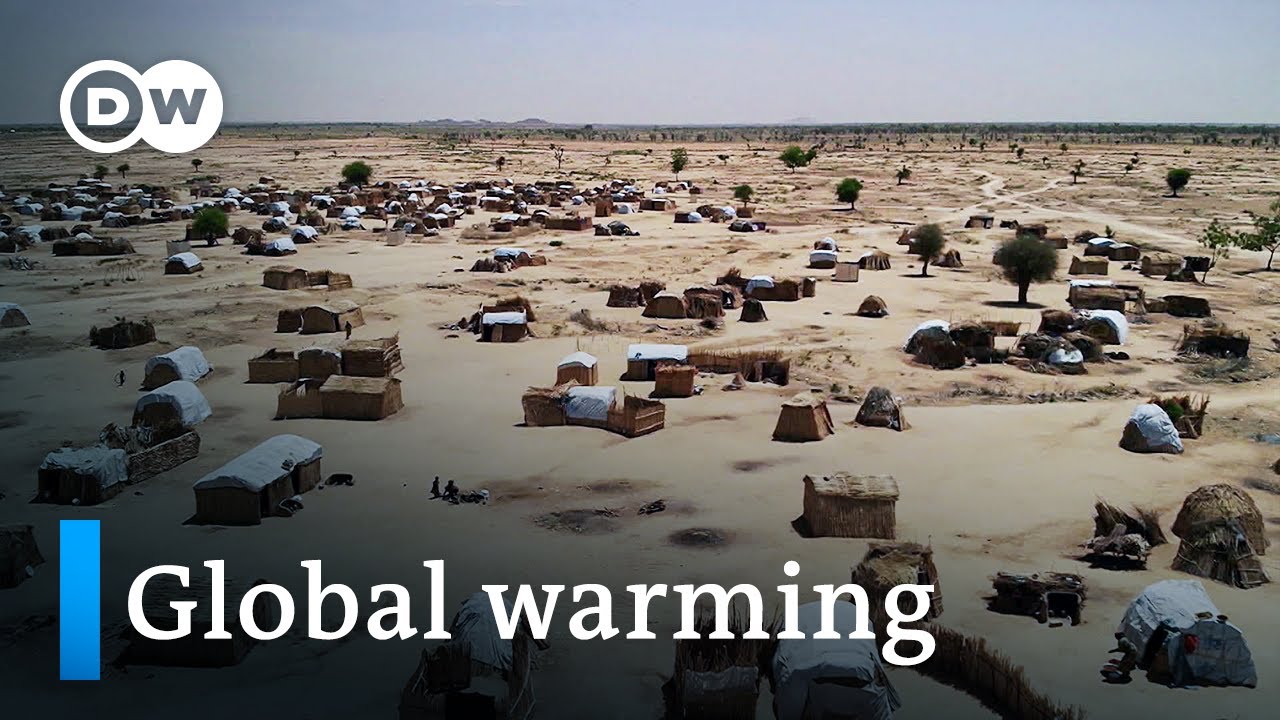
If we continue on the current path, the Earth will experience a temperature increase of a little under 3°C by the end of the century. Implementing measures in all three categories could reduce the temperature rise to 1.8°C, a significant improvement but still not enough to hit the 1.5°C target. In Cameroon, devastating drought is causing water shortages, forcing people to walk long distances to find water.
Lake Chad's Shrinking Shores
Mashari Mulero from the UN's migration organisation tours the Sahel region, speaking with herder Muhammad Ibrahim about the impact of climate change. Lake Chad, the sole natural source of water in the region, has shrunk dramatically, leading to environmental catastrophe. In 1963, Lake Chad covered 25,000 square kilometres, but by 2007, it was just 2,500 square kilometres.
Climate Refugees and Acacia Trees
Millions of people in central Africa have already left the increasingly arid region, and if Lake Chad were to completely dry up, more than 50 million people would become climate refugees. In Sudan, a fair trade organisation is helping women grow acacias, which provide a regular income, stabilise the soil, and prevent the desert from spreading. The acacias also provide shade and help to retain water.
The Success of Acacia Trees
Nadia Ibrahim Muhammad and other local women in the village of Shagra have planted around 20,000 acacias. The trees provide gum arabic, which is used in a wide variety of food products, including Coca-Cola. The profits from the gum have enabled most of their children to go to school. Christian Coyle, the founder of Aosia, has committed to planting a new seedling for every 50 search queries on its website.
The Importance of Rethinking
The documentary team spent three years travelling the world investigating climate change, focusing on the consequences of global warming and the growing threat to people on the ground. They also spoke to those who are actively combating climate change. Christian Coyle emphasises the importance of prompting a big rethink in society, not just stopping CO2 emissions but also repairing what has been destroyed.
The Illusion of Winter's Return
In January 2018, it seemed that winter had returned to Glacia 3000 in Switzerland, with fabulous conditions for skiing and tobogganing. In spring 2018, scientists were also encouraged by the enormous amounts of snow. However, the documentary stresses that fatalism is no better than naive ignorance, and every option deserves to be considered.
Innovative Solutions
The documentary explores innovative solutions such as high-altitude wind power using kites, which can harness wind energy where it's available in almost unlimited quantities. Geoengineering techniques, such as manipulating clouds or distributing sulfur dioxide in the stratosphere, are also discussed, although they are considered costly and risky. Climworks is attempting to remove CO2 from the atmosphere using enormous collectors.
Carbon Capture and Storage
Carbon capture and storage (CCS) is presented as a feasible concept, with Norway experimenting with the injection of CO2 into the ground deep below the seabed. Special ships will transport liquified CO2 from polluting industries to a terminal in Ouya Garden, where it will be pumped offshore and injected into a porous layer of sandstone. Despite these efforts, it's unlikely that greenhouse gas production will be lowered to a tolerable level by 2030.
The Need for Continued Effort
An additional plan is to actively remove CO2 from the atmosphere, an essential step in the eyes of the UN Intergovernmental Panel on Climate Change. Experts believe that the risks are manageable, based on experience from oil and gas explorations in the North Sea. However, even if capturing and storing greenhouse gases were to work, it's not a silver bullet solution, and further research and reductions are needed.
The Vision of Nikita Zemoff
In Russia's far east, climate champion Nikita Zemoff is creating a pleaine park, using animals to create an ecosystem corresponding to that of the prehistoric pleaene era. He aims to prompt a natural marvel in the winter, with his animals trampling down the snow to allow the cold to penetrate the soil. Zemoff's work is raising awareness of the devastating effects of further permafrost melt.
The Bataga Crater
Researchers from Prague are studying the Bataga crater in the Republic of Saka, a mega crater carved into the permafrost. The crater is expanding rapidly, posing a threat to infrastructure. These kinds of catastrophic events could become increasingly common, impacting oil pipelines and natural gas facilities.
The Return to Glacia 3000
In September 2018, glacia expert Matias Hus and his team returned to Switzerland's Glacia 3000. The snow cover that had been so encouraging in April had melted in the space of just one summer. Five meters of snow plus 1.3 meters of glacial ice had all disappeared, highlighting the ongoing and unrelenting loss. Hus is witnessing the death of his beloved glaciers, a catastrophe.

