
Brief Summary
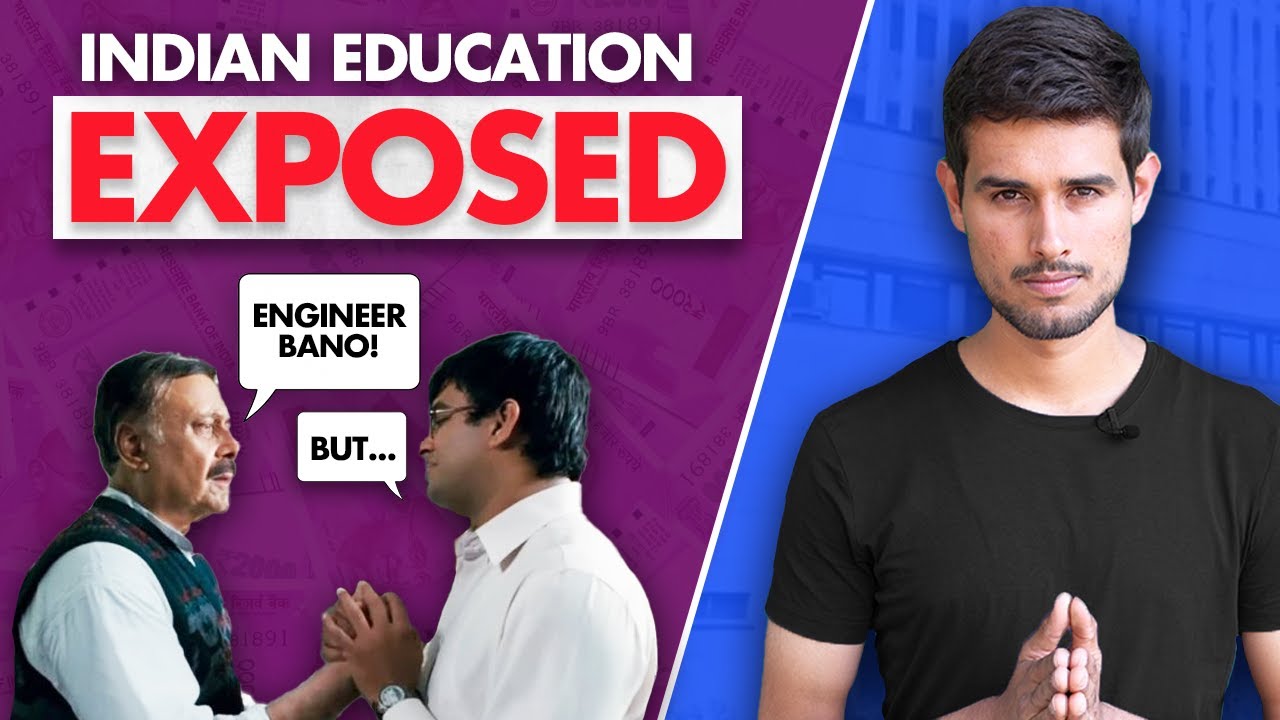
This video explores why Indian students overwhelmingly choose a limited set of traditional career paths (engineer, doctor, MBA, government job) despite messages to pursue their passions. It identifies several key factors: mass media conditioning, parental influence, cognitive biases, and shortcomings in the education system. The video concludes by offering solutions, including being more selective about media consumption, parents broadening their perspectives, and schools providing better career counselling and fostering creativity.
- Mass media normalises limited career options.
- Parents often push children towards traditional, "safe" careers.
- Cognitive biases like conformity and ambiguity aversion influence career choices.
- The education system often fails to expose students to diverse career paths and foster creativity.
Introduction
The video starts by highlighting the paradox that despite films like "3 Idiots" advocating for pursuing one's passion, the vast majority of Indian students still opt for a narrow range of traditional careers such as engineering, medicine, MBA, or government jobs. The video questions whether the Indian education system, parents, teachers, or the students themselves are to blame for this phenomenon. It aims to analyse the underlying issues and propose potential solutions to encourage a broader range of career choices.
Mass Media Conditioning
The video explains how mass media significantly influences career choices. With Indians spending an average of five hours daily on their phones, they are constantly exposed to certain types of information. News channels often prioritise sensational or trivial news over achievements in fields like science, literature, and the arts, which could inspire young people to pursue unconventional careers. Similarly, films often portray heroes in a limited set of professions, further narrowing the perceived possibilities. Social media algorithms also reinforce existing interests, making it difficult for users to discover unconventional career paths. This constant exposure conditions individuals to believe that only a few career options are viable or desirable.
Parents Influence
The video discusses the significant role parents play in shaping their children's career choices. In Indian society, questioning parents is often seen as disrespectful, and many parents view themselves as authority figures who must be obeyed. This can lead to strict parenting styles that erode a child's confidence and decision-making abilities. Parents often push their children towards "safe" and traditional careers, based on their own experiences and perceptions of stability, without keeping up with the changing times. This pressure can make it difficult for children to consider unconventional career paths, even if they are more aligned with their interests and abilities. The video highlights the high demand for government jobs as an example of this outdated mindset, despite the low success rate and relatively low salaries compared to other fields.
Yourself / Cognitive Biases
The video explores the cognitive biases that contribute to students' reluctance to pursue unconventional careers. Conformity bias, the desire to align with the actions of others, leads many students to follow popular trends and career paths, even if they are not the best fit for them. The ambiguity effect, the preference for options with known probabilities, makes students favour traditional careers with perceived certainty over unconventional ones with uncertain outcomes. This bias explains why many students choose to attend engineering colleges with low placement rates or apply for government jobs with extremely low chances of success, rather than pursuing potentially more lucrative but less familiar careers like graphic design.
School infrastructure
The video shifts focus to the role of schools and colleges in addressing the issue of limited career choices. It points out that government schools in many states lack basic amenities and are often in poor condition. Instead of improving these schools, governments are sometimes closing them down. Even in private schools, the "Respecting the Authority" mindset prevails, with teachers often seen as authority figures who must be obeyed. This environment stifles creativity and independent thinking, making it difficult for students to explore unconventional career paths.
Teachers
The video continues to discuss the role of teachers in shaping students' career choices. It argues that teachers often fail to recognise that there are no bad students, only bad teachers. Students are often punished for not conforming to expectations, such as not doing homework or making noise, and may even be subjected to physical or mental humiliation. This environment damages students' self-esteem and makes them less likely to take risks or pursue unconventional paths.
School Curriculum
The video examines the school curriculum and its limitations in exposing students to diverse career options. It argues that the curriculum often fails to connect academic subjects to real-world careers. For example, students may learn about geology in geography class but never consider becoming a geologist. Similarly, they may learn about statistics in math class but never think about becoming a statistician. The curriculum also lacks emphasis on entrepreneurship, which is a viable career path. The video references a TED Talk by Ken Robinson, "Do Schools Kill Creativity?", to highlight the global nature of this problem.
Solutions
The video concludes by offering solutions to encourage a broader range of career choices. It advises individuals to be more selective about their media consumption, seeking out content that exposes them to diverse career options. Parents are encouraged to broaden their perspectives, gain knowledge about various career paths, and avoid strict parenting styles that stifle their children's creativity and decision-making abilities. Schools are urged to stimulate creativity, provide career counselling, and invite guest speakers to talk about unconventional careers. The video emphasises that promoting diverse career choices is not only important for individual success but also for the holistic development of the country. The video ends by introducing a new series, "Jobs Zara Hatke," which will explore unconventional careers in more detail.

