
Brief Summary
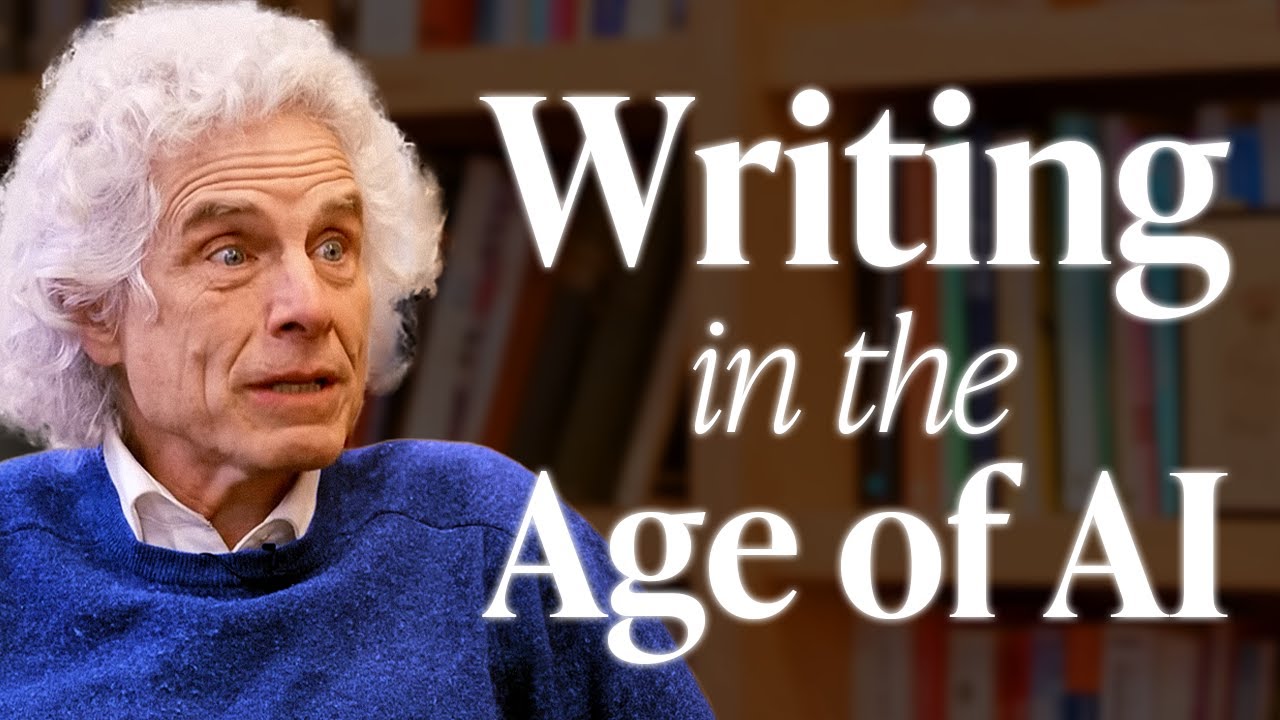
This interview with Steven Pinker explores the principles of effective writing in the age of AI. Pinker discusses the "curse of knowledge," the importance of visual language, and why academic writing often fails. He also touches on the beauty of concise writing, what children can teach us about clear explanations, and the implications of AI on writing style.
- The curse of knowledge is a primary cause of bad writing.
- Visual language and concrete examples are essential for clarity.
- Brevity is key to effective and engaging writing.
- Academic writing often suffers from unnecessary jargon and abstraction.
- AI writing, while grammatically sound, tends to be generic and lacks originality.
Intro
The video introduces an interview with Steven Pinker, a renowned author and expert in language and cognition. The discussion focuses on practical writing rules and the impact of AI on non-fiction writing. Pinker's long-standing interest in AI provides a unique perspective on writing in the age of large language models (LLMs).
Why Is There So Much Bad Writing
Pinker addresses the question of why there is so much poor writing, particularly in academic, bureaucratic, and corporate contexts. He dismisses the idea that bad writing is always a deliberate choice to appear sophisticated or exclude outsiders. Instead, he attributes it to the "curse of knowledge," which is the difficulty in understanding what it's like not to know something that you know. He illustrates this with an anecdote about a molecular biologist who failed to communicate effectively at a TED conference because he didn't consider his audience's background knowledge. Overcoming this curse involves empathy and actively considering the audience's perspective.
How To Make Your Writing Visual
Pinker emphasises the importance of visual language in writing. He argues that understanding involves forming mental images, not just processing words. He advises writers to use concrete examples and visual metaphors to help readers create these images. He notes that older prose often seems more vivid because writers had to rely on common knowledge and shared images before the proliferation of abstract academic terms. While jargon is essential for efficient communication within a specific field, it can hinder understanding for a broader audience.
What Makes Writing So Much Harder Than Speaking
Pinker explores why writing is often more challenging than speaking. In conversation, people typically share common ground and context, allowing for the use of vague terms and references. Writing, however, lacks this shared context, requiring the writer to provide all necessary details for an unfamiliar audience. Additionally, speakers receive immediate feedback from their audience, helping them avoid the curse of knowledge, whereas writers do not have this real-time feedback.
Why Examples Without Context Are Useless
Pinker asserts that both generalisations without examples and examples without generalisations are not very helpful. Generalisations lack detail and can be too vague, while examples without context lack a clear point. He describes the balance between context and compression, where examples provide context and generalisations offer compression. Effective writing involves a dance between the two, providing enough detail to be understood while also summarising key points.
What Makes Writing Beautiful
Pinker discusses the aesthetic aspects of writing, focusing on visual imagery and euphony (pleasant sound). He recommends reading aloud to ensure smooth articulation and rhythm. He also touches on the importance of metrical structure and the avoidance of excessive sibilant sounds. Alliteration, when used subtly, can add a spark of pleasure and improve the flow of a sentence.
Why Academics Are Such Terrible Writers
Pinker expresses his frustration with the poor quality of academic writing. He argues that it represents a waste of brilliant work, as it is often inaccessible to a broader audience. He also points out that bad writing within academia leads to wasted effort and potential misunderstandings. He finds it particularly annoying when linguists and psycholinguists, who study language, are themselves bad writers.
What Kids Teach Us About Clear Explanations
Pinker admires the freshness and originality of children's explanations. He notes that children, lacking accumulated jargon and abstractions, must rely on concrete images and observations. This forces them to create new juxtapositions and appeal to common experiences. He references examples of children's explanations, such as "clouds are water vapour" and "smoke is fire vapour," to illustrate their poetic and insightful nature.
Why Shorter Writing Is Always Better
Pinker emphasises the importance of brevity in writing, citing the line "brevity is the soul of wit" from Hamlet. He also references E.B. White's rule to "omit needless words." He argues that conciseness improves clarity and aesthetic appeal. The exercise of compressing writing to fit a specific word count often reveals unnecessary words and leads to a more effective message.
Why AI Writing Feels So Bland
Pinker discusses the peculiar nature of AI-generated writing. While it tends to be grammatically sound and avoids academic jargon, it is often generic and prosaic. He speculates that this may be due to the way LLMs are designed, as mashups of billions of examples. He suggests that AI writing may be improved through fine-tuning and reinforcement learning, but it currently lacks the originality and freshness of human writing.
How AI Would Rewrite My Books
Pinker reflects on how he might rewrite his books in light of advancements in LLMs. He acknowledges the power of abstracting patterns from massive amounts of input, a concept that was less prominent in his earlier training in computational cognitive science and classic AI. While he doesn't believe the human mind is simply a large language model, he recognises the need to reconcile human intelligence with the pattern extraction capabilities of AI.

