
Brief Summary
This episode of China Uncensored covers a range of topics, including a socialist streamer's experience in China, an embarrassing bridge collapse, Australia's role in supplying China with minerals used in missile production, and US efforts to strengthen alliances against Chinese coercion. It also touches on Trump's stance on Chinese exchange students, and Nvidia CEO's comments on China's AI capabilities.
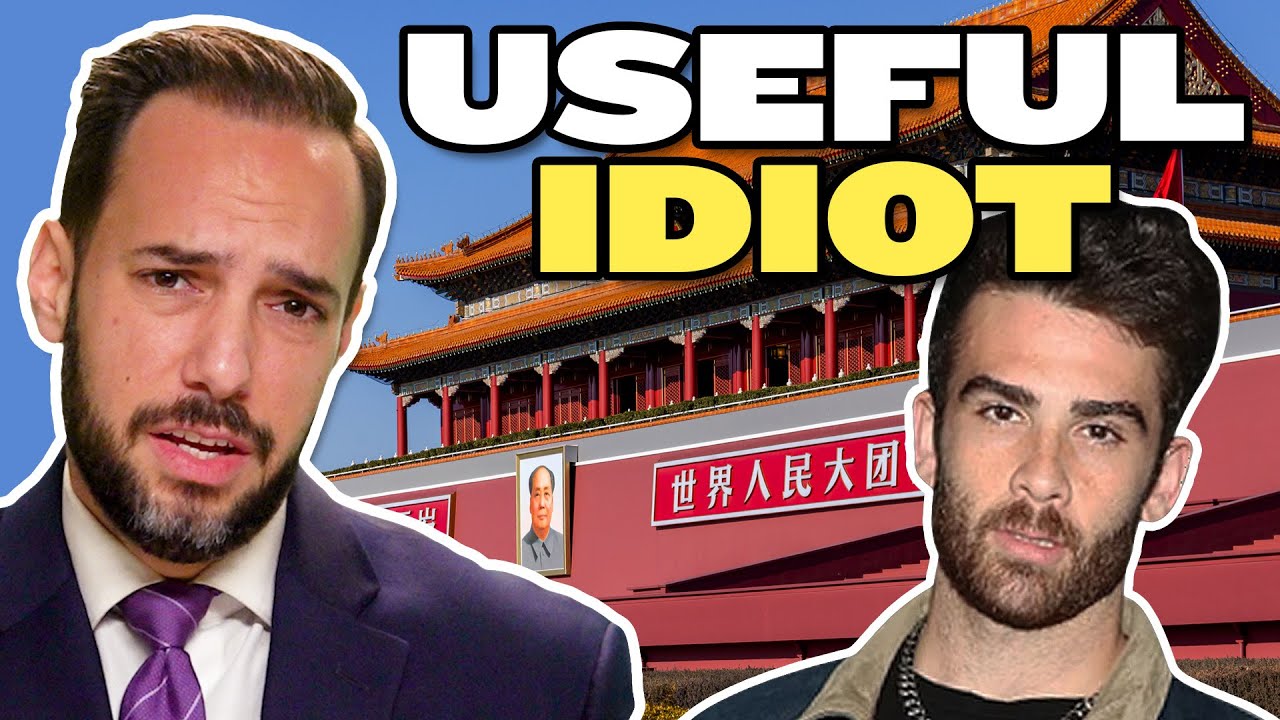
- Socialist streamer Hassan [ __ ] was questioned by Chinese police for holding up a Chairman Mao meme.
- A newly built bridge in China collapsed shortly after opening due to engineering flaws.
- Australia is supplying China with zirconium, a mineral used in missile production, some of which is being re-exported to Russia.
- The US is seeking to strengthen military hotlines with China and is working with allies like the Philippines and Canada to deter Chinese coercion in the South China Sea.
Hassan's Experience in China
Socialist streamer Hassan [ __ ] faced scrutiny from Chinese security officials in Tiananmen Square after displaying a Chairman Mao meme on his phone. Authorities, concerned about potential mockery, questioned Hassan and his crew, examining their phones. Despite being a CCP supporter, Hassan rationalised the incident by suggesting officials were worried about foreigners making China look bad during a national event.
Bridge Collapse in China
China experienced another engineering failure with the collapse of the Hongchi Bridge just months after its opening. Cracks had been noticed prior, leading to its closure and preventing injuries. While some claim ground shifting caused the collapse, experts attribute it to insufficient anchoring pylons. This incident has been used to criticise claims of superior Chinese architecture.
Australia's Mineral Supply to China
Australia is providing China with zirconium, a crucial mineral for hypersonic missiles and nuclear weapons. Two Australian mines, majority-owned by Chinese companies, export 100% of their zirconium to China. Despite a $3 billion mineral deal between Australia and the US to reduce reliance on China, the Australian private sector continues to supply key minerals to Chinese companies with close ties to the CCP. The Australian Defence Minister does not believe tighter controls are necessary, arguing other countries could replace Australian exports.
Zirconium Re-Export to Russia
Data indicates that China is re-exporting some of the Australian zirconium to Russia, supporting Russia's war efforts in Ukraine. Since the Ukraine war began, Chinese zirconium exports to Russia have surged 300%, with some originating from a company owning one of Australia's zirconium mines. This situation puts Australia in the position of sanctioning Russia while indirectly aiding them.
UAE's Technology Transfer to China
US intelligence suggests that China upgraded its PL-15 and PL-17 missiles using technology from the United Arab Emirates (UAE). The AI company G42 provided the technology to Chinese telecoms giant Huawei, which then ended up in PLA missiles. These missiles were later used by Pakistan in clashes with India. The US has issued a warning to the UAE regarding G42's involvement with Huawei. The UAE has also reportedly purchased Chinese drones for the Rapid Support Forces (RSF) in Sudan.
US-China Military Hotlines and Alliances
US Secretary of War Pete Hegseth is seeking to reboot US-China military hotlines to avoid misunderstandings and escalation. He met with his Chinese counterpart, Admiral Dong Jun, and stressed the importance of peace and stability. Hegseth also raised concerns about the South China Sea and unveiled a Philippine task force to deter Chinese coercion. Canada and the Philippines have also signed a defence pact to deter Beijing in the South China Sea, and talks are underway for similar agreements with India, Singapore, France, Germany, and the UK.
Trump's Stance on Chinese Exchange Students
President Trump is defending the continuation of visas for Chinese exchange students in the US, citing the financial benefits for American colleges and universities. He suggested that cutting these visas could lead to the bankruptcy of many institutions, including historically black colleges and universities. Trump acknowledged the risk of espionage but did not suggest bringing in 600,000 new Chinese students, only continuing visas for those already in the country.
Nvidia CEO's Comments on China's AI Capabilities
Nvidia CEO Jensen Huang initially stated that China is not lagging behind the US in artificial intelligence and that the Chinese Communist Party will win the AI race. He has since softened his stance, claiming that the US and other Western countries are falling victim to cynicism and heavy regulations, while China is catching up due to energy subsidies. Huang stressed the importance of the US winning the AI race and suggested keeping developers reliant on Nvidia's chips, which would mean ending restrictions on selling advanced Nvidia chips to China.

