
Brief Summary
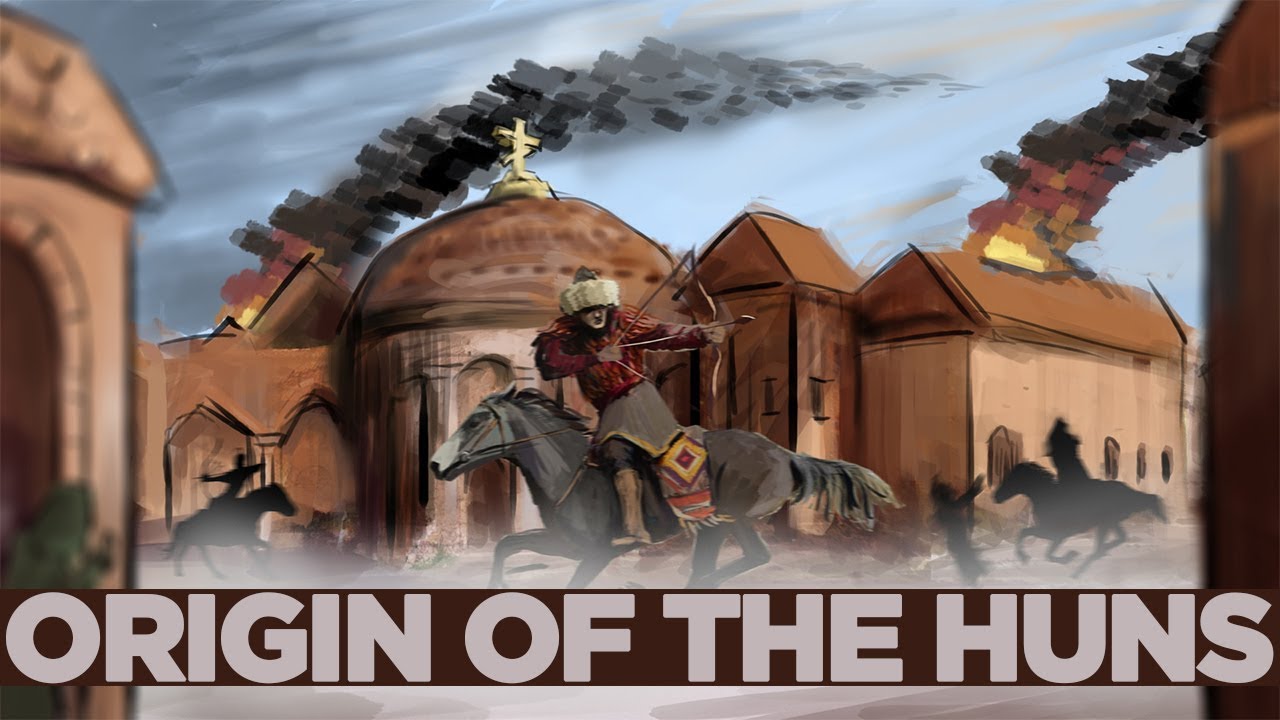
This video explores the history of the Huns, from their possible origins as the Xiongnu in ancient China to their impact on the Roman Empire and their eventual fragmentation. It examines their culture, religion, economy, and military tactics, challenging common perceptions and offering a more nuanced understanding of this enigmatic steppe people.
- The Huns may have originated from the Xiongnu who fought the Han Chinese.
- They likely practiced a form of animism, possibly worshipping a sky-god called Tengri.
- Their economy was agro-pastoralist, combining nomadic herding with agriculture.
- After Attila's death, the Hunnic Empire fragmented due to internal conflicts and external pressures.
- Hunnic mercenaries continued to play a significant role in Eastern Roman armies for almost a century.
Introduction
The video introduces the Huns as a significant nomadic group from the Eurasian steppe, known for their military prowess and impact on empires, particularly the Roman Empire. Under Attila, they became synonymous with ferocity. The video aims to explore their origins, lifestyle, religious beliefs, and culture, addressing the many questions surrounding this enigmatic group.
Hunnic Origins
The video addresses the question of the Huns' origins, contrasting Roman perceptions with modern scholarship. Roman accounts suggest the Huns emerged from beyond the Straits of Kerch, encountering the Goths. However, the video proposes a connection to the Xiongnu, who fought the Han Chinese centuries earlier. While a direct blood relation is debated, the Huns likely adopted the Xiongnu name for its political and cultural significance, similar to the Holy Roman Empire's adoption of the "Roman" name.
Xiongnu Survival and Expansion
The fragmentation of the Xiongnu Empire due to pressure from the Han Chinese and other nomadic groups didn't eliminate them. They survived near the Altai Mountains, facing pressure from various powers. The decline of these powers in the 3rd century allowed the Xiongnu-Huns to expand into Central Asia and eventually Europe, encountering the Roman Empire. Archaeological evidence suggests their presence in the Ural Mountains by the early 4th century, indicating control over a vast territory. By the 370s, they appeared in Greco-Roman records, defeating the Alans and Gothic tribes.
Hunnic Religion
The video explores the religious beliefs of the Huns, noting that while Roman sources claimed they had no religion, this is unlikely. It is inferred that they were animists, revering natural forces like wind, snow, and thunder, believing each possessed a spirit. Similar to the Mongols, they likely worshipped a sky-god, Tenger or Tengri, placated by shamans. Evidence includes a Roman general performing a divination ceremony to please Hunnic auxiliaries. Another theory suggests they worshipped a sacred sword as a proxy for a war god.
Hunnic Economy
The video examines the Hunnic economy, challenging the perception that steppe empires didn't practice agriculture. The Hunnic Empire is described as "agro-pastoralist," with both nomadic herders and sedentary farmers. Nomads practiced animal husbandry, hunting, and fishing, alternating between summer pastures and winter quarters. Sheep were a key animal, providing milk, cheese, and wool. Silk and wine became crucial to the Hunnic economy through interactions with the Roman Empire, obtained through raiding, tribute, and trade.
The Fragmentation of the Hunnic Empire
The video discusses the aftermath of Attila's death, which triggered a civil war among his sons and Hunnic nobles. The conflict likely occurred between eastern and western Hunnic factions, with the western faction led by the Gepids and the eastern faction by the Akatziri tribe. The Battle of Nedao in 454 AD saw Ardaric, king of the Gepids, defeat and kill Ellac, Attila's eldest son. This war is interpreted not as a Germanic revolt, but as a conflict between "Germano-Huns," suggesting cultural hybridisation.
Hunnic Legacy
The Akatziri faction lost due to a pincer movement from the Gepid-led faction and the Oghurs. Attila's youngest son, Ernakh, salvaged the eastern remnant, forming the Bulgar Huns. This group remained formidable, serving as foederati and mercenaries in Eastern Roman armies for almost a century. Hunnic horsemen were renowned for their military prowess, influencing Roman cavalry tactics. The Byzantines' success often depended on their Hunnic allies, highlighting the Huns' continued military significance even after Attila's death.

