
Brief Summary
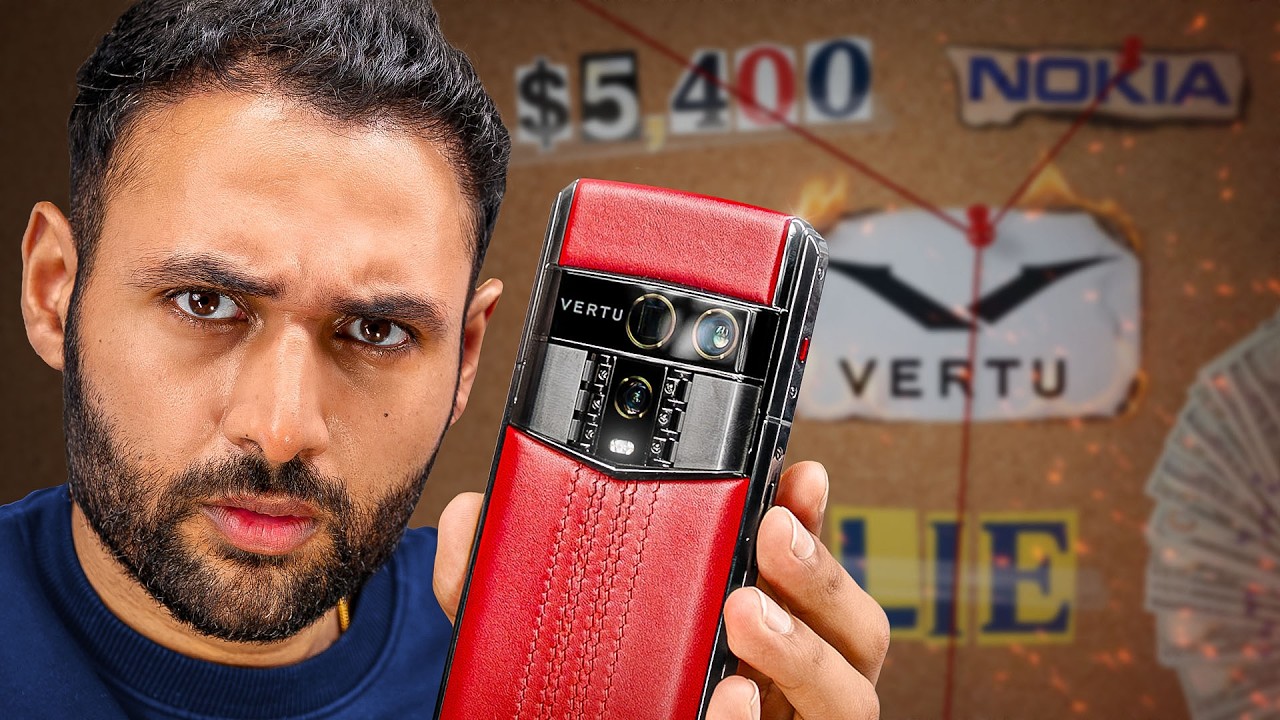
This video investigates Veru, a luxury smartphone company, to determine its legitimacy. It explores the company's products, concierge service, website, and history, revealing inconsistencies and questionable practices. The investigation uncovers that while the concierge service offers some value, the company's products are overpriced and rely heavily on existing Chinese technology, and its marketing is misleading.
- Veru's products are luxurious in appearance but inconsistent in quality and performance.
- The concierge service is a mix of AI and human assistance, offering some genuine benefits.
- The company's website and marketing materials contain misleading information and AI-generated content.
- Veru has a complex history, transitioning from a British-based Nokia subsidiary to a Hong Kong/China-based operation.
Unboxing and First Impressions of Veru Products
The video begins with an introduction to Veru, a luxury smartphone company, and its flagship phone, the Agent Q, which costs $5,400. The phone boasts a ruby button that connects the user to a personal concierge service. The presenter unboxes several Veru products, including a $4,300 smartwatch, a $6,300 Meta Veru 2 smartphone, and a $7,940 flip phone called the Veru Quantum. The packaging and presentation of these products are luxurious, but some details, such as the loose cable in one of the boxes and the manual being primarily in Arabic, seem strange for a British brand.
Testing the Concierge Service
The presenter tests the concierge service by requesting a hotel booking in London for Christmas Day with specific requirements, including a view of the London Eye and a Hindi-speaking receptionist. The concierge responds quickly, finding a hotel room that meets the criteria. The presenter is impressed by the speed and specificity of the service. However, he notices inconsistencies, such as the use of AI-generated images for the concierge team and the same set of messages being used regardless of the selected concierge.
Inconsistencies and Flaws in Veru Products
Despite the luxurious feel of the Veru products, the presenter identifies several flaws. The speakers on the phone are of poor quality, and the phone's design is inconsistent, with a sharp body and a rounded display. The smartwatch has a low-resolution display, and the crown is inconsistent in picking up scrolling. The flip phone's hinge makes a concerning amount of noise.
Concierge Service: Real People or AI?
The presenter investigates the concierge service further, finding that the hotel room offered is more expensive than booking directly. He also discovers that the concierge team's images are AI-generated, raising questions about the authenticity of the service. Despite these concerns, the concierge successfully books a hotel room. The presenter then books another hotel using the concierge service, which initially recommends a hotel with bunk beds. The concierge then recommends a different hotel and upgrades the presenter to a higher-end hotel without charging extra. This suggests a combination of AI and human involvement in the concierge service, with real people in China handling the bookings.
Questionable Website and Marketing Practices
The presenter examines Veru's website, finding that the product photos appear to be digitally altered. He also discovers an article on the site recommending the Samsung Galaxy Z Flip 7 Ultra, a non-existent phone, as the best flip phone. This suggests that the website is filled with AI-generated content. The presenter also finds inconsistencies in the camera slider demonstration and discovers that the promotional photos are stock images from Unsplash.
Veru's History and Transformation
The presenter investigates Veru's history, revealing that the company was originally a British-based Nokia subsidiary that was later sold to various private equity groups and eventually to a Hong Kong-based company. The original UK factory was closed and demolished, and the company re-emerged a year later with a new director and a Hong Kong/China-based operation. The presenter visits the site of the former factory, which is now an Aldi supermarket.
Social Media and ZTE Connection
The presenter analyses Veru's social media presence, noting grammar errors and the use of emojis, which seem unprofessional for a luxury brand. He also discovers that Veru's camera app is very similar to ZTE's camera app. Further investigation reveals traces of ZTE throughout the Veru devices, suggesting that Veru licenses its Android skin from ZTE. While the hardware specs of the Veru phones do not exactly match any ZTE device, the Veru Quantum closely resembles the ZTE Nubia Flip 2.
Final Verdict: Overpriced and Misleading
The presenter concludes that Veru's products are overpriced, offering a phone experience worth about half the price of a top-end flagship. The website experience is poor, but the concierge service is interesting. The presenter suggests that customers are paying a premium for a limited amount of personal admin time. He advises booking hotels directly and highlights the misleading marketing practices of the company.

