
Brief Summary
This video explores the intriguing intersection of early Islamic history and the Byzantine Empire, focusing on the figure of Emperor Heraclius. It examines the Islamic tradition that Heraclius received a letter from Prophet Muhammad, acknowledged his prophethood, but didn't convert due to political reasons. The video analyses the historical accuracy of these accounts, comparing them with Byzantine records and discussing the potential motivations behind the Muslim narratives. It also touches upon the broader context of early Muslim-Byzantine relations and how Heraclius was used in early Islamic writings to legitimise the Prophet Muhammad.
- The Quran mentions the Romans (Byzantines) and predicts their victory, aligning the early Muslim community with them.
- Islamic tradition claims Prophet Muhammad sent a letter to Heraclius, inviting him to Islam, and that Heraclius recognised the truth of the message but feared converting.
- The historicity of this encounter is questionable, with no corroborating evidence from Byzantine sources and timeline inconsistencies.
- Heraclius was used in early Islamic literature to validate Prophet Muhammad's prophethood, portraying him as a wise ruler who recognised the truth of Islam.
Introduction: The Roman-Persian War and the Quran
The video begins by setting the stage with the lengthy war between the Roman (Byzantine) and Persian (Sasanian) empires from 602 to 628 CE, which significantly weakened both. During this period, a new movement was emerging in Arabia led by Prophet Muhammad. The Quran, specifically chapter 30 (Ar-Rum, "The Romans"), mentions that the Romans would be victorious after being defeated, which Islamic tradition says was revealed after the Sasanian conquest of Jerusalem in 614 CE. This prophecy is interpreted as divine favour towards the Romans, seen as fellow Abrahamic cousins by the early Muslims. The early Muslim community in Mecca identified more closely with the Christian Romans than the Zoroastrian Persians due to religious and trade connections. The video then introduces Emperor Heraclius, the leader of the Romans mentioned in the Quran, and how he is viewed in Islamic sources.
Merchandise Plug
The content creator promotes their merchandise store on alkadima.com, featuring wall posters such as a timeline of Islamic history and a map of the fall of Al-Andalus. They also mention their Patreon page for financial support.
The Prophet's Letter to Heraclius
Around 628 CE, Prophet Muhammad sent letters to various rulers, including Heraclius, inviting them to convert to Islam. The letter to Heraclius, delivered by Dihyah ibn Khalifah al-Kalbi, reportedly stated, "In the name of Allah, the Merciful, the Compassionate. From Muhammad, the servant of Allah and his messenger, to Heraclius, the great leader of the Romans. Peace on whoever follows the right path. I invite you to Islam..." It urged Heraclius to embrace Islam for safety and a double reward, warning of the sins of the "Arisene" (possibly heretics) if he refused. The letter also referred to Christians as "people of the book", acknowledging their shared scriptural heritage.
Heraclius's Alleged Response in Islamic Tradition
Islamic scholars have traditionally viewed Heraclius's response to the Prophet's letter as positive. Some accounts, like that of the 9th-century historian Al-Ya'qubi, even provide a supposed reply from Heraclius acknowledging Muhammad as the messenger of God foretold by Jesus. Other scholars suggest Heraclius recognised the truth of Islam but feared losing his throne if he converted. Al-Tabari recounts a story where Heraclius tested his generals' faith, and Sahih al-Bukhari mentions Heraclius seeking information about the Prophet from Abu Sufyan, a Meccan merchant. These narratives consistently portray Heraclius as accepting the Prophet's message internally but unable to publicly embrace Islam due to political constraints.
Historical Accuracy and Byzantine Perspective
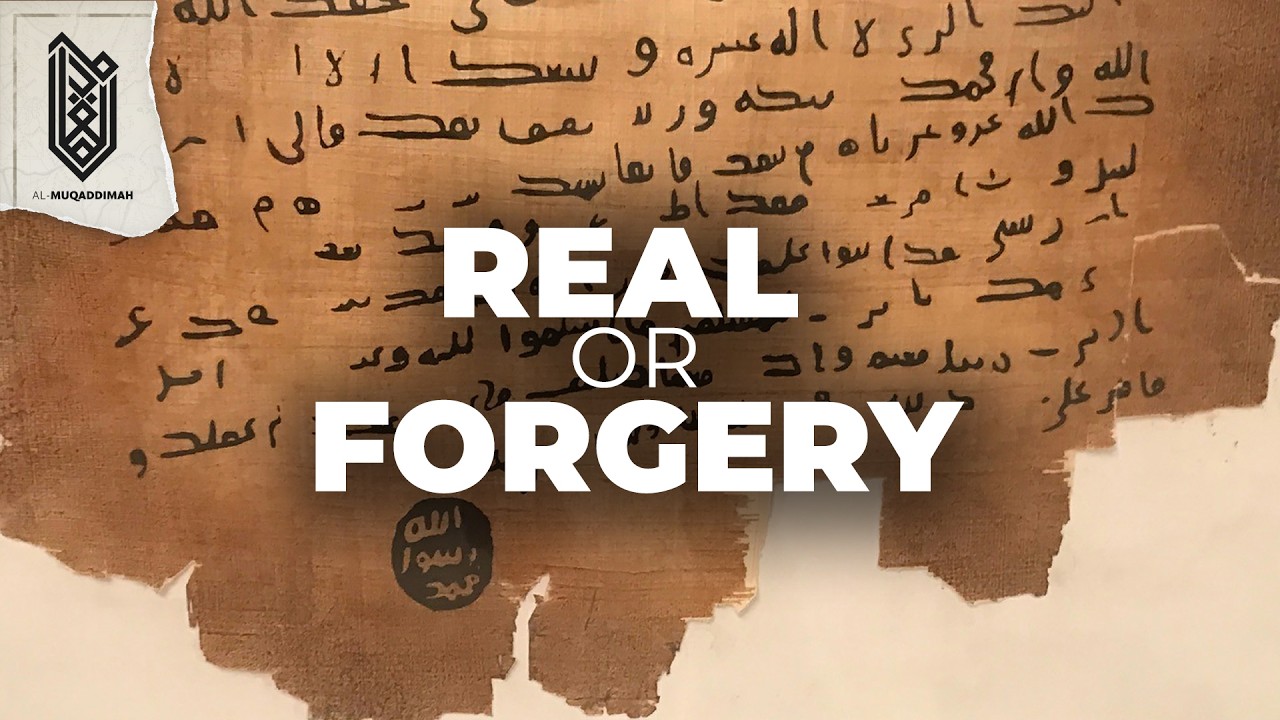
The video questions the historical accuracy of the Islamic accounts. The letter purportedly in the King Hussein Mosque Museum is likely a forgery. Byzantine sources do not mention the events described in Sahih al-Bukhari, which claims the meeting with Abu Sufyan occurred in Jerusalem in 628 CE, before the city was back under Byzantine control. It is also improbable that Heraclius, one of the most powerful rulers at the time, would meet with an emissary from what he would have perceived as a minor Arab tribal leader.
Reconciling the Narrative: Sahih al-Bukhari's Account and Timeline Issues
The video addresses a potential reconciliation of the story based on Sahih al-Bukhari, which mentions Heraclius having a dream about circumcised people taking over his empire, leading to a massacre of Jews. The governor of Bostra then informs Heraclius about a new prophet among the Arabs. This could explain why Heraclius might have been receptive to the Prophet's letter. However, the massacre of Jews in Jerusalem occurred after 629 CE, a year after the supposed meeting. The timeline could work if the Prophet's life is shifted slightly, as proposed by some revisionist scholars. Despite these attempts to reconcile the narrative, there is no historical evidence to support the story.
Conflicts and Contradictions: The Lead-Up to Arab Conquests
In 629 CE, the Prophet's army clashed with Roman vassals at Mu'tah, and in 630 CE, reports suggested Heraclius was preparing to invade Arabia, leading the Prophet to Tabuk. If Heraclius had accepted Islam's truthfulness, such actions would be contradictory, yet the hadiths do not address this. The video concludes that the historicity of the story is non-existent.
Heraclius in Arab Chronicles: A Paragon of Virtue
Despite being the commander of the opposing army during the early Arab conquests, Arab chroniclers wrote positively about Heraclius. Some admired his appearance, and the reports of him recognising the Prophet's truthfulness persisted. Later Muslims portrayed him as a great ruler, embodying leadership, courage, honesty, piety, justice, and magnanimity. This positive portrayal was part of a genre of early Islamic writings aimed at proving the Prophet's prophethood, where Heraclius's recognition served to validate Muhammad's greatness.
The Byzantine Empire's Survival and Early Muslim Views on Christians
Some reports suggest that the Prophet said the Roman kingdom would endure as long as his letter remained with them, possibly explaining why the Byzantine Empire survived while the Sasanian Empire collapsed. This narrative may also reflect early Muslim efforts to encourage proselytisation among Christians, portraying them as receptive to Islam.
Heraclius's Unawareness and Early Perceptions of Islam
The video highlights the irony that Heraclius was used in Muslim stories despite likely being unaware of Islam or Muslims. Early Greek and Persian sources described the Arab conquests in ethnic terms rather than religious ones. While some Greek Christian scholars viewed Islam as a Christian heresy, it wasn't until St. John of Damascus in the 8th century that a real engagement with Islamic theology occurred. In all likelihood, Heraclius would have viewed the Arabs as either Christians or pagans.
Hypothetical Scenario and Conclusion
The video concludes with a hypothetical scenario where Heraclius dismisses the Prophet's emissary, only to later realise the significance of Muhammad's name during the Arab conquests. The video encourages viewers to subscribe and support the channel.

