
Brief Summary
This episode of "Le Dessous des Cartes" on ARTE examines the alarming state of pollution and environmental degradation in the Mediterranean Sea. It explores the historical formation of the sea, its rich biodiversity, and the increasing threats it faces from tourism, plastic waste, maritime traffic, and climate change. The video also assesses the effectiveness of current protective measures, such as Marine Protected Areas (MPAs), and highlights successful conservation efforts, offering a balanced view of the challenges and potential solutions for preserving this vital ecosystem.
- The Mediterranean Sea is heavily polluted due to tourism, plastic waste, and maritime traffic.
- Climate change is exacerbating the environmental issues, leading to rising water temperatures and extreme weather events.
- Marine Protected Areas (MPAs) are often insufficient, but successful conservation efforts demonstrate the potential for marine life restoration.
Introduction: The Troubled Waters of the Mediterranean
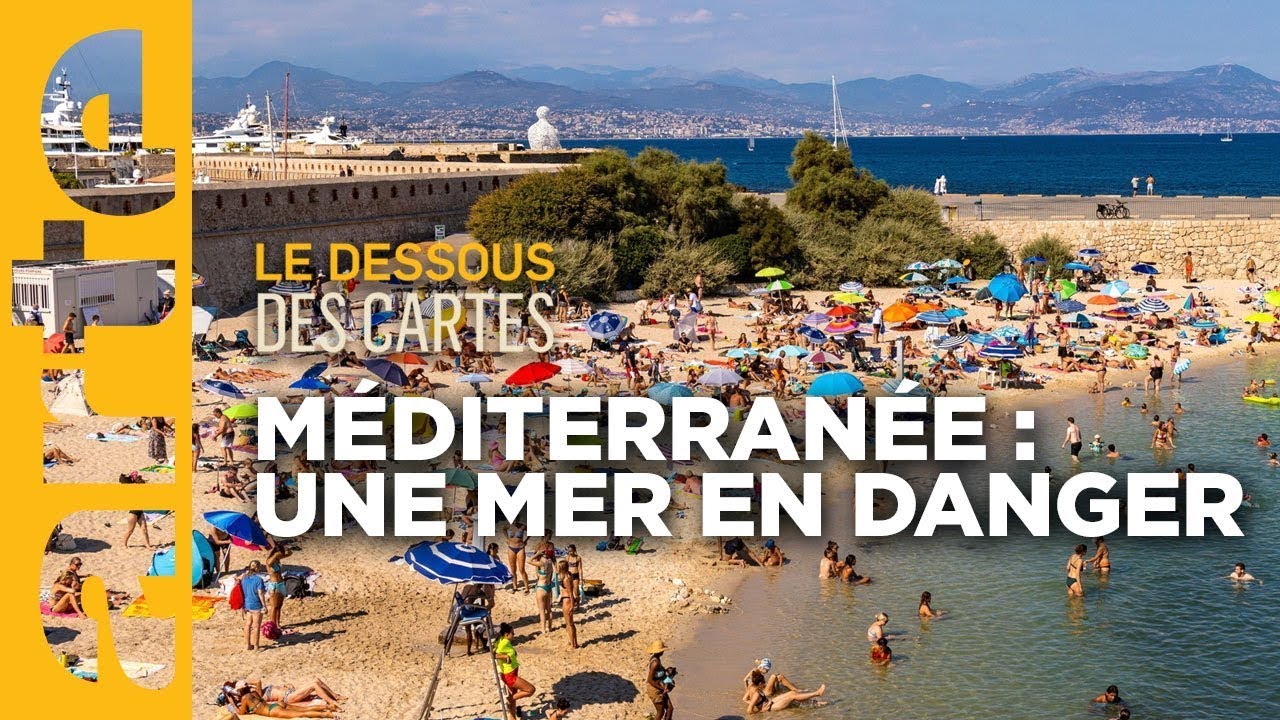
The Mediterranean Sea is facing a severe environmental crisis, exemplified by the overtourism at beaches like La Gravette in Antibes, where bacterial levels exceed safe limits. The WWF reports that approximately 600,000 tonnes of plastic waste pollute the sea. The programme aims to investigate how this historically and culturally significant sea has become a dumping ground, while also exploring potential solutions and raising awareness about the issue.
Geological History and Biodiversity of the Mediterranean
The Mediterranean Sea's formation dates back to the secondary and tertiary geological periods, starting with the supercontinent Pangea. Volcanic activity and continental drift led to the sea's creation, with a significant event 5.3 million years ago when the isthmus connecting Africa and Europe collapsed at the Strait of Gibraltar, flooding the basin. The Mediterranean, covering 2,511,000 km², boasts 8-10% of the world's marine biodiversity despite representing only 0.8% of the ocean's surface. This biodiversity is supported by ecosystems like Posidonia seagrass and coraligenous formations, which purify water, protect the coast, provide habitats, and store carbon.
Human Impact: Tourism and Urbanisation
The Mediterranean is bordered by 22 states and territories, with 512 million inhabitants, a third of whom live along the coast. The region attracts 360 million tourists and 26 million cruise passengers annually, leading to excessive urbanisation and demographic pressure. The Côte d'Azur in France exemplifies this, with rapid tourism development from the 1950s causing coastal artificialisation. In the Alpes-Maritimes department, 35% of the coastline is artificial, resulting in biodiversity loss and the destruction of species unable to adapt.
Pollution: Waste and Plastic
The Mediterranean Sea faces significant pollution from household waste, heavy metals, pesticides, and especially plastic. An estimated 150,000 to 600,000 tonnes of plastic are dumped into the sea each year. Italy, Turkey, Egypt, and Algeria are the largest contributors of plastic waste. The pollution also originates from countries within the Mediterranean's river system, such as Sudan (via the Nile) and Switzerland (via the Rhône). A Greek NGO has organised volunteer divers to collect waste, retrieving 90,000 water bottles, 21 tonnes of fishing nets, and 1,700 tyres between 2017 and 2022. Plastic ingestion has been found in 20-45% of tested fish and mussels.
Maritime Traffic and Resource Exploitation
The Mediterranean Sea is a major maritime route between Asia and the Americas via the Suez Canal and Gibraltar, and a key exit point for goods from Central Europe and Asia via the Black Sea. This heavy traffic leads to hydrocarbon spills, waste, underwater noise, and collisions with marine mammals. Increased oil and gas activities, such as drilling and pipeline construction, further strain the environment. The Leviathan gas reserve, located 135 km off the Israeli coast, is a deep-sea drilling area that threatens a unique marine ecosystem with rare species of sponges, worms, molluscs, and cold-water coral, some of which are thousands of years old.
Fishing and Aquaculture
The Mediterranean is threatened by intensive fishing and aquaculture. Turkey is the largest aquaculture producer in the Mediterranean. In the Bay of Güllük, intensive sea bass farming reduces oxygen levels in the water. Excess nutrients from fish feed and excretion increase nitrogen and phosphorus levels, causing algal blooms and creating dead zones where aquatic organisms cannot survive.
Protective Measures: Marine Protected Areas (MPAs)
There is growing awareness and implementation of protective measures, such as Marine Protected Areas (MPAs), though their effectiveness is limited. MPAs, which originated in 1962, restrict activities like fishing and hydrocarbon extraction. However, some MPAs are strategically placed in areas of low biodiversity to inflate the number of protected areas. In 2020, MPAs covered only 6% of the Mediterranean basin, with only 0.23% having effective protection levels and 0.06% being fully protected.
Successful Conservation Efforts and Marine Restoration
Despite the challenges, there are successful conservation efforts. In France, the Côte Bleue Marine Park has established fully protected zones in Carry-le-Rouet and Cap Couronne, where all human activities are prohibited. These reserves are marked by buoys and signs and are under constant surveillance. These zones demonstrate the extraordinary capacity of marine life to recover when human pressure is reduced. Coral reefs in the Pacific, damaged by French nuclear tests between 1976 and 1995, have partially recovered in the last 40 years.
Climate Change and Future Threats
Climate change poses another significant threat to the Mediterranean. The Mediterranean basin is one of the regions most affected by global warming, experiencing prolonged droughts, fires, and rising water temperatures. When the Mediterranean's temperature exceeds 25°C, it harms the marine ecosystem and promotes the formation of "medicanes" (Mediterranean hurricanes). A medicane struck Libya in September 2023, causing catastrophic damage.

