
Brief Summary
This video from English for Everyone with Kevin and Liza teaches two common English expressions: "spitballing" and "point blank". It explains the meanings, proper usage, and pronunciation of each expression through examples and practice sentences.
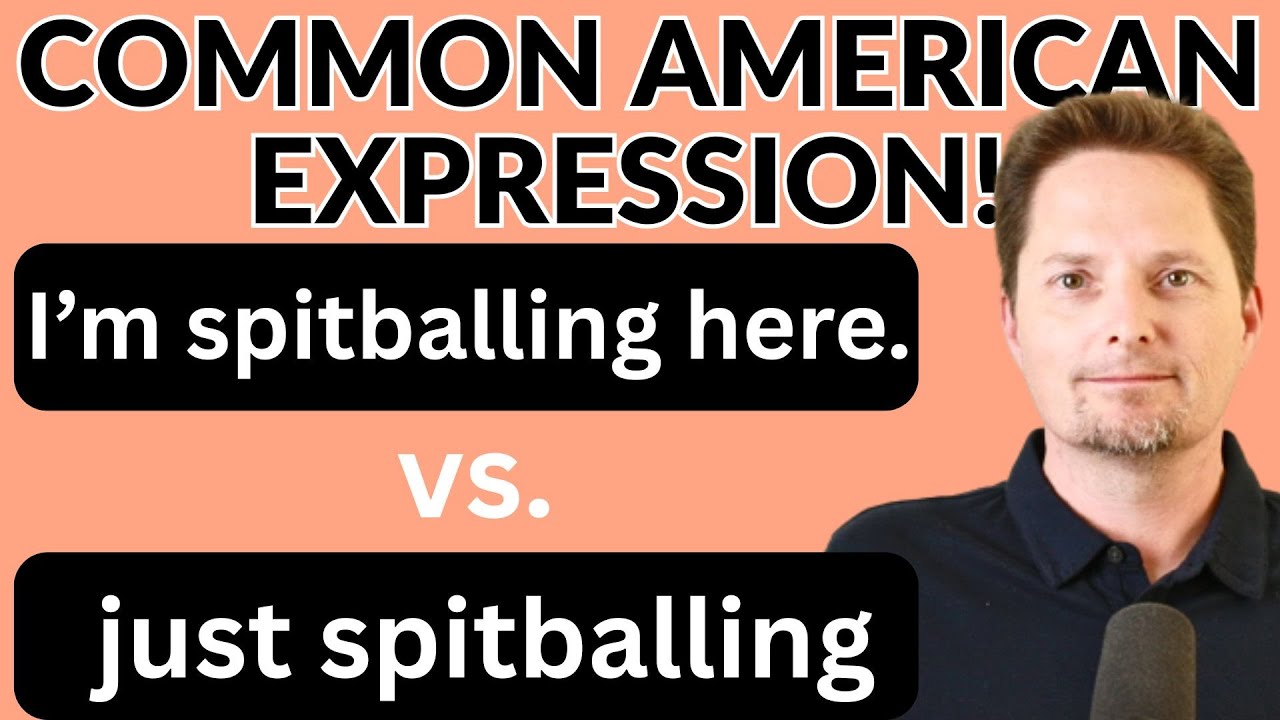
- "Spitballing" means sharing ideas as soon as they come to mind, without extensive planning.
- "Point blank" has two meanings: at very close range (when referring to shooting someone) and directly/bluntly (when asking a question).
Spitballing
The expression "I'm just spitballing" or "I'm spitballing here" means you're sharing ideas as soon as you think of them. It indicates that the idea isn't a well-thought-out plan but rather a spontaneous suggestion. The most common way to use this expression is "I'm just spitballing here." You can also say "I'm just spitballing" or "I'm spitballing here". If you want to eliminate "I'm", you must include "just", so you would say "Just spitballing here".
At Point Blank Range / Point Blank
The phrase "at point blank range" refers to shooting someone at close range. For example, "He shot him at point blank range." The passive voice version is "He was shot at point blank range." The shorter version, "point blank," can also be used in the same context: "He shot him point blank" or "He was shot point blank." When pronouncing "shot him," the 't' in "shot" becomes a fast 'd' sound, and the 'h' in "him" is often silent, resulting in "shot-um."
"Point blank" can also mean "directly" or "getting to the point quickly" when asking a question. For example, "They asked him point blank, 'Did you commit the crime?'" This means they asked him directly without hesitation. In reported speech, this becomes "They asked him point blank if he committed the crime." When pronouncing "if he," the 'h' in "he" is often silent, resulting in "if-y." The 't' in "committed" becomes a fast 'd' sound.

