
Brief Summary
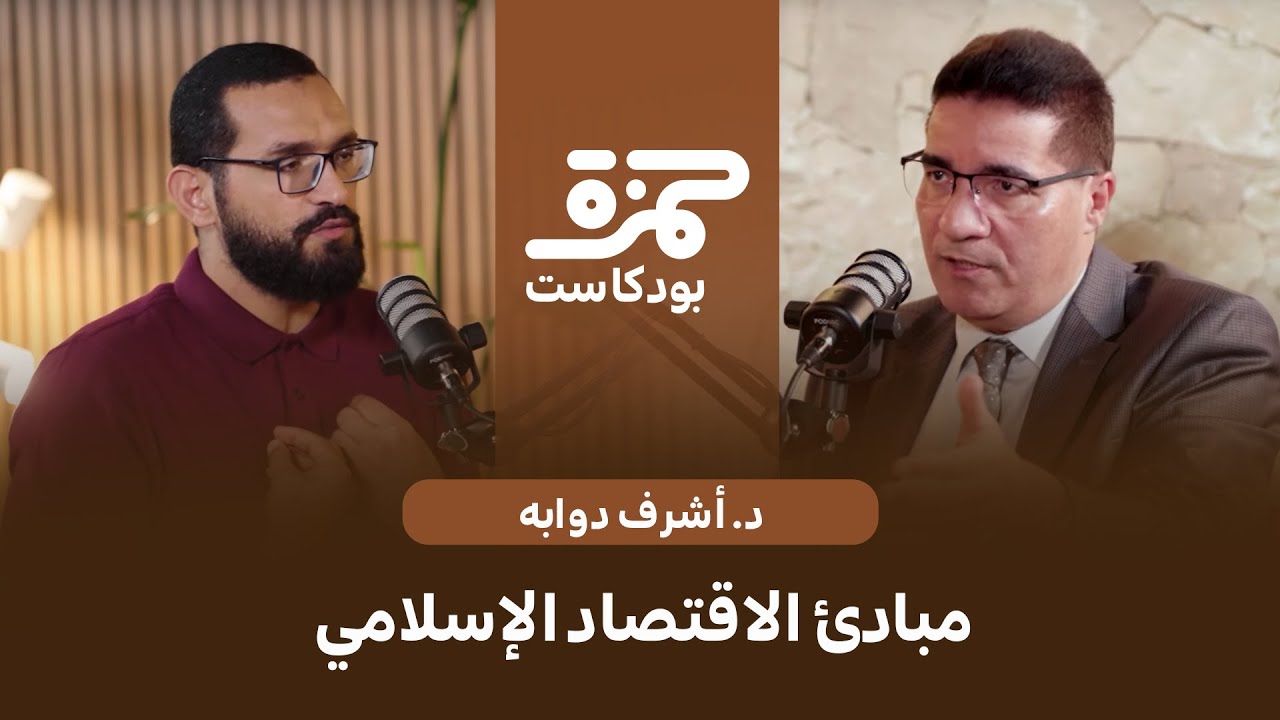
This podcast episode features Dr. Ashraf Dawaba, an expert in Islamic economics, discussing the principles, history, and practical applications of Islamic economics. The conversation covers the definition of Islamic economics, its distinction from conventional economics, the permissibility of using modern financial instruments within Islamic guidelines, and the importance of ethical considerations in financial transactions.
- Islamic economics is rooted in the Quran and Sunnah, emphasising ethical and moral considerations alongside financial principles.
- The discussion highlights the importance of aligning financial practices with Islamic values to achieve both worldly prosperity and spiritual well-being.
- The episode also addresses common misconceptions about Islamic finance and provides guidance on navigating financial decisions in accordance with Islamic principles.
البداية
The host introduces the episode's focus on Islamic economics and the importance of understanding financial transactions within an Islamic framework. He emphasises the need for Muslims to be well-informed about the permissibility of financial dealings to avoid practices that distance them from Allah. Dr. Ashraf Dawaba, a prominent figure in Islamic economics, is welcomed as the guest, with expectations that his insights will be valuable to the audience.
التعريف بالدكتور أشرف
Dr. Ashraf Dawaba introduces himself, detailing his academic background in commerce, finance, and Islamic law. He shares his extensive experience in Islamic banking, academia, and consultancy across various countries, including Egypt, the UAE, Kuwait, and Turkey. Dr. Dawaba mentions his contributions to the field through numerous books and research papers, as well as his affiliations with Islamic scholarly organisations.
مصطلح الاقتصاد ونشاته
Dr. Dawaba discusses the origin and evolution of the term "economics," noting that while the term itself is relatively modern, the concepts and principles of economic activity have existed since the beginning of Islam. He points out that early Islamic scholars wrote about economic matters, such as public finance, centuries before the formalisation of economics as a discipline in the West. The Prophet Muhammad's actions in Medina, such as establishing a marketplace and promoting economic cooperation, are cited as examples of early Islamic economic practices.
تعريف الاقتصاد الإسلامي وعناصر تميزه
Dr. Dawaba defines Islamic economics as a system that balances material and spiritual needs, guided by the values, principles, and objectives of Islamic law. He emphasises that Islamic economics is distinct from conventional economics due to its integration of faith, ethics, and legal frameworks. The goal is to achieve prosperity in both this world and the hereafter. He identifies three key elements governing Islamic economics: belief, ethics and civil law.
علم الاقتصاد الإسلامي
Dr. Dawaba defends the validity of Islamic economics as a science, arguing that it employs a systematic approach to analysing economic problems and developing solutions within an Islamic framework. He explains that Islamic economics not only analyses existing economic conditions but also prescribes what ought to be, based on Islamic values and principles. This approach combines empirical analysis with ethical considerations to guide economic policy and decision-making.
حجم الاقتصاد الإسلامي
Dr. Dawaba estimates the size of the global Islamic economy to be a small percentage of the overall world economy. He attributes this to the lack of widespread adoption and implementation of Islamic economic principles at the state level. While there are successful examples of Islamic financial institutions and industries, a comprehensive Islamic economic system remains largely unrealised.
علماء في علم الاقتصاد
Dr. Dawaba highlights several historical Islamic scholars who contributed to economic thought, including Abu Yusuf, Muhammad ibn Hasan al-Shaybani, Imam Ghazali, and Ibn Khaldun. He notes that these scholars, though not exclusively economists, addressed economic issues within their broader intellectual works, providing valuable insights into Islamic perspectives on finance, trade, and development.
المعاملات المالية بين الحلال والحرام
Dr. Dawaba discusses the Islamic guidelines for financial transactions, emphasising the importance of seeking permissible means of financing and investment. He outlines various Islamic financial instruments, such as qard hassan (interest-free loans), murabaha (cost-plus financing), mudaraba (profit-sharing), and musharaka (joint venture), as alternatives to conventional interest-based transactions. He stresses that the intention and underlying principles of a transaction determine its permissibility in Islam.
الممارسات السلبية لمؤسسات توصف بالإسلامية
Dr. Dawaba critiques certain practices in institutions that claim to be Islamic, particularly the use of tawarruq (reverse murabaha) as a means of providing financing. He argues that such practices often resemble interest-based transactions in substance and violate the spirit of Islamic finance. He calls for greater scrutiny and adherence to Islamic principles in the operations of Islamic financial institutions.
أنواع البيع في الإسلام
Dr. Dawaba explains different types of sales (buyu') in Islam, including buyu' al-musawama (bargaining sales) and buyu' al-amana (sales based on trust). He details the conditions and requirements for each type of sale, highlighting the importance of transparency, honesty, and fairness in commercial transactions.
الباحثين في مجال الاقتصاد الإسلامي
Dr. Dawaba expresses concern about the current state of research and scholarship in Islamic economics. He notes a decline in the quality of research and a focus on titles rather than substance. He calls for a renewed commitment to rigorous scholarship, ethical conduct, and a genuine desire to advance the field of Islamic economics for the benefit of society.
الأوقاف والزكاة
Dr. Dawaba discusses the roles of awqaf (charitable endowments) and zakat (obligatory charity) in Islamic economics. He highlights the historical significance of awqaf in funding education, healthcare, and other social services. He also emphasises the potential of zakat to alleviate poverty and promote economic justice, if properly collected and distributed.
الاقتصاد الأخضر
Dr. Dawaba addresses contemporary concepts such as the green economy, sustainable development, and social responsibility from an Islamic perspective. He argues that Islam has long advocated for environmental protection, social justice, and responsible resource management. He suggests that these concepts can be integrated into Islamic economics by emphasising the principles of stewardship (khilafa) and the prohibition of harm (la darar wa la dirar).

