
Brief Summary
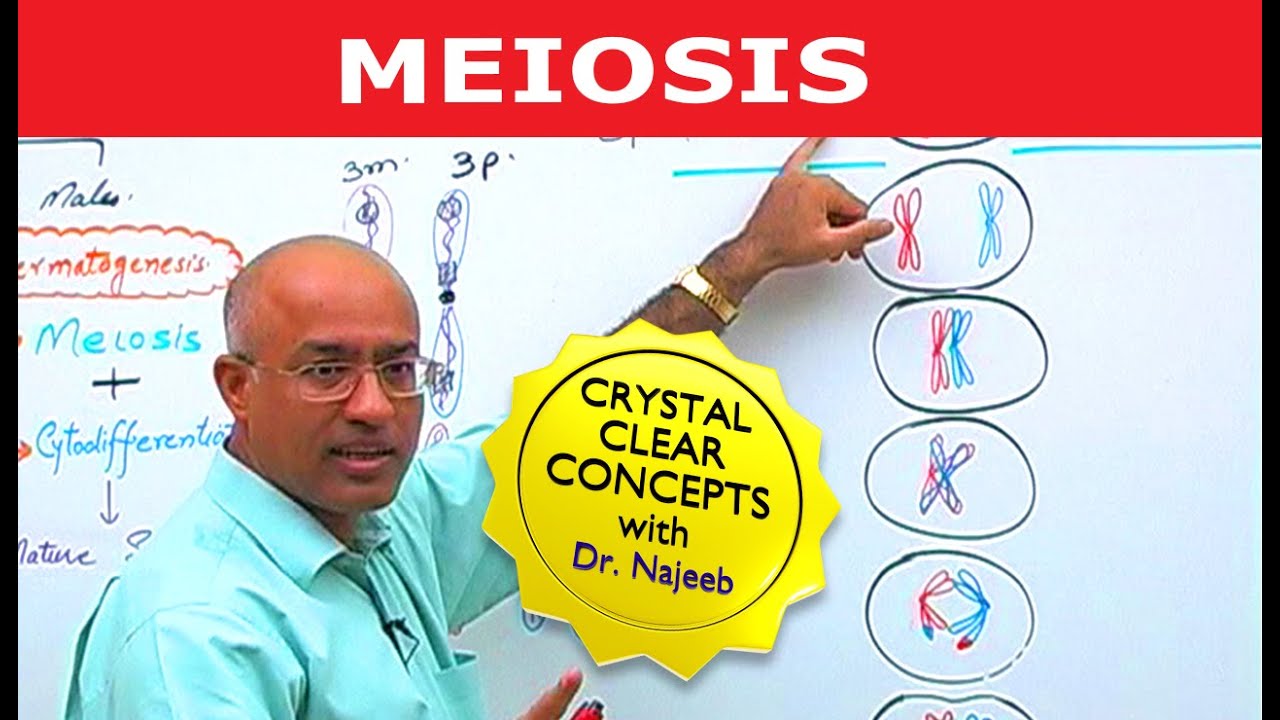
This lecture explains gametogenesis, the process of forming mature gametes (sperm and egg cells) from germ cells. It covers meiosis, a specialised cell division that halves the chromosome number, and details the differences between oogenesis (in females) and spermatogenesis (in males). The lecture also explains the crucial concepts of homologous chromosomes, alleles, and single versus double-structured chromosomes. Furthermore, it describes the unique events in meiosis I, such as synapsis, crossing over, and chiasma formation, which contribute to genetic diversity. Finally, it explains the differences between spermatogenesis and oogenesis.
- Gametogenesis involves meiosis to produce haploid gametes.
- Meiosis I includes synapsis and crossing over for genetic diversity.
- Oogenesis produces one mature ovum and polar bodies, while spermatogenesis produces four sperm cells.
Introduction to Gametogenesis
Gametogenesis is the process where early germ cells undergo meiosis and differentiate into mature gametes. Meiosis is a specialised cell division that occurs in two stages (meiosis I and meiosis II), reducing the chromosome number by half in the daughter cells. This reduction division is essential for sexual reproduction. In females, gametogenesis is called oogenesis, producing mature ova, while in males, it is called spermatogenesis, resulting in mature sperm. Both processes involve meiosis and cellular differentiation to form mature gametes.
Meiosis Basics and Chromosome Numbers
During meiosis, early germ cells, such as oogonia in females or spermatogonia in males, undergo cell division. Human cells typically have 46 chromosomes (23 from each parent), known as the diploid number. Chromosomes from each parent are homologous, meaning they carry genes for the same traits. For example, chromosome number one from the mother is homologous to chromosome number one from the father. The amount of DNA and the number of chromosomes are critical considerations during cell division.
Homologous Chromosomes and Alleles
Homologous chromosomes contain genes for similar traits at corresponding loci. Genes at the same locus that determine the same trait (e.g., eye colour) are called alleles. Chromosomes can be single-structured (unduplicated DNA) or double-structured (replicated DNA). A single-structured chromosome has one chromatid, while a double-structured chromosome has two chromatids. Chromosome number is determined by the number of centromeres.
Chromosome Structure and DNA Replication
Chromosomes can exist in single or double-structured forms. A single-structured chromosome has one centromere, one short arm, and one long arm, representing unduplicated DNA. After DNA replication, a chromosome becomes double-structured, with replicated DNA, also known as a duplicated chromosome or a chromosome with two chromatids. It's important to differentiate between homologous chromosomes, alleles, and single versus double-structured chromosomes to understand meiosis.
Chromosome Numbers and DNA Amount in Spermatogonia
In spermatogenesis, spermatogonia B cells contain 23 maternal and 23 paternal chromosomes. A full set of 23 chromosomes is denoted as 1n. Therefore, spermatogonia B cells have 2n (diploid) chromosomes, totalling 46. The amount of DNA in single-structured chromosomes is represented as 1N. Thus, a spermatogonium B cell has 1N from the paternal side and 1N from the maternal side, resulting in 2N amount of DNA.
DNA Replication Before Meiosis I
Before entering meiosis I, the cell replicates its DNA, causing all chromosomes to become double-structured. This results in the formation of a primary gamete (primary spermatocyte in males, primary oocyte in females). The primary gamete contains 23 double-structured paternal chromosomes (1n) and 23 double-structured maternal chromosomes (1n), maintaining the diploid number (2n). However, the amount of DNA doubles to 4N (2N from paternal and 2N from maternal chromosomes).
Synapsis and Crossing Over in Meiosis I
During meiosis I, homologous chromosomes pair up in a process called synapsis. This pairing is unique to meiosis and does not occur in mitosis. Maternal and paternal chromosomes align lengthwise, point to point, and then exchange blocks of genes in a process called crossing over. This exchange shuffles genetic material, adding diversity to future generations.
Chiasma Formation and Genetic Recombination
After crossing over, homologous chromosomes separate, but remain attached at the points where genetic material was exchanged, forming a structure called a chiasma. This process results in genetic recombination, where maternal chromosomes contain some paternal genes and vice versa. Synapsis, crossing over, and chiasma formation are unique features of meiosis I, contributing to genetic diversity.
Alignment and Random Assortment
Following chiasma formation, chromosomes align on the spindle. During alignment, 23 double-structured chromosomes (originally maternal) and 23 double-structured chromosomes (originally paternal) are assorted randomly. As these chromosomes move to daughter cells, each daughter cell receives a random mix of maternal and paternal chromosomes. This random assortment further enhances genetic variability.
Formation of Secondary Gametes
At the end of meiosis I, two secondary gametes are produced. In males, these are called secondary spermatocytes, while in females, one cell becomes the secondary oocyte and the other becomes the first polar body. Each secondary gamete contains 23 double-structured chromosomes (1n, haploid number) and 2N amount of DNA.
Meiosis II and Formation of Mature Gametes
Secondary gametes proceed directly into meiosis II without further DNA replication. During meiosis II, the centromeres divide, and the double-structured chromosomes split into single-structured chromosomes. This results in four daughter cells, each with 23 single-structured chromosomes (1n, haploid number) and 1N amount of DNA.
Spermatogenesis vs. Oogenesis
In spermatogenesis, one primary gamete (primary spermatocyte) divides into two secondary spermatocytes, each of which divides into two spermatids, maturing into four sperm cells. In oogenesis, one primary gamete produces a secondary oocyte and a first polar body. The secondary oocyte divides into a definitive ovum (mature egg) and a second polar body. The first polar body may also divide. Thus, in females, one primary gamete results in one functional ovum and three polar bodies.
Purpose and Stages of Meiosis
The purpose of meiosis is to produce mature germ cells (sperm and ova) with a haploid number of chromosomes. Meiosis occurs in two stages, with unique events in meiosis I, including synapsis, crossing over, and chiasma formation. These processes, along with random assortment, ensure genetic diversity in the offspring.
Mechanisms of Genetic Diversity
Genetic diversity is achieved through several mechanisms: crossing over, random assortment of homologous chromosomes during meiosis I, and the fusion of sperm and ovum with unique genetic combinations. These processes ensure that each individual has a unique genetic makeup.

