
Brief Summary
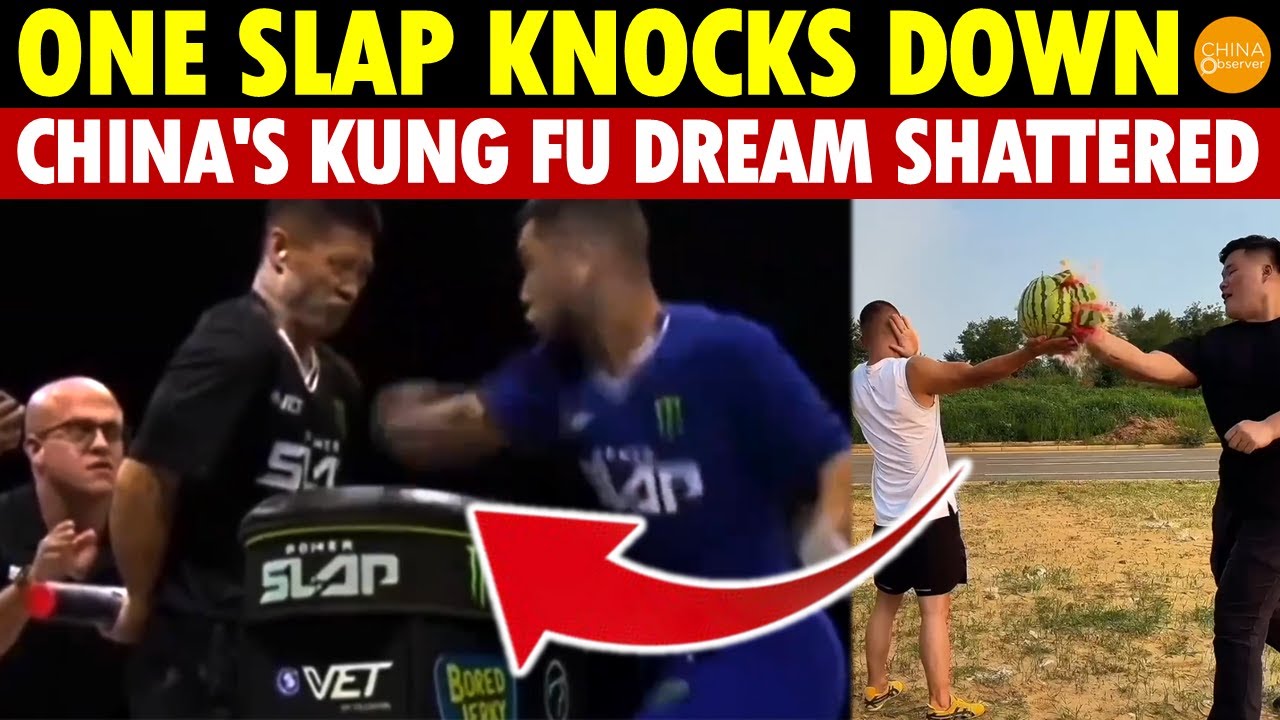
The video discusses the recent defeat of Jao Hong Gang, a disciple of Tongbe Quan, in an international slap competition and the subsequent debate it ignited regarding the authenticity and practicality of traditional Chinese martial arts versus modern combat sports. It explores how martial arts are portrayed in the media, the commercialisation of traditional martial arts, and the lack of real combat training among many practitioners.
- Jao Hong Gang's defeat sparks debate on traditional martial arts.
- Commercialisation and marketing distort true martial arts.
- Lack of real combat training hinders effectiveness.
Introduction: Jao Hong Gang's Defeat and the Kung Fu Debate
Jao Hong Gang, a disciple of Gu Yuan, was knocked out in an international slap competition, leading to a resurgence of the debate over the effectiveness of traditional Chinese kung fu compared to modern combat sports. The contrast between Jao's flashy social media videos and his performance in the competition has drawn criticism. Jao's master, Chen Ko, gained popularity through platforms like Douyin by showcasing traditional martial arts, amassing a large following through online teaching and e-commerce.
The Rise of Gu Yuan and Tongbe Quan on Social Media
Chen Ko, known as Gu Yuan, is the eighth-generation leader of the Chi family's Tongbe Quan School. He became popular on platforms like Douyin, showcasing the practical application of traditional martial arts. His videos often feature dynamic performances and demonstrations, such as smashing watermelons and straightening steel wrenches, which have garnered millions of likes and fuelled a sense of national pride among viewers. These videos lead many to believe that traditional martial arts can easily dominate modern combat sports.
Jao Hong Gang's Journey to the SFC Competition
Gu Wu Yuan's eldest disciple, Jiao Hong Kong, built his popularity through videos of his training and preparations for the SFC competition. He gained attention due to speculation about representing Tongbe Quan in the international SFC competition. Jao travelled to Japan and won his first match with a single slap, becoming the first Chinese competitor to win the slap competition championship in Asia. However, the authenticity of this match was questioned by some viewers.
Meeting Dana White and Signing with SFC
With the help of world champion boxer Zhang Weili, Jao Hong Gang and his master Gu Wu Yuan met Dana White, the owner of SFC and UFC. Gu Wu Yuan demonstrated Tongbe Quan, and Jiao Hong Kong showcased his skills, impressing Dana White, who offered him a spot in the SFC competition. Jao officially signed with SFC and was scheduled to compete on November 1st.
Preparation and the Inevitable Defeat
Jao Hong Gang's opponent in the SFC competition was Amanaty from Kazakhstan, an experienced fighter with international titles. Jiao invited fans and sparring partners for training, but none were professional fighters. After Jiao's defeat on November 1st, the video went viral, sparking debate about the authenticity of Tongbe Quan.
The Public Reaction and Calls for Gu Yuan to Prove Himself
Following Jao Hong Kong's defeat, the comment sections exploded with mixed reactions, questioning the real capabilities of Tongbe Quan. One blogger called for Gu Wu Yuan to demonstrate the true fighting ability of Tongbe Quan by participating in the competition. Amanaty also expressed interest in experiencing the true power of Tongbe Quan and Gu Wu Yuan's teachings in person in China.
Limitations of Traditional Martial Arts in Modern Combat
Industry insiders suggest that traditional Chinese martial arts, including Jao Hong Kong and Gu Wu Yuan, stand little chance against professional international fighters. They lack professional coaching, proper training plans, understanding of competition rules, and relevant experience. The environment for traditional martial arts in China has been challenging since the Cultural Revolution, with resources focused on performance rather than actual combat.
Gu Yuan's Transformation and the Commercialisation of Martial Arts
Initially, Gu Yan presented himself as a simple martial arts enthusiast focused on health and virtue. However, as his videos gained exposure, he set up a marketing team and collaborated with well-known figures, promoting the idea of Tongbe Quan entering MMA. He started to enjoy his fame and wealth, leading him and his disciple to believe they could succeed in the power slap competition without proper training.
Historical Context and the Distortion of Traditional Martial Arts
Traditional combat sports rely on scientific training and real-world testing, while in China, the focus is often on performances, marketing, and profit. Masters become performers, disciples become props, and martial arts become a script. Traditional Chinese martial arts have a long history rooted in real combat knowledge, emphasising physical discipline and mental restraint. However, in modern society, they have shifted to fitness and performance, often misleading practitioners and audiences. The craving for miracles and displays of imagined strength leads to national pride when martial artists perform impressive feats, but this pride turns to anger and embarrassment when they are defeated.

