
Brief Summary
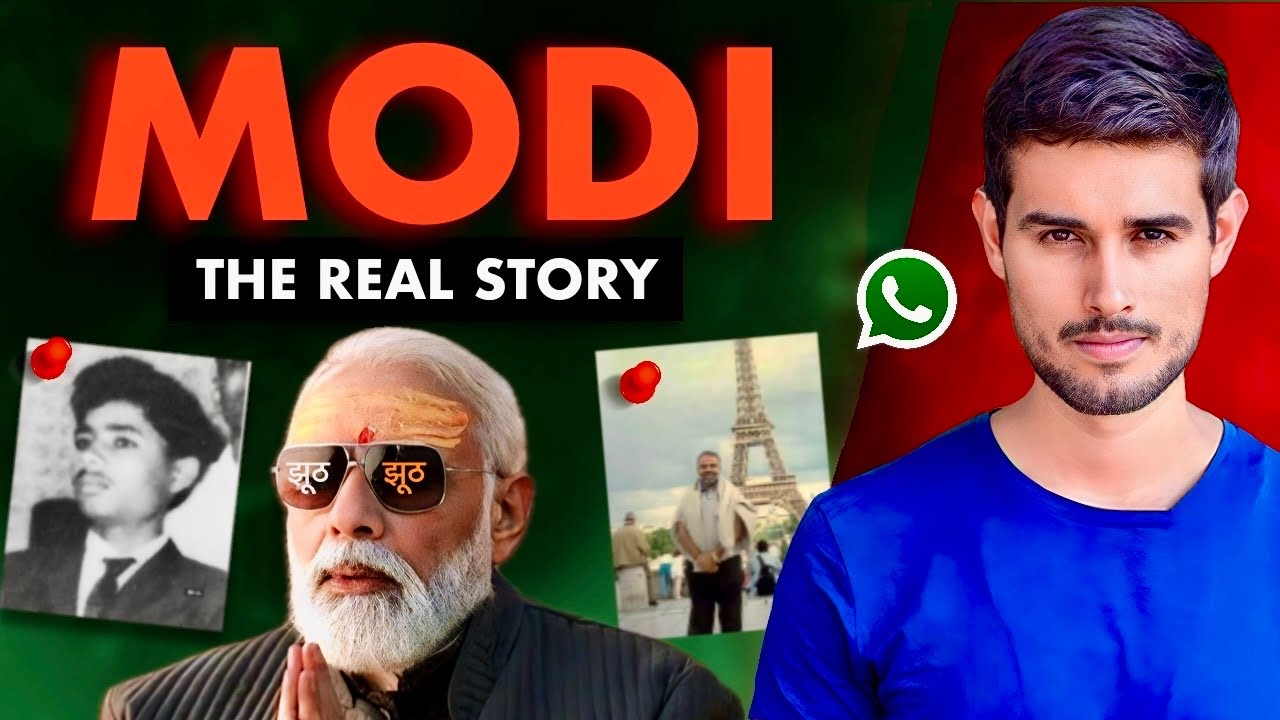
This video analyses Narendra Modi's carefully constructed public image, arguing that it's a cult of personality built on emotional manipulation. It examines the claims of Modi's humble beginnings, his detachment from family, and his ascetic persona, presenting evidence that contradicts these narratives. The video also touches on the comparison of Modi to divine figures and the projection of political opponents as incompetent.
- Modi's claims of poverty are exaggerated to connect with the masses.
- The narrative of abandoning family for the nation is a constructed achievement.
- The image of a holy beggar clashes with displays of wealth and extravagance.
- The comparison to divine figures distorts religious values for political gain.
Introduction
The video introduces the concept of a "brainwashing mafia" operating in four departments: instilling pride, promoting victimisation, creating fear, and presenting Narendra Modi as a messiah. It focuses on the fourth department, the creation of Narendra Modi's cult of personality, and how people are emotionally manipulated into believing he is a God despite his failures.
The Myth of the Tea Seller
The video questions the accuracy of Narendra Modi's narrative of selling tea in his childhood, a story popularised in a 2013 biography. Despite Modi's claims of coming from an extremely poor family and selling tea at a railway station, childhood photos show him wearing suits, and articles suggest his father ran a canteen. This exaggeration is used to sell an idea to the Indian public, contrasting with the reality that good leadership isn't determined by one's economic background.
Dictators and Humble Beginnings
The video draws parallels between Modi's narrative and those of dictators like Benito Mussolini and Joseph Stalin, who also came from humble backgrounds. It argues that a poor background doesn't guarantee working for the welfare of the poor, citing H's regime as an example where crony capitalists profited while the common people suffered. The video contrasts this with Rahul Gandhi's promises to uplift the poor, which Modi mocks, and highlights the income inequality that has worsened under Modi's leadership.
Hiding Poverty and the "Poor Family" Branding
The video points out the hypocrisy of Modi's "poor family" branding by highlighting instances where poverty was hidden during events like the Namaste Trump event in Gujarat and the G20 summit in Delhi. This involved building walls and green screens to conceal slums, dehumanising the poor. The video suggests that Modi's "poor family" narrative is losing its appeal.
The Abandoned Family Narrative
The video critiques the narrative that Narendra Modi abandoned his family for the nation, questioning why this is portrayed as an achievement. It contrasts this with figures like Lal Bahadur Shastri and Savitribai Phule, who contributed to the nation without abandoning their families. The video also references the story of Buddha, who, upon enlightenment, sought to thank his wife Yashodhara. It contrasts this with Modi's attendance at celebrity weddings and events for oligarchs, while seemingly distancing himself from his own family.
Modi's Family and G20
The video highlights the absence of Modi's family at his nephew's engagement and the limited presence of family members in photos with his mother. It cites reports that Modi instructs family members to stay away, questioning the G20 theme of "One Earth One Family" in light of this. The video argues that portraying the abandonment of family as an achievement has negatively influenced some Hindu youngsters, leading them to disregard their own families.
The Myth of the Holy Beggar
The video challenges Modi's image as a "holy beggar" who lived on charity for decades. It questions how someone living on charity could afford foreign tours in the 1990s and own a digital camera before they were widely available. The video contrasts Modi's extravagant lifestyle, including wearing expensive sunglasses and travelling in a ₹120 million Mercedes, with the simplicity of former Prime Minister Lal Bahadur Shastri. It also highlights Modi's frequent outfit changes and collection of headwear, questioning the authenticity of his ascetic image.
Deification and Distortion of Religion
The video discusses the trend of politicians comparing Modi to God and the construction of temples in his name. It draws parallels with Adolf H, who was also compared to Jesus, and the subsequent distortion of religious texts to align with H's hateful agenda. The video argues that BJP is similarly distorting Hinduism, particularly the image of Lord Ram, to promote their own agenda of hate. This includes the spread of false quotes and the creation of iconography depicting angry versions of Hindu deities.
The "Pappu" Narrative and Modi's Inaccessibility
The video examines the strategy of portraying Rahul Gandhi as an incompetent fool ("Pappu") to elevate Modi's image. It contrasts this with the fact that Modi has avoided press conferences and unscripted interviews, while Gandhi has engaged in public debates and lectures. The video also points out instances of Modi making gaffes and questionable statements, suggesting that he is not as intellectually superior as his supporters claim.
The Debate Challenge and Ubiquitous Presence
The video highlights the invitation from former Supreme Court judges for a one-on-one debate between Rahul Gandhi and Narendra Modi, which Gandhi accepted but Modi has remained silent on. It argues that this debate would provide an opportunity to assess their intellectual capabilities and leadership qualities. The video also criticises the pervasive presence of Modi's face in media and advertising, funded by government funds, and the use of pro-government news anchors to promote him.
The End of "Modi Magic"?
The video suggests that people are becoming fed up with seeing Modi's face everywhere and are questioning his ability to solve problems. It points to the record number of Indians giving up their citizenship and the BJP's need to recruit politicians from other parties accused of corruption as evidence of the decline of "Modi Magic". The video concludes by thanking viewers for their efforts to combat lies and hate and encouraging them to vote against it.

