
Brief Summary
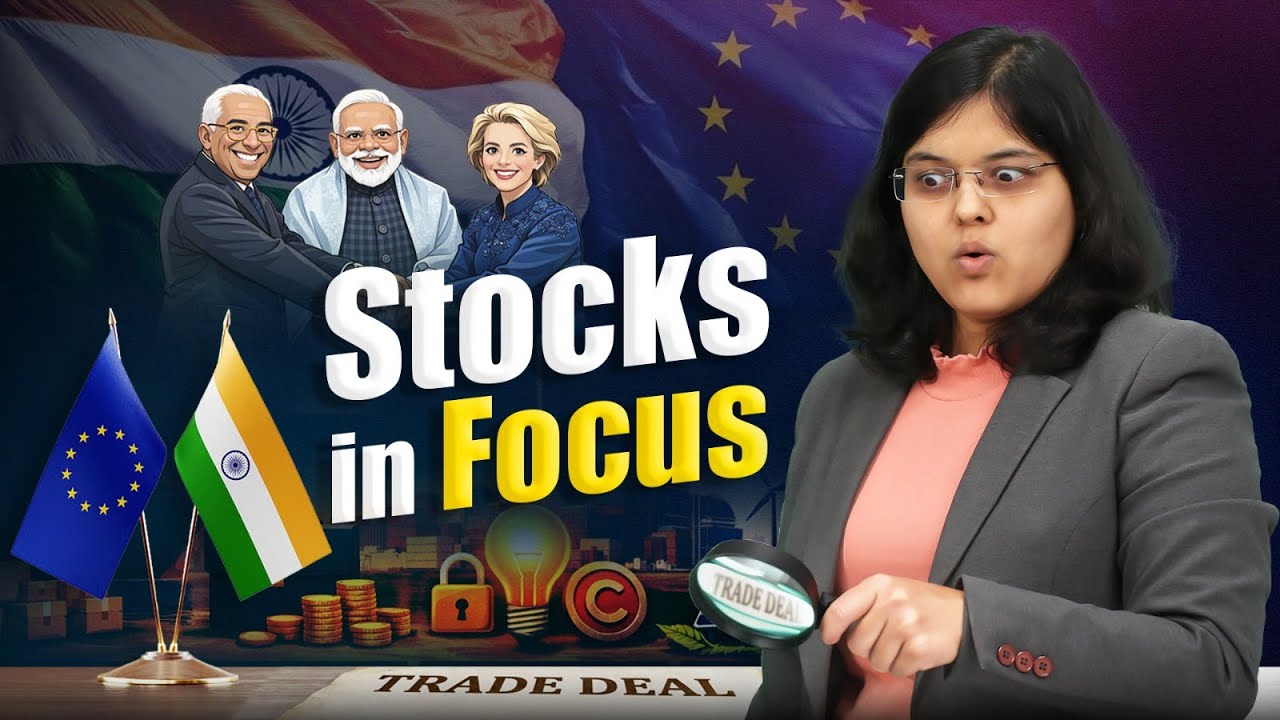
This video provides a detailed overview of the India-EU trade deal, signed on 27th January 2026, after 18-20 years of negotiations. It explains the key aspects of the deal, including tariff reductions, timelines, benefits for India, and potential impact on various sectors and stocks. The deal aims to eliminate or reduce tariffs on a significant percentage of goods traded between India and the EU, boosting trade, creating job opportunities, and enhancing economic growth.
- The trade deal will eliminate tariffs or give preferential access by way of reduction of tariffs on 99.5% of trade value.
- The deal is expected to be fully implemented by 2027, with phased tariff reductions over the following years.
- Key sectors that could benefit include leather and footwear, textiles, chemicals, gems and jewellery, engineering goods, marine products, plastics and rubber, agriculture and IT.
Understanding the EU-India Trade Deal
The India-EU trade deal, referred to as the "mother of all trade deals" due to its size, was signed on 27th January 2026, after many years of negotiations. A key trigger for finalising the deal was the increased global uncertainty, particularly after the USA threatened to impose tariffs on the EU. The EU sought to diversify its trading partners, and India emerged as a reliable choice. The deal covers 25% of the global GDP and one-third of global trade. For goods exported from India to the EU, the deal will eliminate tariffs or provide preferential access through tariff reductions on 99.5% of the trade value. Specifically, 90.7% of Indian exports will face 0% tariffs immediately, with an additional 3% going to 0% over the next 3-5 years, and another 6% receiving preferential access via reduced tariffs. For the EU, India will cut or eliminate taxes on 97.5% of imports by value, primarily through phased reductions. The total goods trade between India and the EU is approximately $135-$140 billion annually, with services trade exceeding $80 billion. By 2024-25, India had a trade surplus of $15.2 billion with the EU, with exports worth $75.9 billion and imports at $60.7 billion.
Timeline of the Deal
Despite the negotiations concluding on 27th January, the implementation of the trade deal will not be immediate. The next phase involves legal scrubbing, where legal experts from both sides verify the entire trade deal to ensure there are no ambiguities or linguistic loopholes. Given the complexity of the agreement, which includes over 20 chapters, this process is expected to take time. A final signature is anticipated in the second half of 2026. Following this, the agreement will be translated into the various official languages of the EU member countries, ratified, and then come into force. The complete process is ideally expected to be fully in effect by 2027. From 2027 to 2032 (or even 2035/37), tariff reductions will occur in a phased manner over the next 3 to 5 years, or even up to 7 to 10 years. For example, the import duty on completely built-up luxury cars, currently at 110%, is expected to drop to 35-40% immediately (by 2027-2035) and further down to 10% by 2032.
How Would this Deal Benefit India
The trade deal is expected to significantly benefit India by providing access to a market with over 450 million high-income European consumers. This access will enable India to sell products at competitive rates, increasing forex earnings and building forex reserves. Five key benefits include: duty-free exports, which will make Indian products more competitive by reducing or eliminating tariffs; more job opportunities, as increased competitiveness leads to more orders and production; reduction in input costs, through lower tariffs on advanced machinery and medical equipment imports, improving productivity and quality; a boost in FDI confidence, driven by improved employment, forex, and advanced technologies; and diversification of trade risk, reducing reliance on specific markets. The deal gives importance to labour-intensive sectors to increase employment rates.
Stocks and Sectors to Benefit from this Deal
Several sectors are poised to benefit significantly from the India-EU trade deal. The analysis includes the size of the EU import market, India's current share, existing tariffs, and tariffs post-deal. Sectors include:
- Leather and Footwear: EU imports $100 billion, India's share is $2.4 billion, current tariff is 17%, post-deal tariff is 0%.
- Textiles and Apparel: EU imports $263.5 billion, India's share is $7.2 billion, current tariff is 12%, post-deal tariff is 0%.
- Chemicals: EU imports $500 billion, current tariff is 12.8%, going down to 0% on 97.5% of goods by value.
- Gems and Jewellery: EU imports $79.2 billion, India's share is $2.7 billion, current tariff is 4%, post-deal tariff is 0%.
- Engineering Goods: EU imports $2,000 billion, India's share is $16.6 billion, current tariff is 2-12%, post-deal tariff is 0%.
- Marine: EU imports $53.6 billion, India's share is $1 billion, current tariffs is 26%, post-deal tariff is 0%.
- Plastics and Rubber: EU imports $317 billion, India's share is $2.4 billion, current tariff is 4-26%, post-deal tariff is 0%.
- Medical Instruments: Current tariff is 6.7%, post-deal tariff will be 0% on 99.1% of the trade lines.
The agricultural sector will gain preferential access to the EU market for products like tea, coffee, spices, fruits, vegetables, and processed foods, potentially improving farmers' incomes. Sensitive sectors will remain protected, allowing for balanced growth. The IT sector, which derives 16% of its revenue from the EU, will benefit from reduced compliance barriers and improved access and mobility for Indian IT professionals, addressing previous visa processing issues.

