
Brief Summary
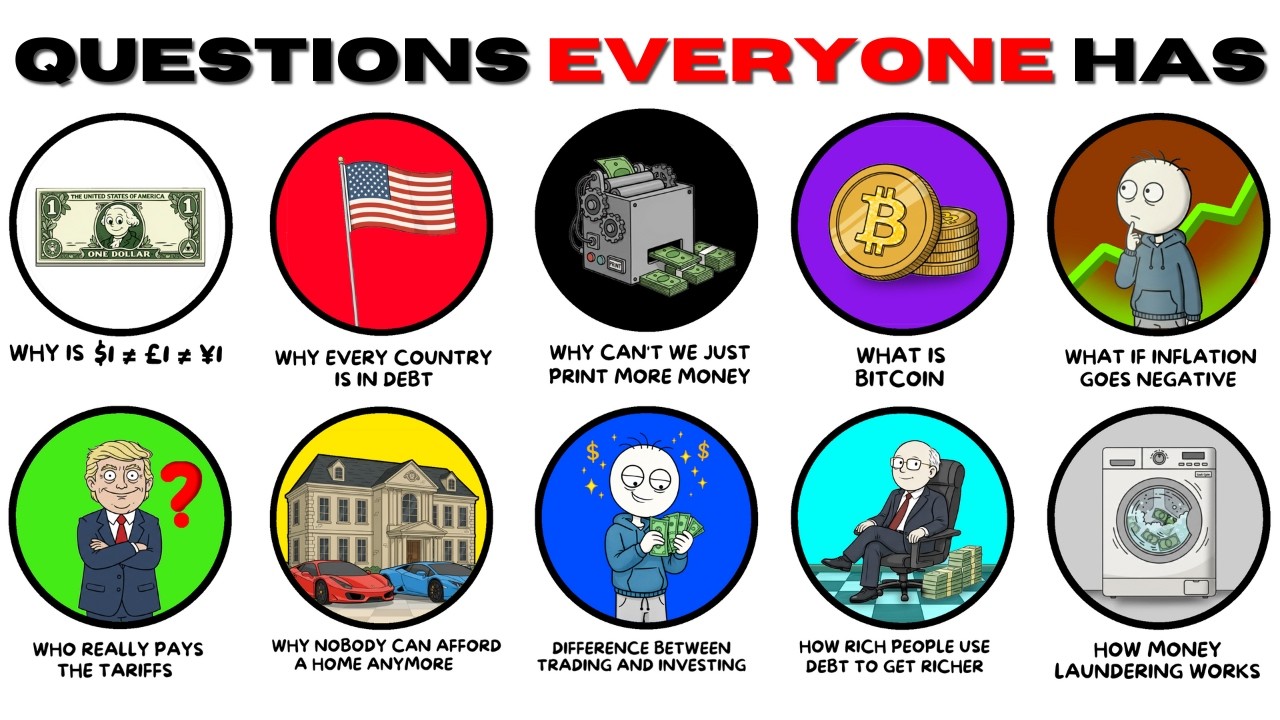
This video explains various aspects of currency and economics, exploring why different currencies have distinct values, the nature of national debts, the implications of money printing, Bitcoin's role in finance, inflation vs. deflation, tariffs, rising housing costs, differences between trading and investing, strategic debt use by the wealthy, and the mechanisms of money laundering.
- Currency values depend on trust and economic performance.
- Governments use bonds to finance their debts, and debts are often refinanced rather than fully paid off.
- Simply printing more money leads to inflation without generating real value.
- Bitcoin operates on a decentralised system and has both benefits and challenges in usage.
- Negative inflation can cause economic freezes and increased debt burdens.
- Tariffs on imports ultimately lead to increased costs for consumers.
- Real estate prices have skyrocketed while wages have stagnated, making housing affordability a significant issue.
- Trading involves short-term profits while investing focuses on long-term growth.
- The rich leverage debt to grow wealth and avoid taxes, unlike average individuals.
- Money laundering involves making illegal funds appear legitimate through a series of processes.
Why is $1 ≠ £1 ≠ ¥1
The value of currencies such as the dollar, pound, and yen varies based on the strengths of the economies behind them, rather than arbitrary assignments. Economic growth, the ability to produce goods, and investor confidence all drive currency demand and value. Exchange rates fluctuate due to market dynamics, trade balances, and the relative economic performance of countries, meaning that the same amount in different currencies does not equate to the same purchasing power.
Why Every Country Is in Debt & Who They Owe
All major nations are in substantial debt, which is essentially money owed to various lenders such as foreign governments, banks, and domestic citizens holding bonds. Governments finance their needs through bonds, promising to pay back a greater sum over time. This leads to a cycle of refinancing where debt is continually rolled over. It is only when trust in a country’s ability to manage its debt falters that problems emerge; until then, nations benefit from lower interest rates on debt.
Why Can't We Just Print More Money
Government printing of money can create short-term relief but leads to inflation without real economic growth. An example illustrates how injecting more cash into an economy, while the number of goods remains unchanged, raises prices rather than increasing purchasing power. Historical examples, such as hyperinflation in Germany, show the dangers of printing money without backing it with real economic value, demonstrating that currency must represent resources and productivity.
What Is Bitcoin?
Bitcoin is a form of digital currency that operates independently from any government or central authority, using blockchain technology to record transactions in a public ledger. Transactions are verified by a network of computers through complex calculations, ensuring anonymity. Bitcoin's limited supply of 21 million coins introduces scarcity, likening it to "digital gold." Despite its potential, Bitcoin faces challenges such as slow transaction speeds and price volatility, making its future role in finance uncertain.
What If Inflation Goes Negative
Negative inflation, or deflation, can freeze economic activity as consumers delay purchases in anticipation of lower prices. This can lead to a detrimental cycle where diminished spending reduces business revenue, prompting layoffs and further decreased demand. Economic paralysis from deflation burdens existing debts since revenues decline while obligations remain constant. Examples like Japan in the 1990s illustrate how prolonged deflation can hinder economic growth.
Who Really Pays the Tariffs
When tariffs are imposed, the cost is ultimately borne by consumers rather than the exporting country. Importers must pay the tariff as part of their costs, often leading to price increases for the final goods. While this practice can protect domestic industries by making foreign goods more expensive, it results in overall higher prices for consumers, illustrating how tariffs function as indirect taxes on purchases.
Why Nobody Can Afford a Home Anymore
The affordability of housing has dramatically declined, with the average home price rising significantly compared to stagnant wages, effectively pricing many people out of the market. Regulatory barriers, investor speculation, and a rising cost of borrowing have compounded the issue. With middle-class salaries no longer sufficient to meet housing costs, homes have transitioned from basic shelters to financial assets, further disadvantaging those needing affordable housing.
Difference Between Trading and Investing
Trading involves buying and selling stocks swiftly to profit from short-term price movements, while investing focuses on a long-term approach by purchasing assets believed to grow in value. Traders react to market volatility, often making rapid decisions, whereas investors endure market fluctuations, seeking to benefit from sustained growth. These different strategies demand distinct mindsets and approaches to financial markets.
How Rich People Use Debt to Get Richer
Wealthy individuals strategically use debt as a tool for increasing their wealth rather than viewing it as a burden. They often borrow against their assets to avoid capital gains taxes and finance investments. This allows them to maintain ownership of their assets while accessing capital at lower interest rates. The disparity in loan access for the wealth versus the average individual highlights systemic advantages in wealth accumulation through debt.
How Money Laundering Works
Money laundering is a method used by criminals to disguise illegally obtained funds as legitimate income. The process consists of three stages: placement (introducing "dirty" cash into the financial system), layering (conducting transactions that obscure the money’s origin), and integration (investing in legitimate businesses to mix illicit money with genuine revenue). This complex manipulation allows criminal proceeds to be used without drawing attention from authorities.

