
Brief Summary
This YouTube video transcript covers a discussion on the topic of political cartels and their impact on democracy in Indonesia. The discussion features multiple speakers, including academics and political figures, who share their perspectives on the concept of political cartels, their relevance in the Indonesian context, and their implications for the country's democratic processes.
- The nature of political cartels and their impact on democracy in Indonesia.
- The structural and cultural factors that contribute to the formation and persistence of political cartels.
- The role of political parties, elite networks, and economic oligarchies in shaping political outcomes.
- Potential solutions and strategies for mitigating the negative effects of political cartels and promoting a more inclusive and accountable democracy.
Introduction by Master of Ceremony
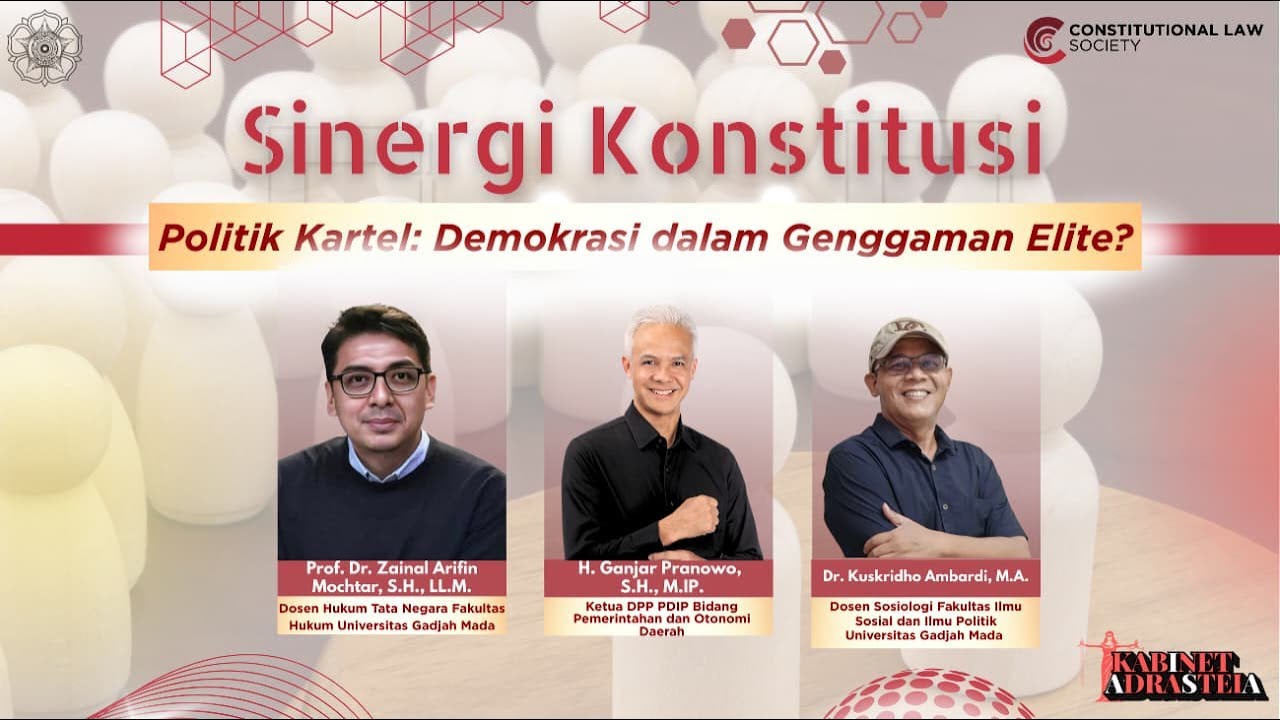
The master of ceremony, Anik Salsabila, opens the discussion on synergy of the constitution 2025, expressing gratitude and outlining the event's agenda, which includes speeches, material presentations, discussions, Q&A, and closing remarks. The theme is "Political Cartels: Democracy in the Grasp of the Elite".
Singing of the Indonesian National Anthem
The Indonesian national anthem, "Indonesia Raya," is performed, with the audience standing.
Welcome Speech by the President of the Constitutional Law Society
Fahrul Haholongan Pulungan, President of the Constitutional Law Society, welcomes attendees to the Sinergi Konstitusi 2025 event. He highlights the growing trend of elitist and closed power relations in Indonesian politics, exemplified by political cartels where major parties prioritise coalition over competition. He questions whether sovereignty remains with the people or has shifted to a select few, expressing hope that the discussion will clarify the dynamics of political cartel practices and safeguard democracy from becoming elitist.
Discussion Session with the Speakers
Ahmad Izuha Hadaan moderates a discussion with Dr. Kuskrido Ambardi, Prof. Dr. Zainal Arifin Mukhtar, and Ganjar Pranowo. The speakers are introduced, and the discussion begins with an explanation of the concept of political cartels by Dr. Ambardi, who wrote a dissertation on the subject.
Concept of Political Cartels
Dr. Kuskrido Ambardi explains that his 2010 book, "Mengungkap Politik Kartel," argued that after elections, political power shifts to the elite, who then determine the political process. He suggests that political parties, initially in competition, become a self-referential group serving their own interests, which is antithetical to democracy. He notes that his thesis aligns with that of oligarchy, where a group of elites controls the political process and policy-making post-election. However, he distinguishes cartels by emphasising the autonomy of political parties, unlike oligarchies where parties are seen as secondary. He illustrates how parties, initially opposing government decisions, later unite in support after behind-the-scenes lobbying.
Structural Factors and Party Independence
Dr. Ambardi discusses the structural factors that lead to cartelisation, particularly the financing of political parties. He notes that parties need significant funds to meet legal requirements for establishing offices and maintaining operations across provinces. However, government aid covers only a small fraction of these costs, forcing parties to seek funds from contributors and other sources, sometimes leading to corruption. He argues that the need for financial survival drives parties towards cartelisation, where they engage in rent-seeking behaviour through projects allocated among themselves.
Democracy and Political Cartels
Prof. Dr. Zainal Arifin Mukhtar discusses the relationship between democracy and political cartels, noting that parties were initially weaker than the state in Indonesia's early history. He highlights the role of the military and the control exerted over political parties during the New Order era. He argues that political parties became more powerful after 1999 but faced increasing pressure post-2014, with criminalisation used to control them. He identifies factors facilitating cartelisation, including party financing issues, the state's desire to simplify parties through electoral thresholds, and the tendency of presidents to co-opt parties into large coalitions. He also points out that the oligarchs backing different political figures often have similar interests, particularly in extractive industries.
Kartelisasi After 2014
Dr. Mukhtar suggests that cartelisation has strengthened since 2014, orchestrated by the president through the distribution of ministerial positions. He criticises the removal of limitations on the number of ministers, leading to Indonesia having the largest cabinet in the world. He argues that this is part of a political quid pro quo to reward parties for supporting President Prabowo. He also notes that the same oligarchs back Prabowo, linking this to issues such as Patriot Bonds and the involvement of certain entities in entertaining the interests of specific parties.
Relevance of Political Cartel Thesis
Dr. Ambardi argues that his political cartel thesis remains relevant, providing new illustrations of its contemporary manifestations. He points to the increased number of ministers in the current administration as evidence of competition being about management rather than collective societal interests. He also critiques the establishment of the Indonesia Investment Authority (INA), or Danantara, questioning its purpose and the lack of transparency in its allocation of funds. Additionally, he highlights the control of numerous fuel distribution permits by a member of a regional parliament as a means of generating rent.
Koalisi and Political Cartels
Ganjar Pranowo discusses the nature of coalitions and political cartels, emphasising the importance of participation and struggle for a just democracy. He notes that political parties are essential for democracy, and individuals should join them to uphold values and combat corruption. He shares personal experiences and anecdotes to illustrate the challenges and realities of political involvement, urging the audience to engage in the political process and fight for a better democracy.
Political Cost and Ideology
Ganjar Pranowo addresses concerns about the high political costs and the challenges faced by young people in entering politics. He shares his own experiences of entering politics without significant financial resources, emphasising the importance of intellectual and social capital. He encourages young people to get involved in political parties and bring new ideas and perspectives. He also discusses the need for political education and talent scouting to identify and promote young leaders.
Questions and Answers
The session is opened for questions from the audience. Topics include the role of celebrities in politics, the relevance of democracy, and how to attract young people to political parties.
Democracy and Relevance
Prof. Dr. Zainal Arifin Mukhtar responds to a question about the relevance of democracy, noting that democracy has faced challenges and criticisms, particularly regarding its ability to ensure prosperity. He argues that democracy is still relevant as it ensures involvement in policy-making. However, he notes that democracy requires prerequisites such as effective check and balances, fair elections, and a strong civil society, which are often lacking.
Democracy and Social Policy
Dr. Kuskrido Ambardi adds to the discussion on democracy, noting that while support for strongman leadership has increased, most still value democracy. He highlights research showing that democracies tend to have better social policies. He also notes that social policies in Indonesia have improved since the reform era.
Celebrities in Politics
Dr. Ambardi notes that some celebrities in politics are effective, while others are not. He suggests that it depends on their knowledge, skills, and commitment to public service.
Attracting Young People to Politics
Ganjar Pranowo discusses the importance of attracting young people to politics, noting that they represent a significant portion of the electorate. He shares examples of how he has engaged with young people and incorporated their concerns into his political work. He also emphasises the importance of representation and creating opportunities for young people to participate in the political process.
Tanggapan
Lintang, a student, reflects on the discussion, noting a shift in his perception of politics from being merely expensive to potentially sacred. He questions whether achieving something sacred requires expensive means and when democracy will be in the hands of the people rather than the elite.
Responses to Tanggapan
Dr. Ambardi argues against viewing politics as sacred, suggesting that it should be seen as a normal human endeavour with ambitions and competitions. He notes that strong ethics are needed to guide political actions. He also suggests that cartels are not inherently negative but become so in contexts lacking transparency and accountability.
Democracy as a Profane System
Dr. Mukhtar argues that democracy is a profane rather than a sacred system, dealing with horizontal relationships among people. He emphasises the importance of everyone's involvement in the democratic process.
Closing Remarks
Ganjar Pranowo emphasises the importance of young people's involvement in politics and encourages them to participate and shape the future.
Presentation of Certificates and Souvenirs
Certificates and souvenirs are presented to the speakers and moderator.
Group Photo
The event concludes with a group photo of the speakers, moderator, and participants.

