
Brief Summary
This video explores the growing issue of desertification in Africa and the efforts to combat it in Morocco and Sagal. It highlights the historical context of the Sahara Desert, the impact of climate change on Lake Chad and the oases of Southern Morocco, and the innovative techniques being used to reclaim land and support local communities. The video emphasises the importance of collective action and sustainable practices to prevent further desertification and its devastating consequences.
- Desertification is swallowing fertile land, particularly in Africa, with the Sahara advancing southwards.
- Morocco and Sagal are leading efforts to combat desertification through initiatives like the Great Green Wall.
- Traditional water management systems and sustainable agriculture are crucial for preserving oases and supporting local communities.
The Advancing Desert
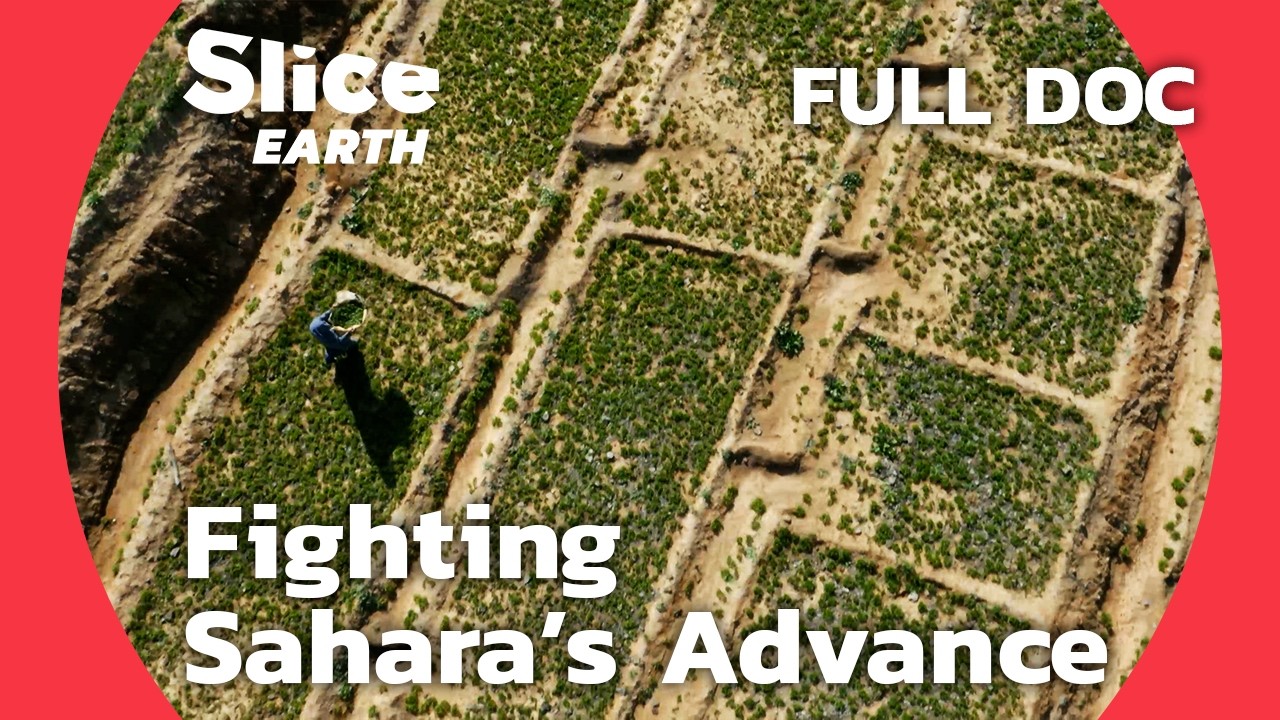
Fertile land is disappearing worldwide, with Africa bearing the brunt as the Sahara Desert expands southward by 250 km over a 6,000 km front in the last century. This has rendered land sterile, forcing populations to flee. In Morocco and Sagal, a determined effort is underway to combat desertification by creating an ecological barrier to protect the Mediterranean region. The destruction of this ecosystem would accelerate desertification towards Europe, necessitating the reclamation of 87,500 hectares of land through the Great Green Wall project, which involves planting 1.7 to 2 million plants annually.
A Glimpse into the Green Sahara
The Sahara Desert, spanning ten countries from the Atlantic to the Red Sea, wasn't always a desert. Rock art in the Ennedi Mountains of Northern Chad reveals a past "green Sahara" during the Holocene epoch, 6 to 8,000 years ago. This savannah-like environment supported diverse animal life, contrasting sharply with today's arid landscape. Cave paintings depict daily life, including herding and fishing, indicating a long and continuous occupation of the Sahara, a stark contrast to its current deserted state.
Vanishing Waters
Cave paintings in Chad reveal the presence of fishermen and boats, indicating a much larger Lake Chad 8 to 10,000 years ago. Satellite images show the lake's significant shrinkage since the 1960s, raising concerns that it may vanish entirely within a decade or two due to climate change. Experts predict that the disappearance of Lake Chad could displace 20 million people. Similarly, in Northwest Africa, the Great Lakes that feed the oases of Southern Morocco are also drying up, exacerbated by rising temperatures and evaporation.
Unpredictable Rains
Desert rains are erratic, with long periods of drought followed by sudden, torrential downpours. While these rains can refill lakes, they often lead to dramatic events. In December 2014, Southern Morocco experienced extreme rainfall, causing rivers to burst their banks, resulting in fatalities and extensive damage. Despite the region's chronic thirst, this water was lost, creating further ravines in the already damaged landscape.
The Loss of Oases
Rainwater reservoirs and additional channels have been constructed to recover available water for the oases. However, for some oases, it is too late. Professor Lassen Cabiri revisits his childhood oasis, now in ruins due to the death of date palms from thirst. The intensive farming practices, with 200 wells pumping water, drained the groundwater, leading to the demise of the palm trees and the desert's resurgence. The loss of traditional mutual aid values and water scarcity contributed to the decline of numerous oases, breaching the barrier against the desert.
Abandonment and Decline
Mohammed Buadi, project coordinator for the Southern Oasis program, notes that drought and encroaching sand have devastated oases, leading to the death of palm trees and a decline in date production. The population has dwindled as people migrate to cities like Agader for work. The decline of Southern oases is also attributed to the abandonment of ancestral irrigation techniques, such as the qara system, which once channelled water from the Atlas Mountains.
Reviving Ancient Irrigation
Professor mmed Madan campaigns for the restoration of the qara irrigation system, a network of underground drainage channels built centuries ago. These channels, if maintained, can still irrigate land. The system was abandoned due to drought, human factors like urbanisation and intensive pumping, and sand clogging. Efforts are underway to clean and restore these channels, using rudimentary tools to remove sand and reopen aeration wells, aiming to convince farmers to maintain this sustainable system.
The Oasis Ecosystem
An oasis is an ecosystem where the date palm is central, providing shade and contributing to soil fertility. A single date palm produces over 100 tons of vegetation and 25 kilos of dates in its lifetime. Traditional oases were subsistence farming areas, but now, young people seek better opportunities. The rise in popularity of crops like capers and argan oil, along with modern irrigation, offers new economic perspectives.
New Economic Perspectives
For people to remain in the oases, a market economy must develop, with farmers creating products with added value to earn money. Organic henna cultivation, using drip feed systems, is becoming popular, balancing profitability with water usage. Coastal oases are also developing barbery fig farming, capitalising on the plant's ability to capture humidity from the air.
The Power of the Cactus
In the desert, where rainfall is scarce, a forest of greenery thrives due to the cactus's ability to capture humidity from the air. This once unloved plant is now recognised for its potential as animal fodder, human nutrition, and its mineral content. The plantations are expanding, turning previously sterile hills green. The cactus provides shade, allowing other plants to grow and creating a whole ecosystem where there was nothing before.
The March of the Sand
Sand carried by wind from the coast creates dunes that advance towards the desert. In Southern Morocco, the coastal town of T fire faces powerful winds that form giant dunes, some moving up to 30 metres a year. The migration of sand is so intense that it often submerges the coastal road, requiring constant clearing. Further inland, the town of Mamed is struggling to survive as sandstorms bury houses, forcing residents to move repeatedly.
Fighting Back the Sand
Palm squares, fences of Palms planted in a square, are used to reduce wind speed and stop sand from reaching protected areas. However, these squares only last for about 10 years. Planting Tamaris trees in ceramic pots is another method to create a green belt. Architect Carlos Perez Mata is exploring alternative solutions, such as rounded barricades that adapt to the shape of the dunes, potentially incorporating apartments within these structures.
Innovative Solutions
The idea is to build in a way inspired by old buildings by using Earth and benefit from the shade of the palm trees. Architect Magnus l proposes using bacteria to solidify sand grains for architectural purposes. In TAA, local authorities have launched a program to combat sand encroachment, planting plants that adapt well to the climate.
The Great Green Wall
The pan-african Great Green Wall project, launched in 2005, aims to reforest a 15 km wide band across the Sahel region. Sagal has been the most committed to this project. The sahal zone is an intensive grazing territory, and the bare soil has no protection. Rainwater reservoirs have been built to recover rainwater, but there are far from enough of these. The rainy season is the only time the Great Green Wall can be extended, with plants needing to be planted when it's wet.
Challenges and Progress
Young trees are vulnerable to grazing animals, requiring barb wire protection. Herders are becoming more sedentary, living around the planted areas and watching over the land. The area, once arid and deforested, is showing encouraging signs of regrowth. The project aims to plant in groves, using various acaia species chosen for their drought resistance and local use.
Enhancing Resilience
While herders have generally respected the enclosures, some starving cattle have breached the fences. Traditional burn-offs are forbidden, and fire breaks are created. Migrating birds are returning, indicating a reborn ecosystem. Scientists are working to improve the resistance of young plants by introducing a mushroom partner that helps them resist adverse conditions. Preliminary tests show that this symbiosis multiplies the survival rate of young trees by four.
Community Involvement
Forest rangers work with local herders to recruit labour and gather information. Despite funding problems that have delayed wage payments, the herders have become more sedentary. The Great Green Wall aims to fight poverty and diversify Revenue sources, with the creation of gardens for women to grow crops. The project has also led to the reopening of schools as people settle down.
A Holistic Approach
The Great Green Wall is not just an ecological project but also addresses health and sanitation. An Observatory monitors changes, anticipates problems, and measures the efficiency of health initiatives. Sagal is exemplary in linking the tree-planting agency with scientists who monitor the modifications. The sahal is a war zone, and starting from Sagal, there is hope to convince others to build this Great Green Wall.
The Fight for Survival
The fight is to ensure that desertification doesn't come to the lands of the S. The Oasis program in Morocco and the Great Green Wall of Sagal demonstrate that the retreat of fertile land can be stopped. This fight is everyone's business, as failure could lead to millions of climate refugees seeking entry into Europe.

