
Brief Summary
This video discusses the controversial plans for a third runway at Heathrow Airport, its historical significance, and its impact on local communities. It highlights the intense debate surrounding airport expansion, the experiences of residents facing displacement, and the environmental implications of increased airport capacity.
- The UK government supports expanding Heathrow with a third runway aimed at boosting connectivity and jobs.
- Residents of nearby villages have spent years in uncertainty about losing their homes.
- Historical context illustrates how Heathrow evolved from a small airfield to a major global hub.
- Economic projections suggest the expansion could significantly increase GDP, but at a high financial and environmental cost.
Heathrow's Controversial Plan
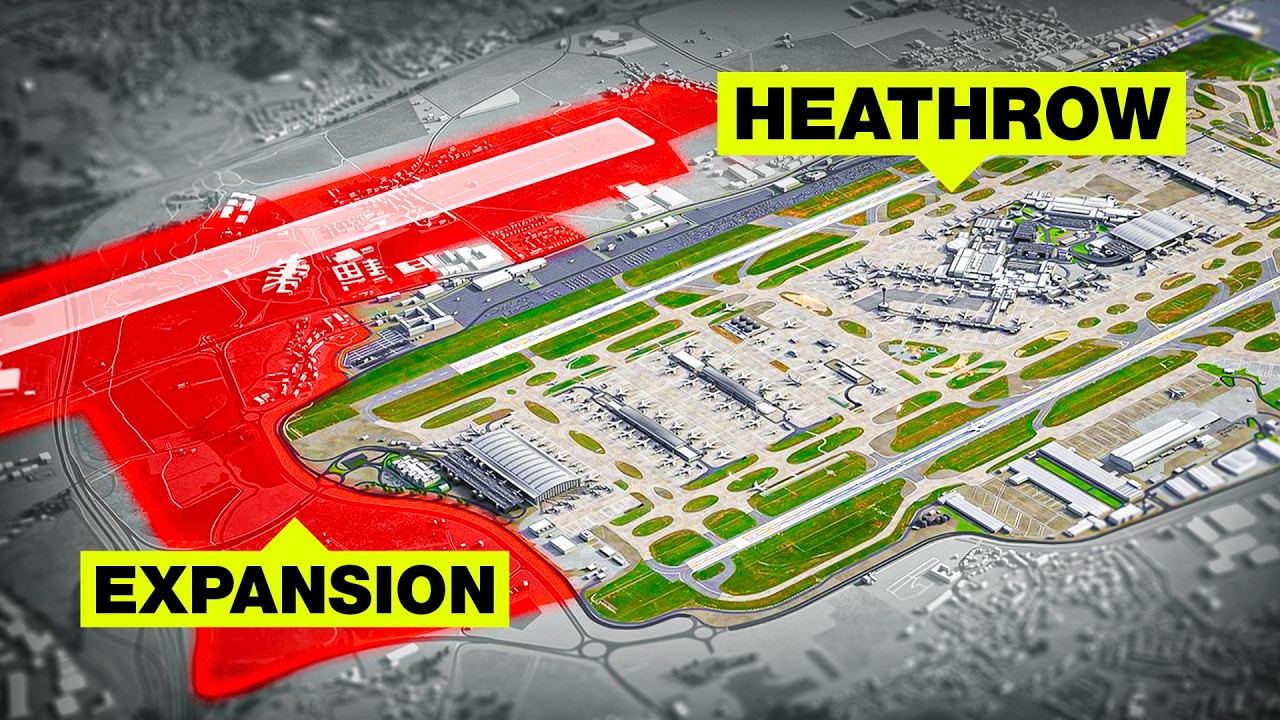
Heathrow Airport is currently operating at full capacity and plans to build a third runway that could erase nearby villages. This has ignited a prolonged debate, with residents expressing strong opposition to their homes being demolished. The UK government backs this plan, aiming for completion by 2035, despite ongoing controversy and community resistance. A sense of limbo plagues the residents, as they wish to move but face an uncertain future tied to the airport’s expansion plans.
The History of Heathrow
Heathrow's history began in 1930 when a small airfield was established, but it dramatically changed during the Second World War when it was developed into an RAF base. Shortly after the war, it reopened as London’s public airport, which has since expanded rapidly to accommodate the increasing demand for air travel. The airport has grown from handling 60,000 passengers in its first year to over 80 million annually, evolving into a hub for international travel.
Heathrow's Major Problem
Today, Heathrow’s two runways limit its operations, which the airport claims have reached a 98% capacity. A third runway would enhance operations by accommodating an additional 260,000 flights per year. However, the airport's location is a significant issue, as it flies over densely populated areas in London, raising concerns about noise pollution and safety. Unlike other major airports situated outside city centres, Heathrow’s location poses unique challenges to its expansion.
Living Next to Heathrow
Life for residents living near Heathrow is characterized by constant noise from aircraft, which has detrimental effects on their health due to increased stress and sleep disruption. The noise pollution, coupled with uncertainty about future plans, leaves many feeling trapped. Some residents have expressed a willingness to take measures against the expansion, underscoring the deep emotional impact this issue has on their lives.
The Village That Heathrow Will Destroy
Residents of Harmonsworth, facing potential demolition, stress the destruction of their community and homes. The uncertainty caused by the expansion plan has led to disinvestment in the area, resulting in abandoned properties and declining conditions. Many feel that their homes and history will be lost if the project proceeds, with emotions running high as they navigate the implications of this potential loss.
A Village in Limbo
In Harmonsworth, community members have lived for years under the threat of compulsory purchase orders for their homes. Families cannot sell their properties due to the impending plans, leaving them in a state of uncertainty. Residents express frustration over the lack of clarity and the impact on their normal lives, concentrating on their desire to move closer to family and live without the looming threat of demolition.
Why They Can't Leave
Residents share their struggles to sell their houses as the expansion plans loom. Banks are hesitant to provide mortgages for homes within the demolition zone, further complicating residents' ability to relocate. This has left them in a cycle of waiting, unsure if and when their homes will be bought by the airport or if they will have to remain indefinitely in a declining community.
The History of Heathrow's Third Runway
The proposal for a third runway can be traced back to various government administrations, with promises made and broken over the years. Recent support for the expansion seems resolute, but significant obstacles remain, including legal battles and public consultations. Experts suggest that actual construction may take far longer than planned, with no definitive timeline for when it will commence.
How Much Will It Cost?
Initial estimates for the cost of constructing a third runway were set at £14 billion in 2014, but current projections range between £42 billion and £63 billion. This escalating cost raises questions about funding, as Heathrow is owned by a mix of foreign investors. If the expansion goes forward, it could have substantial economic implications, generating a notable increase in the UK's GDP in the years to come.
The Climate Argument
The potential environmental impact of a third runway is a significant concern, given that Heathrow currently contributes approximately 10% of the UK’s total emissions. There are debates around balancing expansion with achieving net zero carbon emissions. While the government and airport authorities assert they can manage this challenge, there are apprehensions about the adequacy of measures to mitigate the increased emissions.
Will There be a Third Runway?
The future of Heathrow's third runway remains uncertain, but many residents believe that its construction is inevitable. Ongoing discussions include issues of obtaining necessary permissions, public consultations, and resolving complex legal matters. Meanwhile, the fate of the local communities continues to hang in the balance as they wait for resolutions on the government’s plans for their homes and neighbourhoods.

