
Brief Summary
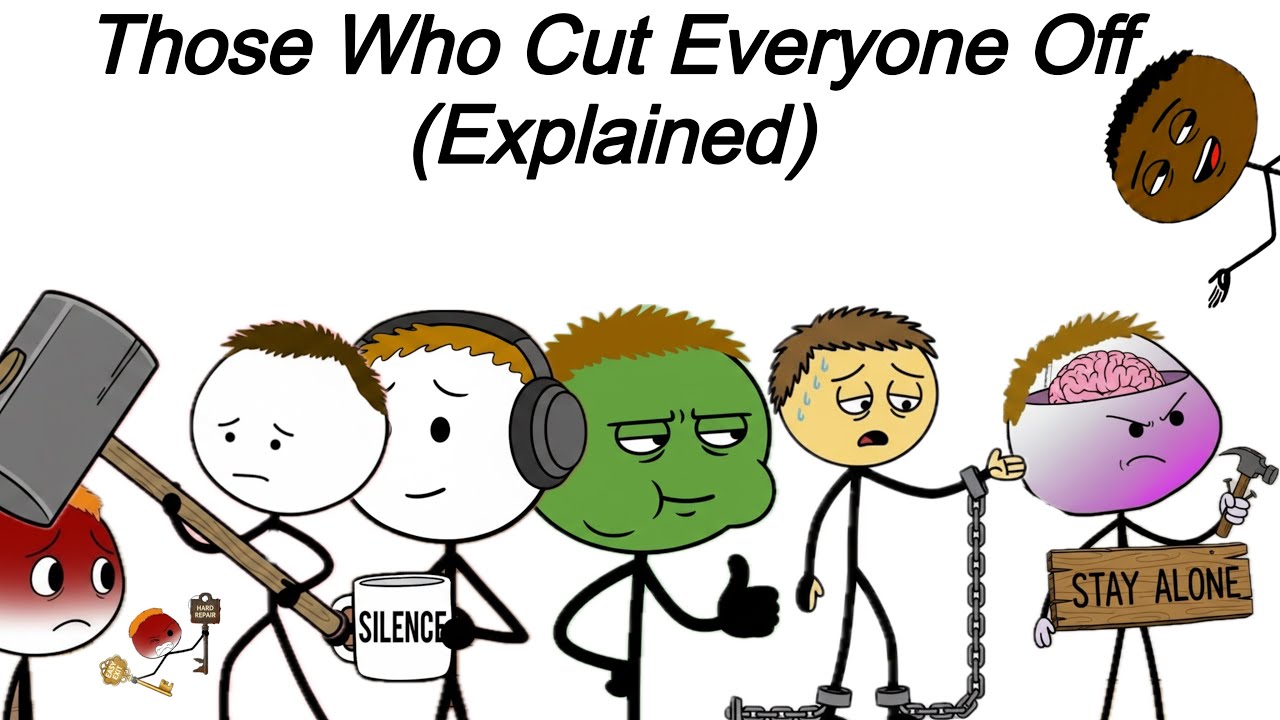
This video explores the psychology behind cutting people off, revealing it's often a defence mechanism rather than a display of strength. It discusses how this behaviour stems from emotional burnout, boundary confusion, damaged trust, and a fear of vulnerability. The video highlights the illusion of peace it provides, the emotional exhaustion it causes, and how it can become an ingrained part of one's identity, ultimately hindering genuine connection and personal growth.
- Emotional evacuation as a response to burnout.
- Boundary confusion, mistaking avoidance for strength.
- The illusion of peace through isolation.
- Trust damage leading to detachment.
- The fear of being truly known.
Emotional Evacuation
Emotional evacuation is described as a quiet decision to disengage from people after repeated disappointments, betrayals or exhausting interactions. It's a defence mechanism against emotional overload, where the brain removes entire categories of people to avoid future damage. While it feels efficient, it can be unhealthy as it removes potential support and growth, hindering the chance of finding better connections. This is likened to burning down a house because one room is messy, leaving you without shelter.
The “I’m the Problem” Flip
The narrative shifts from blaming others to questioning oneself, leading to a realisation of "What if I'm the toxic one?". This arises from the pattern of cutting people off, causing the brain to overthink and connect unrelated dots. Past interactions are replayed, leading to self-doubt and a psychological ping pong between self-protection and self-doubt. The video explains that while not everyone is toxic, you're likely not the villain either; it's often a mix of mismatched expectations and poor communication.
Boundary Confusion
People who cut others off often believe they have strong boundaries, but it's frequently avoidance disguised as strength. True boundaries involve managing relationships, communicating limits, and expressing discomfort, rather than instant removal. Cutting people off skips these steps, avoiding vulnerability and potential conflict. This creates a cycle of not practicing boundaries, feeling overwhelmed, and repeating the pattern, hindering the development of emotional strength.
The Silent Test
Individuals who frequently cut people off often have unspoken expectations, observing how others behave and react without clear communication. Failure to meet these invisible standards results in emotional exile, without warning or feedback. This ties into mind-reading bias, the belief that others should instinctively understand your needs. This leads to disappointment as people fail expectations they never knew existed, while the person cutting them off interprets it as proof they're not worth keeping around.
The Illusion of Peace
Cutting everyone off initially feels peaceful, free from drama and awkwardness. However, this peace is a result of removing all variables rather than solving the equation. True peace is the ability to exist around people without feeling drained or threatened. Eliminating everyone leads to controlled isolation, which, over time, results in loneliness and boredom. This creates a contradiction of not wanting people but also not wanting no people, leading to stagnation and emptiness.
Trust Damage
At the core of cutting people off is a lack of trust, stemming from past betrayals, disappointments, or subtle instances of being ignored or misunderstood. The brain adapts by creating a rule: don't get attached, don't rely, don't trust. This filters out everyone, not just bad people, as trust is built slowly through interactions and repairs. Leaving at the first sign of imperfection prevents this process, reinforcing the belief that people can't be trusted, creating a self-fulfilling loop.
The “High Standards” Mask
Some people justify cutting others off by claiming to have high standards, but this can be fear disguised as maturity. While having standards is healthy, disqualifying everyone indicates a filter so strict it deletes reality. Humans are messy and make mistakes, so standards that leave no room for error eliminate the possibility of connection. This allows one to stay in control, avoiding vulnerability and disappointment, but ultimately creating a game where nobody can win.
Emotional Exhaustion Loop
Cutting people off is emotionally exhausting long-term. Each new connection comes with the expectation of it failing, leading to detachment and constant low-level tension. The brain runs background processes, questioning the genuineness of others. When something goes wrong, it confirms the expectation, restarting the cycle. This makes relationships feel like something to survive rather than enjoy, eventually leading to giving up on trying altogether.
Control Over Chaos
Cutting people off provides a sense of control, which feels appealing because relationships are unpredictable. By deciding when a connection ends, the chaos disappears, and one feels in charge of the narrative. This control equals safety, preventing abandonment and deep hurt. However, it also removes depth, as the best parts of relationships require vulnerability and some level of unpredictability. Choosing control over vulnerability results in surface-level relationships or none at all.
Identity Lock-In
Cutting people off can transition from something you do to who you are. You become the person who doesn't tolerate nonsense, making it difficult to change this pattern. The brain reinforces this identity, finding reasons to cut people off to prove itself right. Interactions are filtered through this identity, making it harder to form genuine connections. Stopping the pattern feels like betraying oneself, even when meeting decent people.
The Fear of Being Known
Cutting people off is sometimes about avoiding true intimacy. Real connection means being seen, including the messy, insecure parts of oneself. This is terrifying because deeper knowledge increases the stakes, making opinions and rejections more impactful. The brain's solution is to keep things light and maintain distance. When someone gets too close, the instinct is to back away, not because they're dangerous, but because they're approaching the truth, hindering the potential for genuine connection.
It Feels Easier Than Fixing Things
Cutting people off can feel like the easier option compared to addressing underlying issues.

