
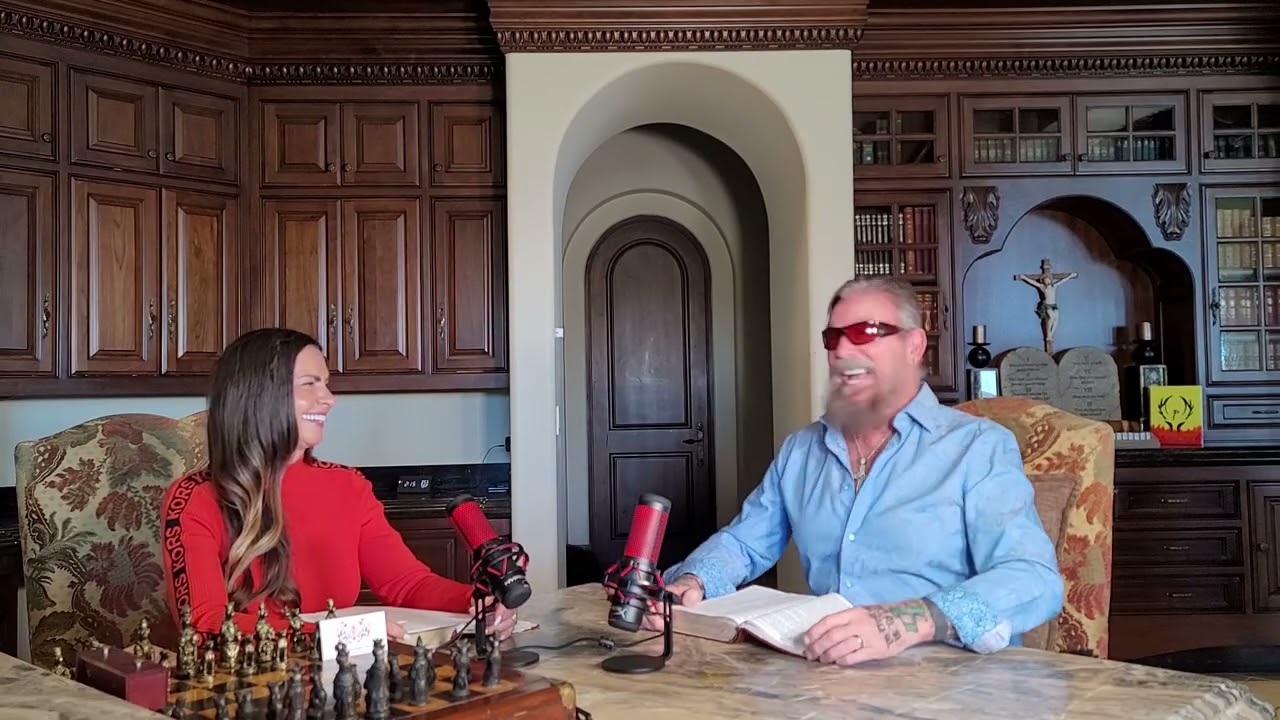
Brief Summary
This YouTube video provides an explanation of Leviticus Chapter 27, focusing on vows, tithes, and the relationship between God and the Israelites. It highlights the importance of keeping one's word, the concept of "skin in the game," and the significance of tithing as a demonstration of faith and commitment. The chapter discusses various forms of offerings, including money, animals, houses, and land, and the regulations surrounding their valuation and redemption.
- The chapter focuses on vows, tithes, and the relationship between God and the Israelites.
- Keeping one's word and the concept of "skin in the game" are highlighted.
- Tithing is presented as a demonstration of faith and commitment.
Introduction
The video begins with a prayer and an introduction to the final chapter of Leviticus, Chapter 27. The speakers acknowledge the complexity of the chapter and explain that it focuses on the relationship God was trying to establish with the children of Israel, particularly regarding vows and intentions related to money and possessions.
The Importance of "Skin in the Game"
The speakers share an anecdote about their non-profit organisation, which helps children with orthodontic treatment. They learned from a dental centre that families need to pay a portion of the treatment cost to ensure they remain committed to the process. This concept, known as "skin in the game," illustrates the importance of personal investment in fulfilling commitments. They compare this to children with cleft lips in third-world countries who are often ostracised until they receive corrective surgery, highlighting the transformative power of such interventions.
Vows to God and New Testament Comparisons
The discussion transitions to comparing vows given to God in Leviticus 27 with Jesus' teachings in the New Testament, specifically the idea of letting "yes be yes" and "no be no." This comparison aims to clarify God's intentions in Leviticus 27, emphasising discipline, responsibility, and accountability in one's relationship with God. The speakers reference Ecclesiastes 5:4-6 and Matthew 5:33-37 to support this comparison.
Personal Stories and the Seriousness of Vows
A personal story about one of the speaker's grandmothers, who vowed to attend mass every morning if her sons returned safely from World War II, illustrates the importance of keeping vows to God. The story highlights the consequences of breaking a vow, even unintentionally, and reinforces the idea that God always fulfils His part of the bargain. Another story about a grandma who didn't make a vow and lost her three sons in the war.
Overview of Leviticus 27
The speakers provide an overview of Leviticus 27, explaining that it covers vows to God and the giving of a portion of money to the church. The amount of money varies based on the person's age and responsibility. The chapter also discusses exchanging money for animals (both clean and unclean), houses, and land. The concept of tithing is introduced as an important practice done in good faith.
Valuation of Persons and Offerings
The speakers read through Leviticus 27, starting with verse 2, which discusses the valuation of persons making vows to the Lord. The estimation varies based on age and gender, with specific shekel amounts assigned to different demographics. The passage also addresses situations where individuals are too poor to pay the estimated amount, in which case the priest will value them based on their ability to pay.
Regulations on Animal Offerings
The reading continues with regulations on animal offerings. It is stated that all offerings to the Lord shall be holy, and there should be no altering or exchanging of good for bad or bad for good. If an exchange is made, both animals become holy. The passage also covers unclean animals, which are evaluated by the priest, and the option to redeem them by adding a fifth part to their estimation.
Sanctifying Houses and Fields
The discussion moves to sanctifying houses and fields to the Lord. The priest estimates the value of the house, and that estimation stands. For fields, the estimation is based on the amount of seed required to plant it. The passage also addresses scenarios where fields are sanctified before or after the Year of Jubilee, with specific rules for redeeming the field and adding a fifth part to the estimation.
Redeeming Fields and the Year of Jubilee
The speakers explain the concept of redeeming a field and the implications of the Year of Jubilee, during which land returns to its original owner. If a field is sold and not redeemed, it becomes holy to the Lord and belongs to the priests. The passage also covers fields bought from others, not part of the family's original possession, and the estimations and rules that apply to them.
Shekels, Firstlings, and Devoted Things
The reading clarifies that all estimations should be according to the shekel of the sanctuary, which consists of 20 "guerra". Firstlings (firstborn animals) already belong to the Lord and cannot be sanctified. Unclean animals can be redeemed with an added fifth part or sold according to the priest's estimation. No devoted thing, whether man, beast, or field, can be sold or redeemed; it is most holy to the Lord.
Tithing
The speakers address the concept of tithing, explaining that a devoted person cannot be redeemed but must be put to death, signifying complete dedication to God's law. They then discuss tithing, which is giving 10% of the land's produce or fruit of the tree to the Lord. If one wishes to redeem part of their tithe, they must add a fifth part. The tithe of herds or flocks involves passing animals under a rod, with the tenth animal being holy to the Lord.
Final Thoughts on Tithing and Conclusion
The speakers emphasise that one should not search whether the animal is good or bad when tithing, nor should they exchange it. If an exchange is made, both animals become holy and cannot be redeemed. These commandments were given to Moses for the children of Israel on Mount Sinai. The video concludes with the speakers expressing their excitement to begin working on the fourth book of Moses, Numbers, after completing all 27 chapters of Leviticus.

