
Brief Summary
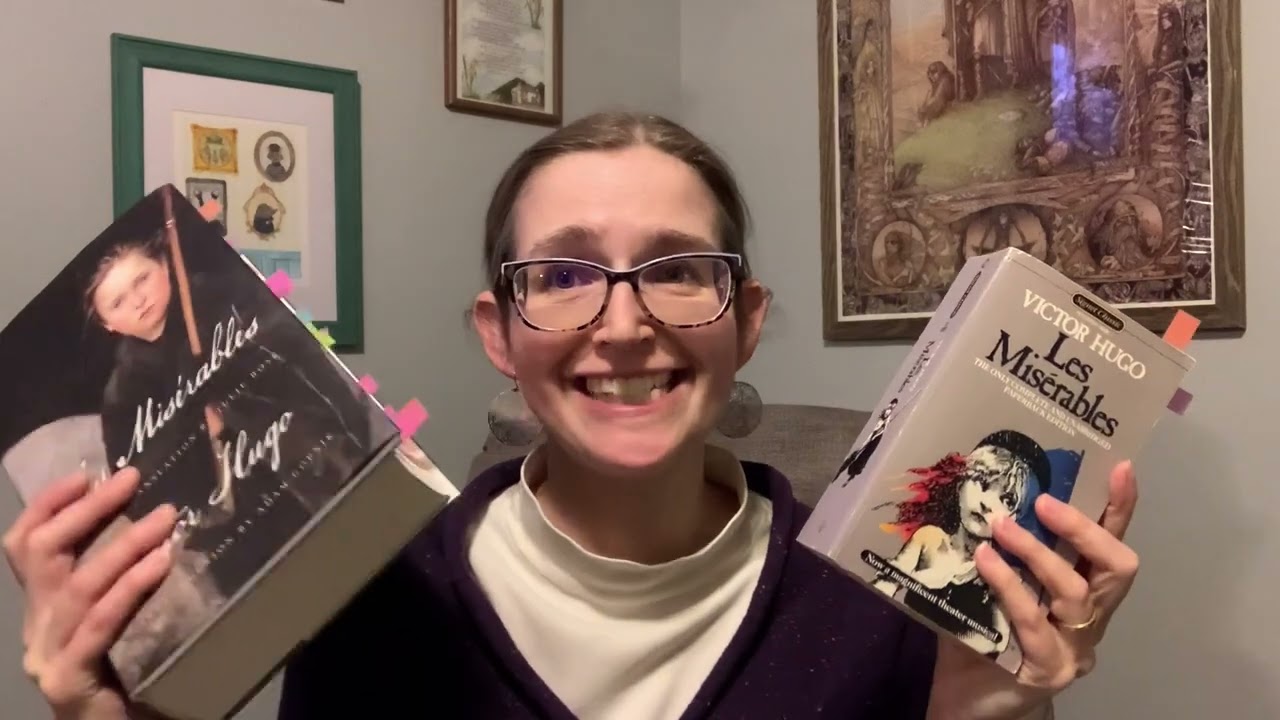
Kelly reviews Victor Hugo's "Les Misérables," emphasising its depth beyond the musical adaptation. She discusses the historical context, translation nuances, and the book's themes of mercy and redemption. She also touches upon specific sections like Waterloo and the Paris sewer system, highlighting Hugo's intent to connect with his contemporary French audience.
- The book explores themes of mercy, redemption, and social injustice in 19th-century France.
- Different translations offer varying reading experiences, with Julie Rose's translation being particularly praised for its accessibility and endnotes.
- Key sections like the Battle of Waterloo and the Paris sewer system provide important context and insights into Hugo's message.
Introduction
Kelly starts the video by celebrating Victor Hugo's birthday and introducing her spoiler-free review of "Les Misérables". She mentions that Sandy from "Miss Reads a Lot" has selected it for her book club and encourages viewers to check it out. Kelly expresses her initial hesitation to read the book due to her love for the musical, but acknowledges that the book offers a much deeper experience. She also offers to review film adaptations of "Les Misérables" with Jason if viewers are interested.
Historical Context and Writing
Kelly provides the historical context of the novel, noting that Victor Hugo began writing it in 1845, paused due to political events, and resumed during his exile in the 1860s, finally publishing it in 1862. She highlights that Hugo wrote the book in exile, aiming to address the people of France, particularly those in Paris, about issues like slavery, poverty, injustice, and the country's tumultuous history. She touches upon key events like the French Revolution and the Battle of Waterloo, which shaped the political landscape of France during that time.
Translation Comparison
Kelly discusses the importance of translation in experiencing "Les Misérables," comparing an older translation with Julie Rose's 2008 version. She shares a paragraph from both translations, illustrating how Rose's version feels more accessible and "breathes" better. While she generally prefers Rose's translation, she notes a few instances where the language felt too modern, like the use of "what's up." She also appreciates the endnotes in Rose's edition, which provide valuable context, especially in chapters referencing Paris in 1817, filled with allusions to real people and events.
Themes and Characters
Kelly explains that the core of "Les Misérables" lies in the contrast between the "miserable" and the "merciful," focusing on themes of redemption and undeserved forgiveness. She notes that the book begins with a bishop, a minor character in the musical, whose goodness sets the tone for the entire story and profoundly impacts Jean Valjean's life. She appreciates Hugo's detailed character development, making the reader feel deeply connected to them. She also felt like she knew Victor Hugo by the end of the book.
Interconnectedness and Specific Sections
Kelly appreciates the interconnectedness of characters and storylines in the book, similar to how musical themes recur in the "Les Misérables" musical. She mentions specific sections like the Battle of Waterloo, which Hugo researched extensively, and the Paris sewer system, which was undergoing significant changes during the novel's timeline. While these sections might slow down the reading pace, she argues that they are crucial for understanding Hugo's message and his connection to his contemporary audience.
Hugo's Writing Style and Emotional Impact
Kelly points out that Victor Hugo, like Anthony Trollope, directly addresses the reader, which she found endearing. She mentions Hugo's decision to stop including a character's stutter in the writing, showing sensitivity. She also notes the book's inherent musicality, with characters often singing or quoting poetry. Kelly describes the ending as heartbreaking, admitting she sobbed through the final pages.
Final Recommendations
Kelly encourages viewers to read "Les Misérables," suggesting they try a few pages of different translations to find one that suits them. She expresses interest in reading a more modern translation in the future. She concludes by calling the book "special" and invites viewers to share their thoughts or express their intention to read it in the comments.

