
Brief Summary
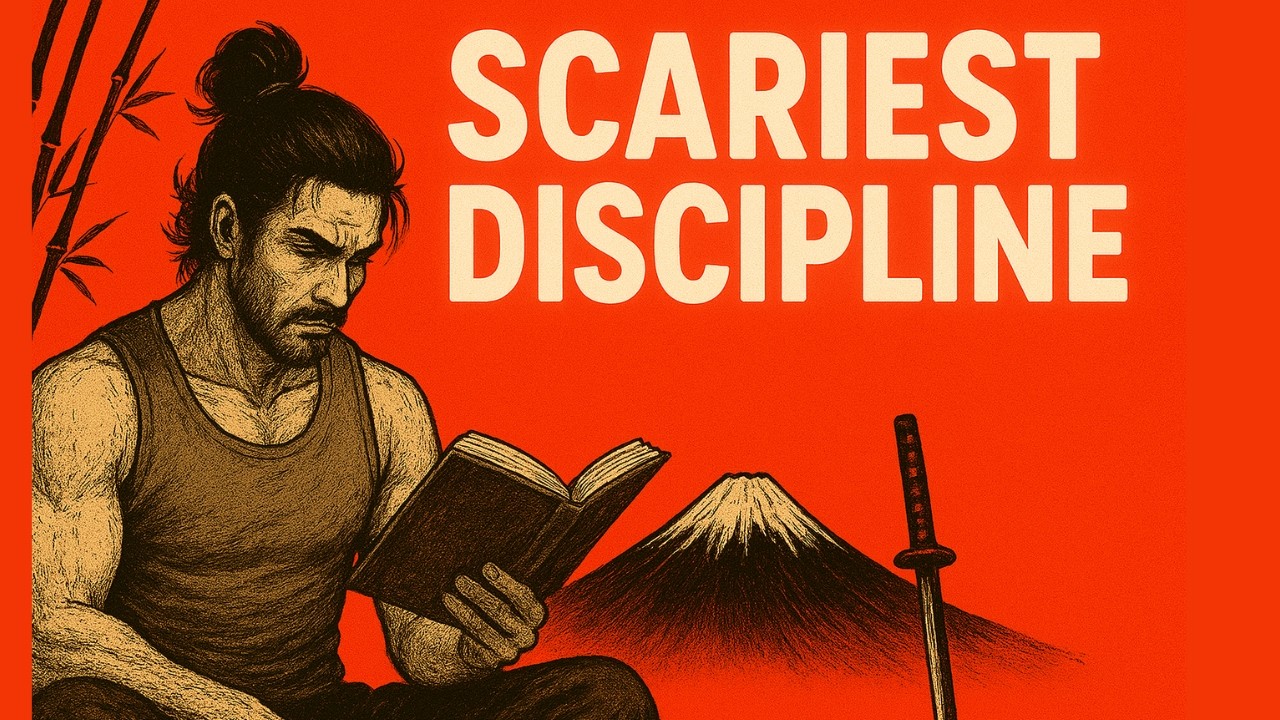
This video talks about "Gujoji," a Zen monk system for achieving frightening consistency by making commitments irreversible. It emphasizes public declarations, fixed schedules, and consistent practice to reshape one's identity. The key takeaways include:
- Transforming commitments from reversible to irreversible through public declarations.
- Eliminating decision fatigue by adhering to fixed schedules and pre-planned solutions.
- Maintaining continuous practice, even imperfectly, to prevent old patterns from returning.
The Awakening
The video starts with the story of Raphael, a programmer who could not stick to any habit for more than two weeks. He tried everything from habit tracking apps to accountability partners, but nothing worked. He was fighting the very architecture of his brain. Then he discovered why Zen monks can meditate for 800 years straight without missing a single day. It's not willpower, but something much deeper and more frightening.
The Secret of the Monks
In Zen temples, there's a rule called "Gioji," which means continuous practice without gaps. Since 1200 AD, monks at Ihai Temple wake up every day at 3:30 a.m. because they understand that the brain categorizes commitments as either reversible or irreversible. Monks change their identity by making public vows, ending the negotiation with their minds. A Harvard neuroscientist found that making a behavior public makes the brain interpret failure as a survival threat. Raphael made a public declaration to meditate for 20 minutes every day at 5:00 a.m. for 90 days, which made giving up more painful than continuing.
The Internal War
Even with social pressure, Raphael still faced an internal war every day. He discovered the monk's second principle: non-negotiable hours. He chose 5:00 a.m. because the world was asleep, eliminating distractions and excuses. The first week was hell, but in the second week, his body started waking up before the alarm. By the 14th day, his feet touched the floor before his conscious mind even engaged. It's not about finding the perfect schedule, but about removing time as a variable.
The One Way
Variety is where consistency dies. Every time you change what you're doing, your brain has to make micro-decisions. Raphael locked everything down: 20 push-ups, 10 minutes of meditation, 10 minutes of reading, same order, same timer, same thing. His personal ango period was 90 days of identical practice. By week six, the practice was taking care of itself. It's about repetition until willpower is no longer needed. An MIT researcher explains that repeating an action in the same context for approximately 66 days makes the behavior automatic.
Practice Without Gap
The all-or-nothing lie has killed more consistency than laziness ever could. Gaps are where your old self crawls back in. Elite athletes have rest days, but those rest days are still progress. When you skip because you're tired, that's retreat. A river never stops flowing. The moment you create a gap, you're no longer practicing. On travel day, Raphael did push-ups in the airport bathroom, meditated in the Uber, and read on the plane. Everything maintained momentum toward the same goal he declared 90 days ago.
Pre-Solutions
Consistency killers are unexpected obstacles that you haven't predecided how to handle. Zen monasteries don't make decisions when obstacles arise; the answer already exists. Raphael wrote down every obstacle that had ever broken his consistency and pre-solved each one. When X happens, I do Y. The power of this is that you stop wasting mental energy on decisions. A Yale University behavioral psychologist found that when you predecide your actions, you remove decision fatigue from the critical moment.
The Transformation
When your discipline makes others uncomfortable, you're finally operating at the right level. Consistency isn't about doing something every day; it's about becoming someone who can't do it any other way. When you implement the guoji system, you're not just creating habits; you're reshaping your identity. You stop being someone who tries and become someone who simply is. It's about the death of your inconsistent self and the birth of your unbreakable self.

