
Brief Summary
This YouTube video delves into the concept of morality from religious and philosophical perspectives, emphasizing the importance of truthfulness and ethical behavior across different faiths. It explores the Christian concept of original sin, linking it to the act of lying, and contrasts it with Islamic teachings on morality and accountability. The discussion also touches on the challenges of maintaining ethical standards in modern society, the role of knowledge in ethical decision-making, and the consequences of greed and selfishness.
- Explores the concept of morality from religious and philosophical perspectives.
- Emphasizes the importance of truthfulness and ethical behavior across different faiths.
- Discusses the challenges of maintaining ethical standards in modern society.
Intro
The video starts with an invocation and introduction to the topic of ethics. The speaker acknowledges that while ethics is typically the domain of philosophers and ethicists, they will approach the subject through the lens of religious texts, specifically examining what the four major religious books say about ethical issues. The speaker references İyonla Küçuradi, a prominent figure in Turkish ethics, and mentions a previous discussion on ethics in the Quran, noting that the word "ahlak" (ethics) appears only once but emphasizes the Prophet Muhammad as the ultimate example of high moral character.
Quranic Perspective on Ethics and Lying
The discussion highlights that the Quran references Prophet Muhammad as the epitome of high moral character. The Quran addresses ethical behavior by condemning lying, associating it with various negative traits. The speaker emphasizes the importance of interpreting religious texts carefully, using the Quran's singular mention of ethics to highlight the significance of the Prophet Muhammad as a moral exemplar.
The Connection Between Lying and Original Sin
The speaker draws a parallel between the Quranic emphasis on truthfulness and the Christian concept of original sin. According to Christian belief, the first sin was an act of deception by Satan, who lied to Adam and Eve about the consequences of eating from the forbidden tree. This lie is seen as the root of all sin, aligning with the Quranic view that truthfulness is fundamental to ethical behavior. The speaker connects this to the idea that believing in Jesus Christ as a savior means embracing truth and rejecting falsehood.
Historical Context and Ethical Decline
The conversation shifts to why Muslims are perceived to be less ethical today, referencing scholars like Ali Bardakoğlu and Mustafa Çağrıcı. It suggests that the rapid enrichment of Muslims and negative nationalism contributed to a decline in ethical behavior. The speaker draws a parallel between the initial simplicity and ethical focus of early Sufis, who resisted materialism and promoted equality, and the challenges faced by contemporary Muslims.
Tasawwuf and the Importance of Justice
The discussion explores the origins of Tasawwuf (Sufism) as a response to the ethical challenges arising from the rapid enrichment of the Muslim community and the negative aspects of Arab nationalism. Early Sufis emphasized simplicity, equality, and justice, contrasting with the materialism and social inequalities of their time. The speaker notes that Tasawwuf resonated more with non-Arab Muslims, such as Iranians and Turks, who sought a more egalitarian and spiritual approach to Islam.
The Role of Islamic Scholars and the Concept of Shafaat
The speaker references Fazlur Rahman's critique of the Muslim world for failing to create a cohesive worldview due to a lack of harmony between Islamic jurisprudence (fiqh), theology (kelam), and Sufism. Fazlur Rahman argued that the concept of shafaat (intercession) has been misunderstood, leading to a lax attitude toward sin. The speaker shares personal reflections on the importance of teaching children about religion in a way that fosters genuine ethical understanding rather than mere ritualistic observance.
Dangers in Religious Teachings and the Importance of Critical Thinking
The speaker cautions against certain approaches to religious teachings, particularly those that promote a domineering or unbalanced view of faith. They stress the importance of critical thinking and a deep understanding of religious texts to avoid distortions and ensure that religious teachings align with the true spirit of the faith. The speaker shares an anecdote about a peculiar religious practice to illustrate how easily religious beliefs can be misinterpreted or exaggerated.
Defining Ethics and the Role of Intention
The speaker defines ethics as the moral qualities and behaviors that lead to being described as good or bad. Quoting İyonla Kuçuradi, it's highlighted that every action begins with an evaluation, emphasizing the importance of understanding the intention behind an action. The speaker connects this to Bediüzzaman Said Nursi's teachings on the significance of intention (niyet) and perspective in ethical judgment.
The Importance of Knowledge and Ethical Values
The discussion emphasizes the importance of knowledge in ethical decision-making. Drawing from religious texts, the speaker notes that God taught Adam, highlighting that knowledge is fundamental to ethical behavior. Ethical values such as honesty, respect, and trust are distinguished from mere norms, emphasizing that ethical living requires both knowledge and practical wisdom.
Defining Immorality and the Platform Film
Immorality is defined as being merciless and prioritizing desires over needs. The speaker introduces the film "The Platform" as an allegory for social inequality and ethical challenges. The film depicts a multi-level prison where food is distributed from the top down, leading to a struggle for resources and highlighting issues of greed and selfishness.
Greed, Selfishness, and the Wisdom of Voluntary Poverty
A participant who watched "The Platform" describes it as a system where those at the top eat excessively, leaving little for those below, even though there is enough for everyone if resources were shared equitably. The speaker connects this to the concept of voluntary poverty, noting that Prophet Muhammad chose a simple life despite having opportunities for wealth. This is contrasted with modern examples of politicians and others who accumulate wealth excessively, prompting a discussion on the importance of teaching ethical values and the dangers of normalizing greed.
The Seven Deadly Sins and the Origin of Sin
The discussion introduces the concept of the seven deadly sins in Christianity, which are seen as the root of all immoral behavior. One of these sins is gluttony, which aligns with the film's depiction of excessive consumption. The speaker references a book on Christian ethics, noting that contemporary Christian thought is moving away from the idea of original sin being inherited from Adam, instead emphasizing individual free will.
The First Sin as Lying and the Quranic Perspective
The speaker emphasizes that lying is the first sin, as exemplified by Satan's deception in the Garden of Eden. This aligns with the Quranic view that truthfulness is paramount. The speaker notes that the Quran links the concept of azab (torment) with both disbelief and lying, reinforcing the idea that lying is a form of disbelief.
Said Nursi's View on Lying and its Impact on Society
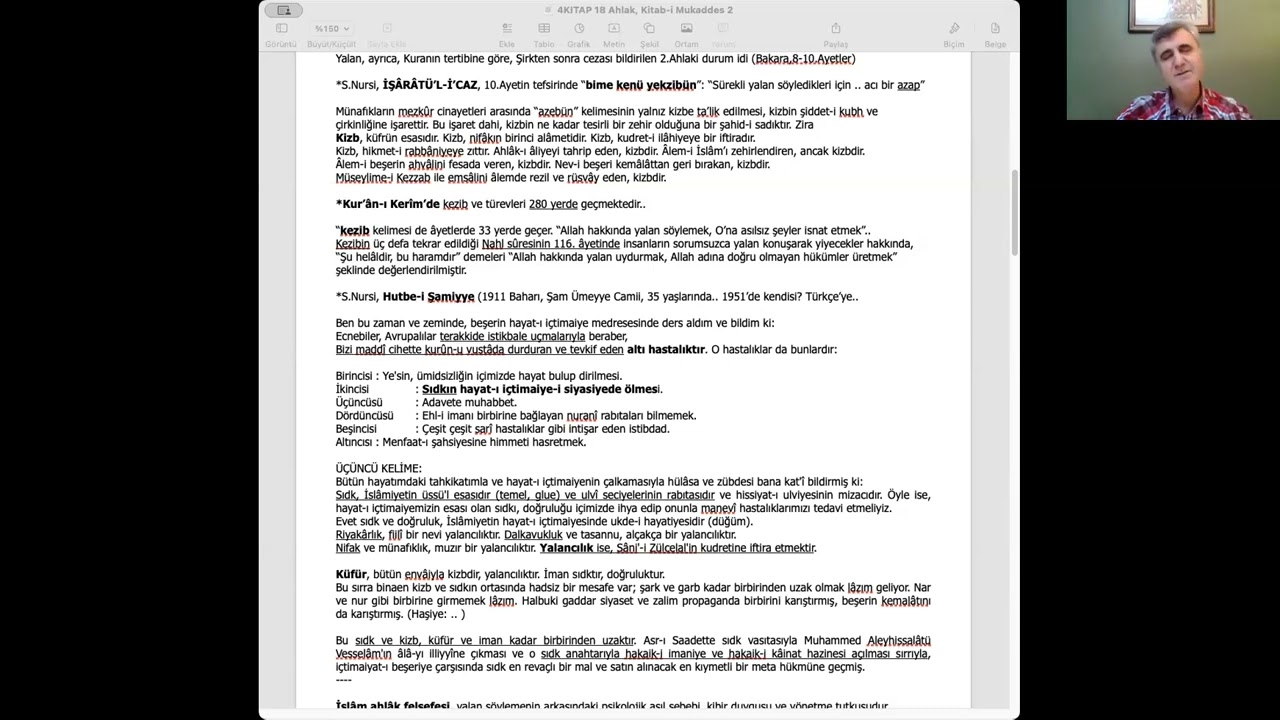
The speaker quotes Said Nursi, who describes lying as the foundation of disbelief and the primary characteristic of hypocrisy. Said Nursi asserts that lying destroys high morals, poisons the Islamic world, corrupts human affairs, and hinders human progress. The speaker notes that the Quran mentions kezip (lying) and its derivatives 280 times, underscoring its importance in Islamic teachings.
The Importance of Honesty and Trust in Society
The speaker emphasizes the importance of honesty and trust in society, contrasting the "beyan esas" (declaration-based) system in the West, where people are presumed to be truthful, with the situation in some Muslim countries where trust is often lacking. The speaker shares an anecdote about Prophet Muhammad taking an oath from women, including Hind bint Utbah, who questioned whether a woman would steal, highlighting the importance of honesty and integrity.
The Influence of Christian Values on Western Society
The speaker explores the origins of the emphasis on truthfulness in Western society, questioning whether it stems from Kantian ethics or Christian values. While acknowledging the influence of both, the speaker suggests that Christian values likely play a significant role, given their historical precedence. The speaker also touches on the psychological aspects of lying, noting that people often lie to themselves, which can be as damaging as lying to others.
The Story of Prophet Ibrahim and the People of Lut
The speaker shares a story about Prophet Ibrahim (Abraham) pleading with angels not to destroy the people of Lut (Lot) if there are even a few righteous people among them. This story, found in both the Quran and the Bible, illustrates the importance of righteousness and the consequences of widespread immorality. The speaker emphasizes that the Quran's brief mention of Ibrahim's struggle with the angels holds deep meaning that can be fully understood by reading the Bible.
The Importance of Truthfulness and Avoiding Falsehood
The speaker emphasizes the importance of truthfulness, noting that the Quran mentions lying in various forms in approximately 280 verses. The speaker quotes Bediüzzaman Said Nursi, who identifies six diseases that have kept Muslims in the Middle Ages, including hopelessness, the death of sincerity, love of enmity, ignorance of the spiritual bonds connecting believers, the spread of oppression, and prioritizing personal interests.
The Essence of Islam and the Importance of Truthfulness
The speaker quotes Bediüzzaman Said Nursi, who states that truthfulness is the foundation of Islam and the bond of its noble characteristics. Said Nursi emphasizes that truthfulness and falsehood are as distant from each other as faith and disbelief. The speaker also discusses the legal consequences of lying in Islam, noting that those who lie under oath or give false testimony are liable for damages and punishment.
The Seven Deadly Sins in Christianity
The speaker discusses the seven deadly sins in Christianity, which are seen as the source of all immorality. These sins include gluttony, greed, sloth, envy, wrath, pride, and lust. The speaker references Dante's "Divine Comedy" and the film "Seven" as examples of how these sins have been portrayed in art and culture.
The Seven Deadly Sins and Their Manifestations
The speaker elaborates on the seven deadly sins, discussing how each one can lead to immoral behavior. Gluttony is seen as a lack of control and a disregard for the needs of others. Greed is an insatiable desire for more, leading to unhappiness. Sloth is laziness and a lack of motivation. Envy is resentment of others' success. The speaker connects these sins to Quranic stories, suggesting that the Quran also identifies pride, lust, and envy as major sins.
The Importance of Humility and Service
The speaker discusses how Jesus combatted pride by washing the feet of his disciples, an act of humility and service. The speaker connects this to the importance of brotherhood and resolving conflicts within the community. The speaker also references a story from the Bible where Jesus says that those who serve others will inherit the kingdom, emphasizing the importance of helping those in need.
The Importance of Love and Justice
The speaker discusses the Christian emphasis on love, sharing a story about a student who challenged the Quranic view of justice. The speaker argues that while love is important, justice is also necessary to prevent evil. The speaker references a book on Christian ethics that discusses the role of love and justice in society.
Hubbu Jah and Other Challenges
The speaker discusses Bediüzzaman Said Nursi's "Hücumat-ı Sitte" (The Six Attacks), which identifies six ways in which evil attacks people. These include hubbu jah (love of fame), fear, greed, negative nationalism, egoism, and laziness. The speaker elaborates on each of these attacks, noting that they can lead people away from faith and ethical behavior.
The Importance of Resisting Temptations and Maintaining Ethical Standards
The speaker emphasizes the importance of resisting temptations and maintaining ethical standards, even in the face of fear and hardship. The speaker references the Battle of Uhud, where the Muslims were tested but remained steadfast in their faith. The speaker also discusses the importance of contentment and avoiding greed, noting that the Quran teaches that God provides for everyone.
The Importance of Ethical Conduct and Avoiding Harmful Behavior
The speaker emphasizes the importance of ethical conduct and avoiding harmful behavior, even when faced with difficult circumstances. The speaker references the Quran, noting that it teaches that God provides for everyone and that people should not be motivated by greed. The speaker also discusses the importance of managing time effectively and prioritizing service to others.
The Importance of Justice and Compassion
The speaker discusses the importance of justice and compassion, referencing a story from the Bible where Jesus says that those who serve others will inherit the kingdom. The speaker also discusses the importance of treating others with kindness and respect, even those who are different from us.
Ethical Challenges in Religious Texts
The speaker discusses ethical challenges in religious texts, noting that some passages in the Old Testament seem to condone violence and discrimination. The speaker contrasts this with the Quran, which teaches that all people are equal and that violence should only be used in self-defense. The speaker emphasizes that it is important to interpret religious texts in a way that promotes justice and compassion.
The Importance of Ethical Conduct and Avoiding Discrimination
The speaker emphasizes the importance of ethical conduct and avoiding discrimination, even when religious texts seem to condone it. The speaker notes that the Quran teaches that all people are equal and that violence should only be used in self-defense. The speaker also discusses the importance of treating others with kindness and respect, even those who are different from us. The speaker concludes by summarizing the main points of the discussion and thanking the audience for their attention.

