
Brief Summary
This video presents a list of 15 perennials that offer extended bloom times, from late spring through the first frost, providing continuous color and activity in the garden. It highlights lesser-known varieties and provides specific tips for success in different climate zones.
- Catnip, Echinacea, Black-Eyed Susan, Hardy Geranium, Penstemon, Perennial Salvia, Heuchera, Agastache, Scabiosa, Amsonia, Baptisia, Clematis, Crocosmia, Chelone, Veronicastrum
- The list emphasizes plants that attract pollinators, offer unique visual interest, and solve common gardening frustrations like midsummer slumps.
- The video encourages viewers to move beyond familiar choices and explore these reliable, long-blooming perennials for a more vibrant and ecologically rich garden.
Introduction: The Promise of Long-Blooming Perennials
The video addresses the common frustration of perennials that bloom briefly and then become space-occupiers. It promises to introduce 15 perennials that bloom from late spring through the first frost, many of which are unfamiliar to most gardeners. The speaker highlights that these plants save money, time, and ensure solutions for a vibrant garden.
Catnip: Aromatic and Long-Lasting Color
Catnip is presented as a low-maintenance plant that provides abundant color for an extended period. Its soft lavender-blue flowers create a cloud-like effect from late May through October in zones 3 through 8. A key to maintaining its long bloom is cutting it back by one-third after the initial June flush. Catnip is versatile for pathways, borders, and slopes, attracting bees without becoming invasive.
Echinacea: Modern Varieties and Winter Interest
The video encourages gardeners to look beyond traditional purple coneflowers and explore newer Echinacea varieties in salmon, red, yellow, white, and bi-colors. These varieties, like SunSeeker's Salmon and Cheyenne Spirit, thrive in zones 3 through 9, blooming from early summer through fall. The speaker advises leaving the seed heads standing through winter to provide food for goldfinches and chickadees. Echinacea attracts a high number of pollinator species. Southern gardeners should choose heat-tolerant varieties and provide afternoon shade.
Black-Eyed Susan: Disease Resistance and Monarch Support
Black-eyed Susans are highlighted for their beauty and the improved disease resistance of newer varieties like American Goldrush and Little Goldstar. These varieties stay clean all season and produce golden-yellow flowers with chocolate brown centers from late June through the first frost. Suitable for borders, fences, and meadows in zones 3 through 9, they also serve as a vital stopover for monarch butterflies migrating south.
Hardy Geranium: Confusions and Ground Cover
Hardy geraniums, specifically the Rozanne variety, are distinguished from annual geraniums. Rozanne is a tough, spreading perennial that blooms from April through September in zones 4 through 8. It produces vivid blue-violet flowers and tolerates both sun and partial shade. It is useful as a ground cover under roses or along shaded borders, attracting small native bees and hoverflies. It thrives in the cooler, moister conditions of the Pacific Northwest and New England.
Penstemon: Hummingbird Magnet and Pruning Tips
Penstemon, native to North America, is a favorite of hummingbirds, with varieties adapted to various US regions. Its tubular flowers come in scarlet, purple, pink, and lavender, blooming from late spring through midsummer, sometimes into fall. It is crucial not to prune penstemon until late spring, as the old stems protect the crown from freeze damage in zones 4, 5, and 6.
Perennial Salvia: Midsummer Color and Deadheading
Perennial salvia is presented as a solution to the midsummer garden slump, offering intense colors like violet, blue, and burgundy that hold up in the heat. Hardy in zones 4 through 9, it blooms from late spring through fall with consistent deadheading. Cutting spent flower spikes back encourages new growth. Southern gardeners in zones 7 through 9 should choose Amistad and Black and Blue varieties for heat and humidity tolerance.
Heuchera: Foliage Interest and Shade Tolerance
Heuchera, or coral bells, is valued for its foliage in shades of burgundy, caramel, lime green, and silver, which lasts from March through December in zones 4 through 9. It thrives in shade, making it ideal for under trees or on the north side of structures. Gardeners in zones 4 through 6 should press the crowns back into the soil in early spring to prevent heaving from freeze-thaw cycles.
Agastache: Hummingbird Attraction and Drainage Needs
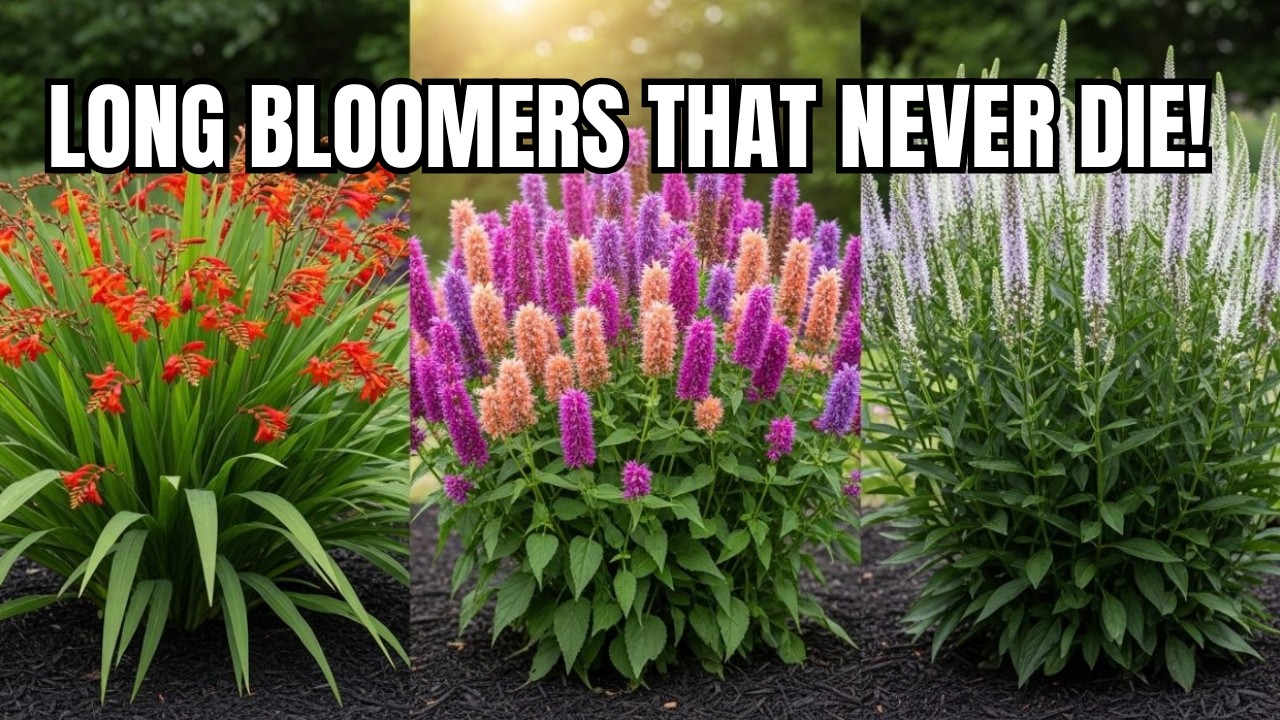
Agastache, or hyssop, is known for attracting hummingbirds quickly and blooms from midsummer through hard frost. The Summer Long series offers new colors like coral, magenta, peach, and lilac. Hardy in zones 5 through 10, it requires sharp drainage to prevent crown rot, especially in heavy clay soils. Southwest and southern gardeners in zones 7 through 10 will find it thrives in their heat and dry conditions.
Scabiosa: Delicate Appearance and Butterfly Magnet
Scabiosa, the pincushion flower, is tougher than it looks, blooming from June through late August (sometimes October) in zones 3 through 7. Its flowers come in lavender blue, white, and burgundy red. It is suitable for the front to middle of a border and makes an excellent cut flower. It attracts painted lady and swallowtail butterflies, functioning as a butterfly landing pad.
Amsonia: Two-Season Interest and Native Benefits
Amsonia, or blue star, offers two distinct displays: powder blue flowers in late April and May, followed by brilliant golden yellow foliage in October. Hardy in zones 3 through 9, it should be cut back by one-third in late June to maintain a compact shape and enhance fall color. Amsonia tabernaemontana is native to the southeast and mid-Atlantic, providing nesting habitat for native bees.
Baptisia: Botanic Garden Impact and Drought Tolerance
Baptisia, or false indigo, resembles a botanic garden display with deep violet-blue (or yellow/white) flower spikes above silvery blue-green foliage in midspring. Hardy in zones 3 through 9, it is drought-tolerant once established due to its deep taproot. It should be planted permanently as transplanting is difficult. It supports wild indigo buntings and native bees.
Clematis: Climbing Versatility and Root Care
Clematis offers a broad design range beyond the typical mailbox planting, with colors from purple to burgundy, pink, white, and bicolors. Hardy in zones 4 through 9, its bloom can be extended by planting early, midsummer, and late-blooming varieties together. It transforms arbors, fences, shrubs, and tree stumps. The key is to plant it with its head in full sun and its roots shaded and cool.
Crocosmia: Fiery Late-Summer Drama and Winter Protection
Crocosmia provides visual drama in late summer with arching stems of fiery orange-red flowers. Some varieties are golden yellow or deep scarlet. Hardy in zones 5 through 9, it requires heavy mulching in November in zones 5 and 6 to protect the corms from freeze-thaw cycles. It can be planted in front of ornamental grasses or in a cutting garden.
Chelone: Unique Flower Shape and Moisture Preference
Chelone, or turtlehead, features unusual hooded pink flowers resembling a turtle's mouth, blooming from August through October. Hardy in zones 3 through 8, it thrives in consistently moist areas like rain gardens, along fence lines, or at the edge of streams. It is primarily pollinated by bumblebees.
Veronicastrum: Architectural Presence and Keystone Species
Veronicastrum, or Culver's root, is a tall, architectural plant with white or lavender candelabra-style flower spikes reaching 4 to 6 feet. Hardy in zones 3 through 8, it blooms from July through September and supports over 100 species of native bees and butterflies. It is a keystone species in Mid-Atlantic and Midwestern landscapes. It should be planted at the back of a border or in the center of an island bed.
Conclusion: Achieving a Spectacular, Long-Lasting Garden
The video concludes by reiterating the value of these 15 perennials for creating a garden that remains vibrant from Memorial Day through the first frost. It emphasizes that the key to a spectacular garden is not luck or budget, but knowledge of plants that perform across the full season. The speaker encourages viewers to subscribe for more zone-specific gardening information.

