
Brief Summary
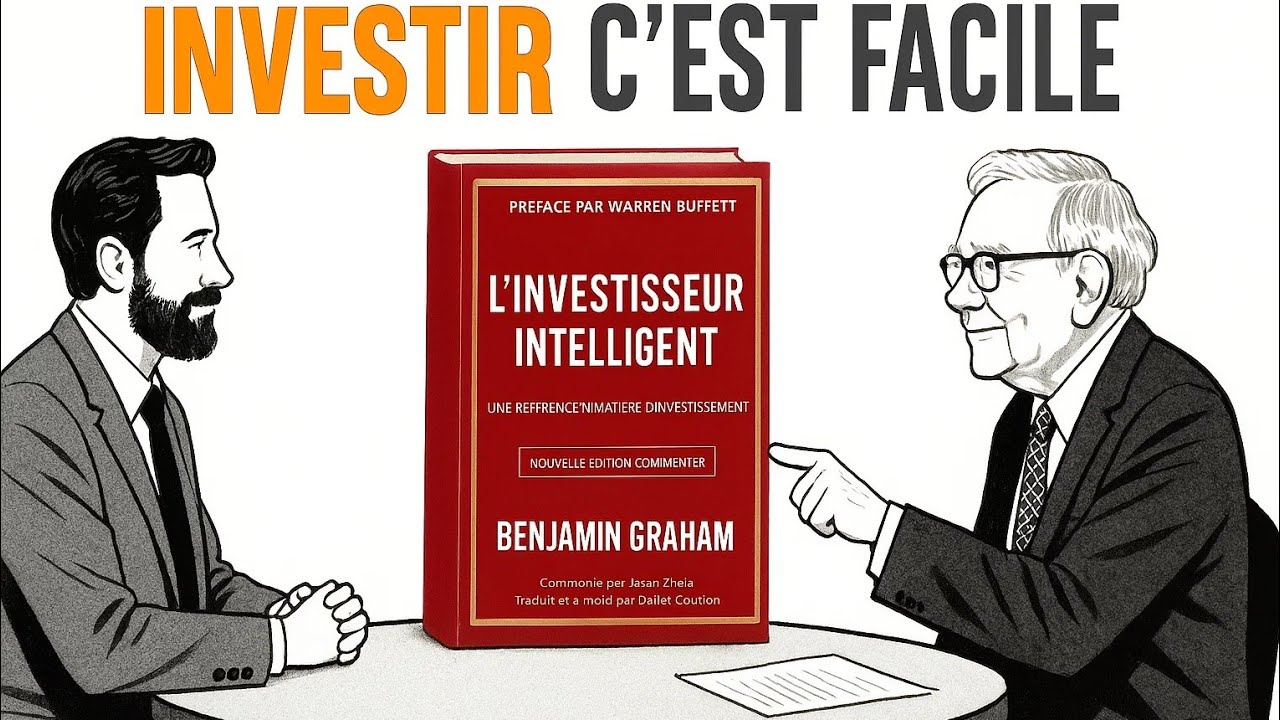
This video summarizes the key principles from Benjamin Graham's "The Intelligent Investor," a book Warren Buffett considers the best on investing. It emphasizes thinking rationally about money, investments, and risk to build long-term wealth. The video covers five essential concepts: viewing the market as "Mr. Market" and using his volatility to your advantage, avoiding speculation by treating stocks as parts of real businesses, ensuring a margin of safety in your investments, choosing between being a defensive or an enterprising investor, and maintaining emotional discipline to avoid impulsive decisions.
- Understand and utilize market volatility to your advantage.
- Treat stocks as ownership in real businesses, avoiding speculation.
- Always invest with a margin of safety to protect against unforeseen events.
- Choose a suitable investment approach: defensive or enterprising.
- Maintain emotional discipline to avoid impulsive decisions driven by market fluctuations.
Mr. Market
The concept of "Mr. Market" is introduced to illustrate the irrationality of the stock market. Mr. Market is portrayed as an erratic neighbor who constantly offers to buy your business at wildly fluctuating prices. The key takeaway is not to take Mr. Market's offers too seriously, as his behavior is driven by emotions like fear and greed. Instead, use Mr. Market's volatility to your advantage by buying when prices are low due to panic and being cautious when prices are high due to euphoria. The market is there to serve you, not to instruct you. Focus on understanding the value of your investments and act only when it makes sense, rather than trying to predict short-term price movements.
Stop Speculating
Investing is different from speculating. Investing is a calm, long-term approach based on research and protecting your capital, while speculation is driven by the hope of quick profits without understanding the underlying value. Graham advises treating a stock as a share in a real company, with employees, products, and revenues. Avoid buying stocks based on hype or the advice of others without doing your own research. If you wouldn't buy the entire company, don't buy a small part of it. While taking risks is acceptable, it should be done with a clear understanding of the potential downside and the true value of the investment.
The Margin of Safety
The margin of safety is a crucial concept that involves never paying full price for an investment. Regardless of how thorough your research is, unexpected events can occur. A margin of safety acts as a cushion against potential losses. For example, if you estimate a company's worth at $50 per share, wait until the price drops to $30 or less before buying. This approach provides a buffer if things go wrong. During the 2008 financial crisis, many solid companies traded below their intrinsic value, presenting opportunities for investors like Warren Buffett who understood the importance of a margin of safety. Even if you admire a company, avoid overpaying and wait for a price that offers a sufficient margin of safety.
Choose Your Camp
Investors must choose between being defensive or enterprising, with no middle ground. A defensive investor seeks to maintain a simple, low-effort approach, such as investing in broad index funds like the SP500 and rebalancing their portfolio annually. An enterprising investor, on the other hand, enjoys analyzing companies and financial statements to find undervalued stocks. This approach requires significant time, effort, and skill. Graham advises that if you lack the time, skills, or interest to conduct thorough research, stick to a defensive strategy. Avoid being caught in the middle, chasing trends and making emotional decisions, which often leads to losses.
Emotional Discipline
Emotional discipline is essential for successful investing. The difference between successful and unsuccessful investors lies not in intelligence but in emotional control. Avoid panicking during market downturns or becoming overly greedy during rallies. Maintain a cool head and stick to your investment plan. Implement a systematic approach, such as dollar-cost averaging and regular rebalancing, to remove the need for emotional decision-making. Just as a pilot follows a system during turbulence, investors should adhere to their plan and ignore market noise.

