
Brief Summary
This video provides a comprehensive guide to understanding the various components and features of screws, aiming to help DIYers make informed decisions when selecting the right screw for their projects. It covers screw tips, threads, shanks, head types, drive types, finishes, and materials, highlighting the importance of each in achieving successful outcomes. The video also addresses common DIY mistakes, such as using the wrong driver or bit, and introduces helpful tools for drilling and countersinking.
- Understanding screw components is crucial for project success.
- Selecting the right screw can prevent common DIY problems.
- Paying attention to small details enhances project quality and enjoyment.
Screw Tips
Screws have various tip designs, each serving a unique function. Some screws feature a self-drilling tip with a small cut in the shank, designed to drill its own hole and reduce splitting, particularly useful in repetitive tasks like installing decking. When driving the screw in, small wood shards come out, indicating the screw is drilling its own hole to reduce splitting and ease installation. Other screws, like drywall screws, have a pointy tip for easy penetration through sheetrock, while some have a fat tip that requires pre-drilling to avoid splits and difficult installation.
Threads
Screw threads have subtle features, including pitch, which affects clamping force. Coarse pitch threads, like those on cabinet screws, offer quick clamping force, ideal for projects like building cabinets or decks where speed is important. Fine pitch threads, found on machine screws or drywall anchors, provide precise control for delicate applications like adjusting outlets or installing towel rods, preventing over-tightening and damage. Choosing the right thread pitch is crucial for achieving the desired balance between speed and control in various projects.
Shank
The shank, or body, of a screw has important features, including its size and the presence of a smooth, unthreaded section. Common screw sizes are number eight, number nine, and number 10, and selecting the appropriate size can save money and reduce labor. Screws used vertically for clamping force don't need as strong a shank as those used laterally for hanging objects, which require greater shear load resistance. A smooth shank helps pull wood pieces together tightly by allowing movement through the first piece of wood, providing clamping force, especially useful when clamping isn't possible.
Head Type
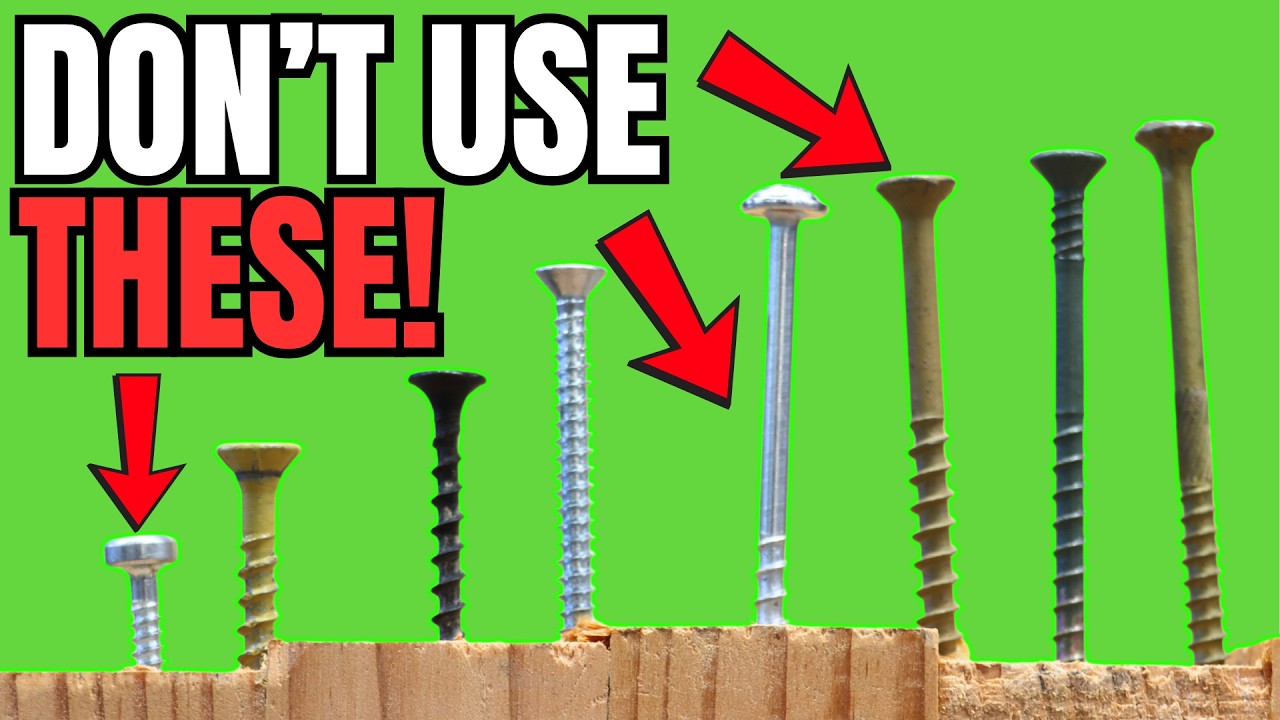
Different screw head types serve specific purposes. Flat heads are designed to be driven flush with or slightly recessed from the surface, offering excellent clamping force but potentially causing splitting in dry wood or near edges. Truss heads have a flat bottom for extra clamping force without increasing splitting, ideal for applications where the head can be pre-drilled or hidden. Pan heads stick up above the surface and are used when extra clamping force isn't needed, often in pre-drilled applications like drywall anchors. Trim heads are compact for minimal impact and are sometimes adjustable for fine-tuning trim work.
Drive Type
The drive type of a screw is a debated topic, with various options available. Slotted screws are used in applications requiring clamping force, like drywall anchors. Phillips heads are common and offer good holding power if used correctly. Square drive screws perform well, especially in decking, maintaining bit integrity better than Torx. Torx bits are popular for their ability to maintain bit integrity and resist stripping, allowing for multiple uses.
Finishes and Materials
Screw finishes and materials are crucial for durability and application suitability. Drywall screws have a light oxide coating that rusts easily with moisture, making them unsuitable for exterior use or pressure-treated wood. Painted finishes offer better exterior protection and smoother driving. Stainless steel screws are impervious to moisture and chemicals, ideal for environments like wood-fired hot tubs where chemical exposure is a concern.
Common DIY Mistakes and Solutions
Common DIY mistakes include using the wrong driver (drill vs. impact) and the wrong bit. Impact drivers are useful for tasks like drilling deck screws, while drills are better for delicate applications like installing screws around tile to prevent breakage. Using the correct bit size and type is essential to avoid damaging the screw head. Tools like DeWalt's drill bit and driver bit combo can streamline drilling and countersinking, improving efficiency and precision.

