
Brief Summary
This sermon emphasizes the importance of directing our attention towards God to experience personal and regional revival. It highlights how easily our focus can be captured by distractions and negative influences, leading to spiritual stagnation. The key takeaways include:
- The need to prioritize the Word of God to rewire our minds and align with divine truth.
- The necessity of encountering the Holy Spirit to bring life and freedom to seemingly dead situations.
- The call to shift our attention from worldly distractions to God, fostering humility, prayer, and obedience, which ultimately leads to healing and joy.
Introduction
The speaker begins by reminding the congregation of Vibrant Church's mission: to help people believe in Jesus Christ, belong to the church, become more like Jesus, and build the kingdom. He then thanks Convoy of Hope for their disaster relief efforts in Mississippi and acknowledges the church's contribution of $20,000 to support their work. The speaker also expresses gratitude to the volunteers who participated in the "Saturday Serve" event, assisting communities affected by the recent ice storm. Additionally, he shares his appreciation for the church members involved in "Love the Block," a community outreach program for children, emphasizing the positive impact they are making.
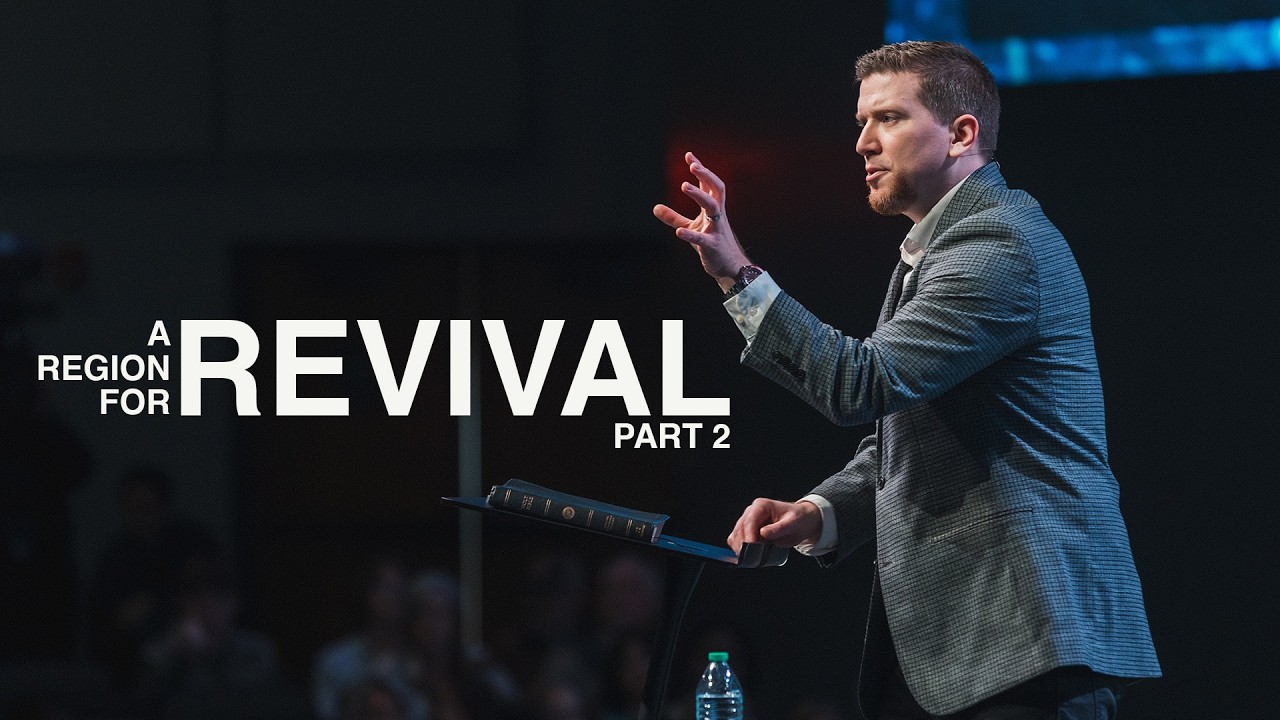
A Region for Revival Part Two
The speaker introduces the sermon topic, "A Region for Revival Part Two," revisiting themes from Mark chapter 5 about Jesus' presence being unwanted in a region. He transitions to Acts chapter 8, focusing on Philip's ministry in Samaria. The key observation is the recurring phrase "paid attention," highlighting how the spiritual condition of the Samaritans was linked to where they directed their attention.
The Attention Economy
The speaker explains that attention directs one's life, leading to affection and ultimately determining behavior. He introduces the concept of the "attention economy," where human attention is a scarce and valuable resource. Marketers understand that money, influence, and power follow attention, leading to a massive increase in advertisements, from 500 per day in 1970 to 10,000 today. A 30-second Super Bowl ad costs millions, illustrating the value placed on capturing attention.
The Power of Attention: Spiritual Implications
The speaker emphasizes that the spiritual condition of the people in Samaria was directly related to where they focused their attention. He warns that the devil can use fear and anger to create crippling anxiety and bitterness. Conversely, focusing on faith, joy, and love leads to encouragement, happiness, and confidence. He uses the analogy of a bug zapper, where an attractive but fatal light draws bugs to their destruction, mirroring how the enemy can use distractions to harm us.
The Enemy's Strategy: Deception and Distraction
The speaker asserts that the devil can defeat us by first distracting us. He defines how the enemy gains influence over a region by integrating demonic lies into its ideas, values, morals, practices, and social norms. He clarifies that demonic power often manifests as deception rather than overt displays. These lies can penetrate a community and become deeply ingrained ideologies that contradict God's word.
Philip's Ministry: Preaching Christ
The speaker explains that God sent Philip to Samaria to preach Christ, despite the historical animosity between Jews and Samaritans. He emphasizes that regional revival requires a love for people, regardless of race or cultural tensions. The speaker underscores the importance of preachers in disturbing communities and challenging the status quo, rather than seeking popularity.
Emphasis on the Word
The speaker stresses the need for an emphasis on the Word of God. He notes that Philip preached the word and proclaimed Christ. He warns that demonic spirits also preach lies, creating a battle for attention. Shifting from the lies of the enemy to the Word of God opens the door for supernatural movement. The Word rewires the mind, challenging what we've learned from various sources that may not align with God's teachings.
The Word as a Tool for Transformation
The speaker references Jeremiah 1:10, highlighting that the Word roots out, pulls down, destroys, throws down, builds, and plants. He encourages preaching the Bible and allowing the consequences to follow. He explains that Christians are citizens of heaven with a new constitution, requiring a lifetime to understand. The Word of God disturbs, challenges, and changes us, and if we give it our attention, it can transform a region.
School of Discipleship
The speaker promotes the church's School of Discipleship, encouraging intentional devotion to knowing Christ and growing in relationship with Him. He emphasizes the importance of becoming more like Jesus by spending time with Him and allowing His Word to work within us.
Encounter with the Holy Spirit
The speaker emphasizes the need for an encounter with the Holy Spirit. He points out that as the crowds paid attention to Philip, they witnessed signs, unclean spirits leaving people, and the paralyzed being healed. The Holy Spirit touches lives, performs miracles, and causes demons to flee. He quotes Romans 8:11, explaining that the Holy Spirit, who raised Jesus from the dead, gives life to our mortal bodies.
The Power of the Holy Spirit
The speaker describes the Holy Spirit's power to bring life to dead situations, referencing the resurrection of Jesus. He emphasizes that if the Holy Spirit touches a marriage, a teenager, or a church, something will come back to life. He recounts how the Holy Spirit transformed the scared and worried disciples into bold preachers on the day of Pentecost. He encourages welcoming the Holy Spirit into our homes and praying for our loved ones.
Shifting Attention and Experiencing Joy
The speaker highlights that when the Samaritans shifted their attention from Simon to Philip, they believed and were baptized. This shift in attention led to a change in affection and behavior. He criticizes social media as "junk food for the brain" that keeps us distracted and engaged in conflict. He urges believers to set their affection on Jesus and turn their eyes away from worldly distractions.
The Path to Healing and Revival
The speaker references 2 Chronicles 7:14, outlining the steps to healing the land: humble themselves, pray, seek God's face, and turn from wicked ways. He explains that these steps involve shifting attention from self to God, from control to dependence, from the world to God's presence, and from sin to obedience. When attention changes, heaven responds with healing and forgiveness.
Conclusion: A Call to Action
The speaker encourages listeners to prioritize being kingdom-minded over political affiliations or other labels. He concludes by emphasizing that shifting our attention, prioritizing the Word, and encountering the Holy Spirit can lead to much joy. He invites those who want to work on their attention to raise their hands and leads the congregation in a prayer, asking God for forgiveness and help to keep their eyes on Jesus.

