
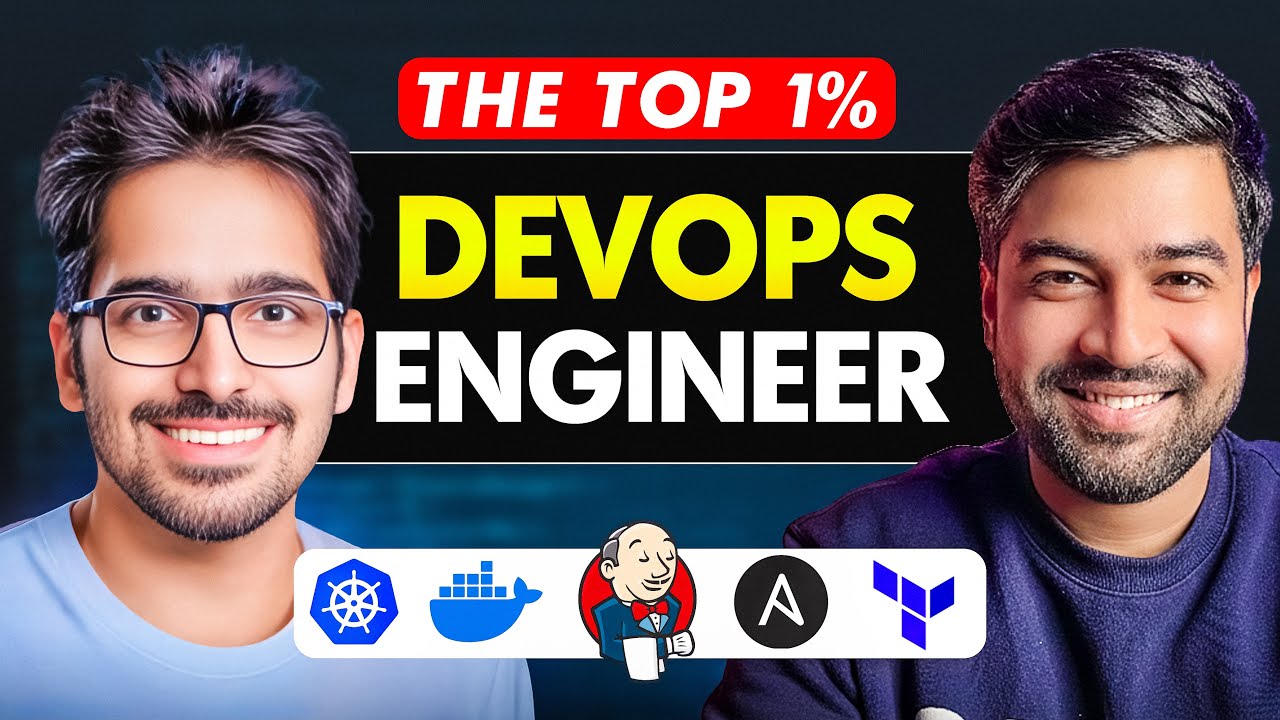
Brief Summary
This podcast features Sayan Pathak, founder of Kubesimplify, discussing his career journey, cloud and Kubernetes technologies, and open-source contributions. He shares insights on transitioning from large corporations to startups, focusing on continuous learning, and the importance of fundamental knowledge in the tech industry. He also touches upon the significance of certifications, community involvement, and dispels common misconceptions about the necessity of programming skills in cloud and DevOps.
- Career transitions from big corporations to startups
- Importance of fundamental knowledge and continuous learning
- Open-source contributions and community involvement
- Dispelling misconceptions about programming in cloud and DevOps
Introduction
Paras Thakur introduces Sayan Pathak, the founder of Kubesimplify, highlighting his extensive experience in the cloud and DevOps domains. Sayan expresses his gratitude for the invitation and briefly introduces himself, mentioning his decade-long experience in the IT industry and his work at companies like HP, Walmart, Oracle, and Cohesity. He also touches upon his transition from VMware to cloud technologies, Kubernetes, and his current exploration of AI tooling and structures.
Career Journey and Work-Life Balance
Sayan discusses his career shift from established corporations like Oracle and Walmart Labs to startups and community advocacy, a path less traveled. He acknowledges the initial fear of disrupting work-life balance but emphasizes the unique advantages of startups, such as direct access to leadership and a more significant impact on decision-making. In larger organizations, navigating hierarchies to get ideas heard can be challenging, requiring the use of specific channels and tools. Sayan values the empowerment and voice he found in startups, which, along with factors like company culture, compensation, and work-life balance, influenced his decision to switch.
Benefits of Startups and Adapting to the Environment
Sayan highlights the benefits he experienced after switching to startups, particularly the feeling of having his voice heard and the empowerment that came with it. He notes that while people switch jobs for various reasons, such as company culture, salary, power, and work culture, his decision was driven by the opportunity for greater influence. He also acknowledges that startups often require more work due to the collective drive to reach the next level, but he adapted well to this environment.
Approaching Cloud and Kubernetes Learning
Sayan shares his approach to learning cloud and Kubernetes technologies, especially for students overwhelmed by the vast amount of information available. He emphasizes that this is the best time to be alive and in college due to the accessibility of knowledge through platforms like YouTube. He advises students to use AI as a companion to structure their learning path, as everyone's growth path is unique. Sayan stresses the importance of carving out one's own path, taking inspiration from others but not blindly following their strategies.
Focus and Discipline in the Era of Information
Sayan addresses the challenge of maintaining focus in an era of abundant information, particularly for students watching numerous roadmaps on YouTube. He suggests practicing meditation to control the mind and cultivate discipline. He compares this to essential habits like eating and brushing teeth, which are maintained through consistent effort. Sayan advises writing down a roadmap on paper, breaking it down into monthly and weekly goals to stay on track. He also acknowledges the human tendency to be curious about new technologies and encourages exploration while staying committed to core goals.
Roadmap and Fundamental Skills
Sayan shares insights on creating a roadmap and the importance of fundamental skills. He advises students to write down their roadmap, breaking it into monthly and weekly goals to stay on track. He also suggests using a whiteboard to visualize these goals daily. Sayan acknowledges the human tendency to be curious about new technologies and encourages exploration while staying committed to core goals. He emphasizes that college subjects like Linux, networking, data structures, algorithms, and operating systems are fundamental and must be studied thoroughly.
Essential Skills and Technologies
Sayan outlines the essential skills and technologies for those in software engineering and DevOps. He stresses the importance of understanding the basics of databases, operating systems, Linux, and networking. For software engineers, he highlights the need to build applications, understand test cases, and delve into programming depth, including multi-threading and data structures. For DevOps engineers, he emphasizes the need to deploy applications, understand infrastructure, servers, cloud fundamentals, containerization, and orchestration tools like Kubernetes.
Impact of Certifications in the Current Market
Sayan discusses the impact of certifications in the current market, particularly cloud-based and Kubernetes-specific certifications like CKA and CKAD. He notes that while he hasn't worked in service-based companies, certifications often serve as a filtering criterion for HR when dealing with a large number of applicants. Certifications demonstrate that an individual has dedicated time and effort to learn and pass an exam in a constrained environment. Sayan prefers performance-based certifications like CKA and CKAD, which require hands-on skills rather than just multiple-choice questions.
Open Source Contributions
Sayan shares his perspective on open-source contributions, advising students to approach it with understanding rather than blindly following trends. He emphasizes that open-source contribution should stem from a genuine passion for a project and a desire to contribute to its growth. While it can lead to recognition, improved skills, and job opportunities, it should not be seen as a guaranteed path to employment. Sayan advises choosing projects thoughtfully, attending meetings, and shadowing experienced contributors before making contributions.
Finding Projects and Avoiding Random Contributions
Sayan provides guidance on how students can find open-source projects to contribute to, suggesting starting with smaller projects to increase visibility. He recommends exploring CNCF landscapes and Linux Foundation projects. He cautions against making random contributions without understanding the project's goals and impact. Sayan stresses that open-source contributions, like certifications, do not guarantee jobs but can help in getting closer to job opportunities.
Common Mistakes and Misconceptions
Sayan addresses a common mistake among beginners in cloud and DevOps: the belief that programming is not necessary. He clarifies that scripting skills and knowledge of languages like Go or Python are essential. He emphasizes that even with AI assistance, understanding the code produced by AI is crucial. Sayan highlights that the best cloud and DevOps engineers are those with strong fundamentals in system administration, networking, and programming. He advises against skipping steps and encourages a comprehensive understanding of technology.
Understanding Technology and AI
Sayan emphasizes the importance of understanding technology, particularly AI, and recommends resources like Andrej Karpathy's explanations of how LLMs work. He suggests reading the "Attention is All You Need" paper by Google to understand the transformer architecture that enabled the AI revolution. Sayan encourages gaining a fundamental understanding of how things work rather than treating them as black boxes.
Tech Fire Round
In a rapid-fire round, Sayan answers several tech-related questions:
- He prefers Docker over Podman.
- He uses VS Code, Cursor, and Kihiro, with VS Code being his top choice due to AI capabilities.
- He identifies Kubevela and Hemi for GPUs as underrated cloud-native tools.
- He recommends the AWS Cloud Practitioner certification for every student.
- He considers Kubernetes the next operating system.
- He states that individual projects are better for personal growth, while community work is better for growing the community and oneself.
- He would bet his career on AI if not Kubernetes.
AI and Job Market
Sayan addresses concerns about AI taking over jobs, noting that every revolution creates new jobs while removing others. He advises preparing for the jobs that are emerging rather than focusing on those that are disappearing. He concludes by thanking Paras for the opportunity to share his insights and encourages viewers to follow his YouTube channel and LinkedIn for more learning resources.

