
Brief Summary
This video discusses the importance of understanding the concept of "karamah" (miracles or extraordinary events) of righteous people in Islam, according to the Ahlus Sunnah wal Jama'ah (the Sunni Muslims). It addresses the dangers of extremism in either denying karamah altogether or exaggerating them to the point of associating partners with Allah (shirk). The video emphasizes that karamah are real but are granted by Allah to those who are truly pious and follow the Quran and Sunnah, and that not all individuals displaying extraordinary feats are necessarily saints or close to Allah.
- Importance of understanding "karamah" in Islam.
- Dangers of extremism: denying or exaggerating karamah.
- True karamah are granted to pious individuals following the Quran and Sunnah.
- Not all extraordinary feats indicate sainthood.
Introduction
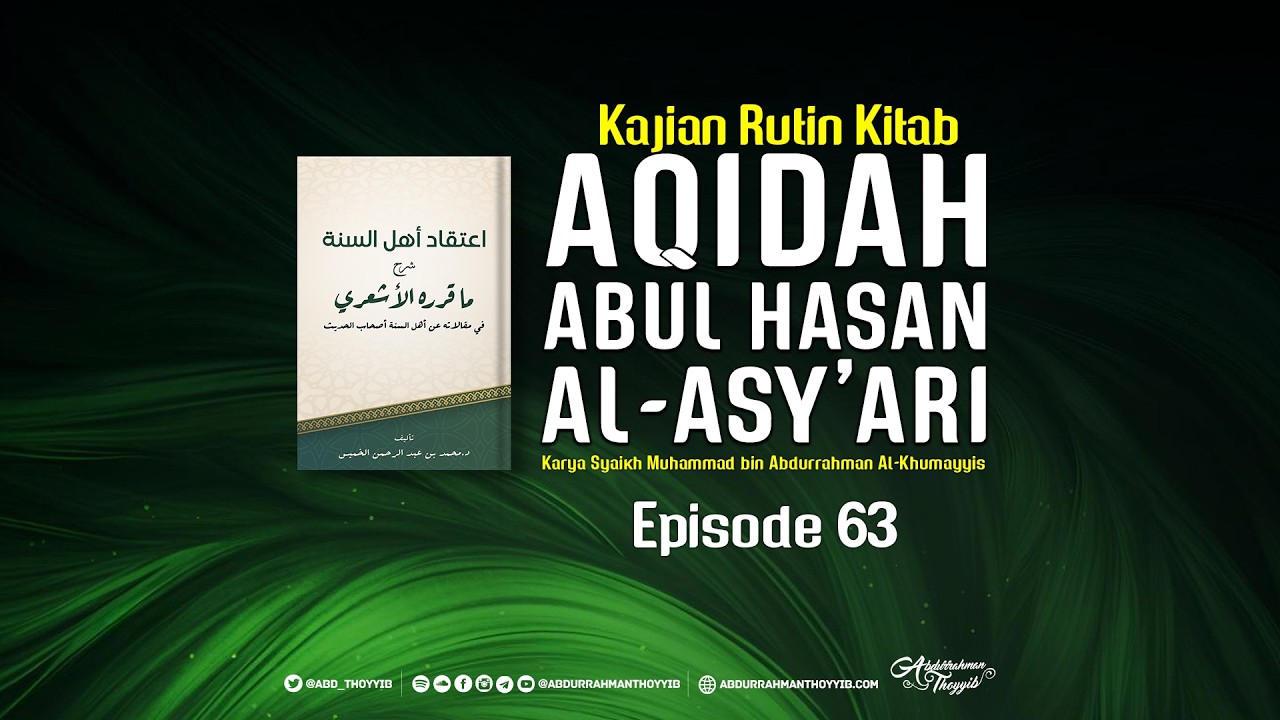
The speaker begins with Islamic greetings and expresses gratitude to Allah for the opportunity to resume the study of Aqidah (Islamic Creed) from the book "Maqalatul Islamiyin" by Imam Abul Hasan Al-Asy'ari, along with the commentary by Sheikh Muhammad bin Abdurrahman Alkumayy. The current topic is about affirming the existence of karamah (miracles) for righteous people or "wali-wali Allah" (friends of Allah).
Imam Al-Asy'ari's Statement on Karamah
Imam Abul Hasan al-Asy'ari states that it is permissible for Allah to grant righteous people special signs or miracles (karamah) that appear through them. The speaker emphasizes that Ahlus Sunnah wal Jama'ah believes that Allah grants special favors to his righteous servants, manifesting as extraordinary events or miracles.
Importance of Understanding Karamah in Contemporary Times
The speaker stresses the significance of understanding the concept of karamah, especially in an era where many fabricate stories about the supposed miracles of their figures. This is a gateway to shirk (associating partners with Allah), as people may be drawn to sanctify individuals and their graves based on fabricated tales. Muslims should understand this topic according to the Quran and Sunnah to avoid being misled by those who call to hellfire.
The Sunni Creed on Affirming Karamah
Sheikh Muhammad bin Abdurrahman Alkumais explains that affirming karamah is a principle of Ahlus Sunnah. Karamah are extraordinary events that do not occur in the normal course of life. Ahlus Sunnah believes in and affirms the existence of karamah for the righteous, as supported by the Quran, Hadith, and the consensus of early scholars (Ijma Salaf).
Three Groups of People Regarding Karamah
The speaker explains that scholars identify three groups concerning karamah:
- Those who deny karamah altogether, like the Mu'tazilah, who rely on their limited intellect and fear it might be confused with miracles of prophets.
- Those who exaggerate karamah, fabricating countless stories about their figures, sometimes to absurd extents, to attract followers and sanctify individuals and their graves.
- The moderate group, Ahlus Sunnah wal Jama'ah, who affirm karamah but attribute them only to truly righteous individuals who adhere to the Quran and Sunnah.
Qualities of Wali Allah (Friends of Allah)
The speaker clarifies the difference between Ahlus Sunnah and those who exaggerate karamah. Ahlus Sunnah attributes karamah only to true "wali Allah" (friends of Allah). The Quran (Surah Yunus 10:62-63) defines them as those who believe (have faith in the six pillars of Iman) and are pious (fear Allah, carry out His commands, and avoid His prohibitions). They must be of sound mind, excluding the insane.
Hadith Qudsi on the Characteristics of Allah's Wali
The speaker quotes a Hadith Qudsi (divine hadith) from Sahih Bukhari, where Allah states that whoever harms His wali (friend), He declares war against them. The closest way for a servant to draw near to Allah is by fulfilling the obligatory duties. This emphasizes that performing obligatory duties is a sign of a true wali of Allah.
Condemnation of Beliefs Contradictory to Islamic Law
The speaker condemns the belief that a wali can be of a higher status than a prophet or be exempt from following the Sharia (Islamic law) of Prophet Muhammad (peace be upon him). Such beliefs are considered heretical and can nullify one's Islam. He references the Shia Rafidah sect, who believe their Imams are superior to prophets, and warns against trusting them. He quotes Imam Shafi'i, who stated that he had never seen a group more given to false testimony and lying than the Shia Rafidah.
Imam Shafi'i's Guidance on Evaluating Individuals
Imam Shafi'i said that if you see someone flying in the air or walking on water, do not be deceived until you weigh their actions, words, and beliefs against the Quran and Sunnah. Those who commit bid'ah (innovation in religion) cannot be wali Allah, as piety must be based on the Quran and Sunnah.
Dajjal's Extraordinary Abilities
The speaker notes that even if individuals possess extraordinary abilities, it does not guarantee they are wali Allah. The Dajjal (Antichrist) will have supernatural powers but is an infidel. Such abilities could be from Satan to deceive people. Being a wali Allah is defined by faith and piety, not necessarily by performing miracles.
Principles of Ahlus Sunnah Regarding Karamah
Sheikh ul-Islam Ibn Taymiyyah stated that among the principles of Ahlus Sunnah is affirming the karamah of the Awliya (saints or close friends of Allah). He emphasized that karamah of the Awliya occurs through the blessings of following the Messenger (peace and blessings of Allah be upon him).
Denial of Karamah by Innovators
Sheikh Muhammad bin Abdurrahman Khumayy states that the people of innovation from the Jahmiyyah and Mu'tazilah deny karamah. The speaker reiterates the three groups: those who deny, those who exaggerate (especially among some Sufis), and Ahlus Sunnah, who affirm karamah only for the righteous who believe and are pious.
Evidence of Karamah in the Quran
The speaker explains that evidence for karamah exists in the Quran, such as the story of Maryam (Mary) in Surah Ali Imran (3:37), where Prophet Zakaria (Zechariah) found unusual provisions with her. This is interpreted as fruits out of season, a karamah granted to Maryam.
Karamah of Imam Bukhari
The speaker shares the story of Imam Bukhari, the compiler of Sahih al-Bukhari, who was blind as a child. His mother had a dream where she was told that Allah had restored his sight because of her excessive crying and prayers. When she woke up, Imam Bukhari had regained his sight.
Karamah in Hadith
Karamah of righteous people are mentioned in the hadith of the Prophet Muhammad (peace be upon him). One example is the story of Juraij, a devout worshiper, who was falsely accused of adultery. A baby miraculously spoke to clear Juraij's name, affirming his innocence.
Story of the Three Men Trapped in a Cave
The speaker mentions the well-known story of three men who were trapped in a cave and made dua (supplication) by mentioning their righteous deeds. One of them had been faithful in guarding the wages of his employee, another had resisted the temptation to commit adultery, and the third had been dutiful to his parents. As a result, Allah opened the cave for them.
Not All Extraordinary People Are Wali Allah
The speaker reiterates that not everyone who possesses extraordinary abilities is a wali Allah. One must examine their adherence to the Sharia. If they do not follow the teachings of Islam, they are not wali Allah but could be aided by Satan.
Karamah of the Companions of the Prophet
The speaker clarifies that not all companions of the Prophet (peace and blessings of Allah be upon him) had karamah, but some were granted them. He mentions the karamah of Abu Bakr as-Siddiq, where food would increase as it was taken, and the karamah of Umar ibn al-Khattab, who, during a Friday sermon, warned his army commander in a distant land about an impending attack, which was later confirmed.
Other Examples of Karamah
The speaker mentions other examples of karamah among the companions, such as Abbad bin Bishr and Usaid bin Hudair, who were guided by light in the darkness, and Safina, a servant of the Prophet, who was guided by a lion on an island. He also mentions Khalid bin Walid, who drank poison without being harmed.
Conclusion
The speaker concludes by summarizing that Ahlus Sunnah believes in the karamah of the Awliya, which Allah grants to them. These karamah are affirmed by the Quran, Sunnah, and the consensus of the early scholars. He prays that Allah makes us among His friends in this world and the Hereafter.

