
Brief Summary
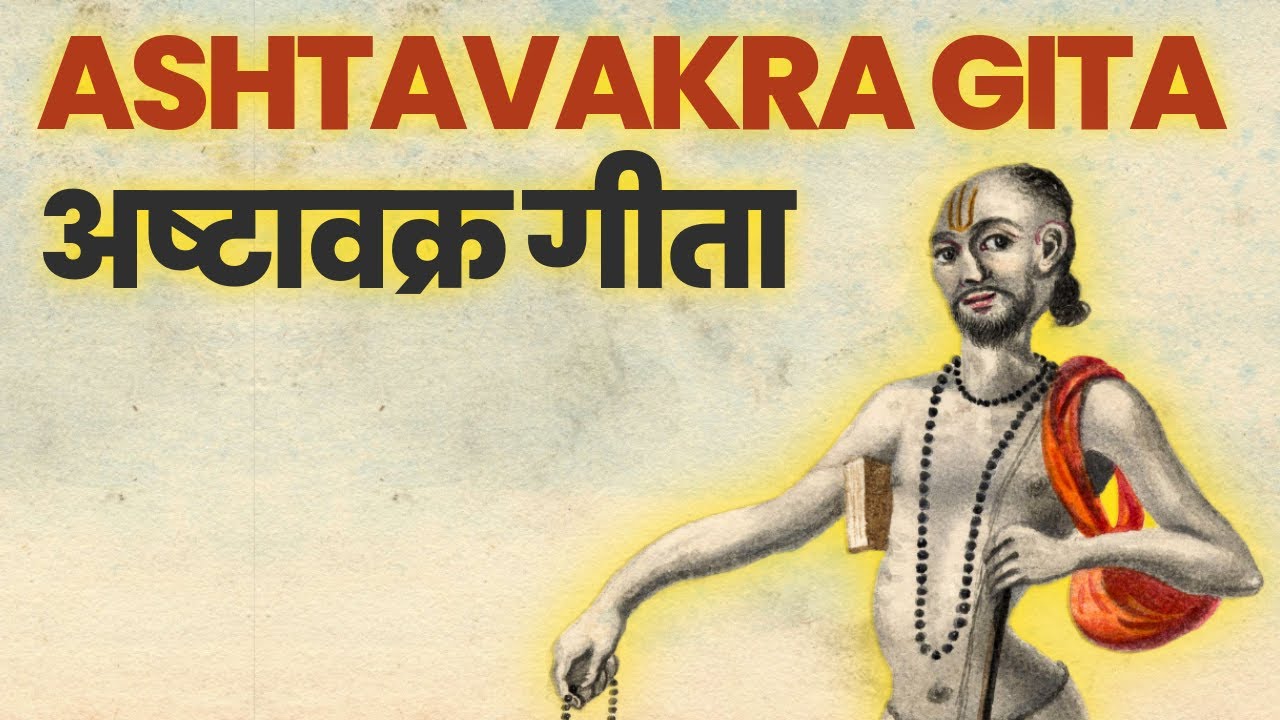
The video discusses the ancient text "Ashtavakra Gita," which features a dialogue between King Janaka and Sage Ashtavakra. The conversation revolves around concepts of truth, freedom, and self-realization. Key takeaways include the idea that true liberation comes from understanding one's true nature as pure consciousness and letting go of attachment to worldly desires, identities, and dualities.
- King Janaka seeks knowledge and liberation.
- Ashtavakra emphasizes the importance of recognizing one's true self beyond physical form and illusion.
Introduction to Ashtavakra Gita
The "Ashtavakra Gita" is an ancient text, characterized by a dialogue between King Janaka, who seeks Truth and liberation, and Sage Ashtavakra, who provides answers to his queries about knowledge, liberation, and renunciation.
The Path to Liberation
Ashtavakra advises King Janaka that to attain liberation, he must renounce worldly pleasures as if they are poison. He suggests cultivating qualities like patience, simplicity, kindness, and acceptance of truth as nectar. The essence of freedom lies in the realization that none of the physical elements define one's true self; only the soul, which is pure knowledge, remains.
Understanding Self-Identity
Ashtavakra stresses that one is not defined by caste, body, or any physical identity. The true self is formless, stands as a witness to everything, and remains liberated regardless of worldly conditions. The belief of being an individual separate from others traps one in bondage, which can be transcended by identifying with the purest form of knowledge.
The Illusion of Attachment
Believing oneself to be a doer or a sufferer leads to a toxic existence. True happiness emerges from the awareness that one does not act but instead witnesses life as it unfolds. Ashtavakra posits that understanding the ultimate truth can obliterate ignorance, leading to unadulterated joy and peace.
On Reality and Illusion
The world is described as an illusion, akin to mistaking a rope for a snake. Upon realizing this, one is engulfed in the bliss of pure knowledge. Understanding that the reality of all beings is enshrined within oneself leads to contentment, as one finds that everything stems from the self.
The Nature of Freedom
Janaka acknowledges his newfound understanding: he sees himself as pure consciousness, distinct from nature. The separation between self and the world dissipates—everything is interconnected. The essence of liberation lies in recognizing that duality and distinctions are mere constructs of the mind.
The State of the Enlightened
The enlightened being experiences neither joy nor sorrow, circulating through existence unscathed by the worldly tumult. This individual maintains a state of detachment and tranquility, seeing life's ephemeral nature clearly without attachment to desires.
The Clarity of Non-Duality
In this state, knowledge and ignorance dissolve; there is no distinction between the knower and the known. The realization of non-duality leads to the ultimate peace. This clarity destroys the illusions created by attachment, desire, and fear, establishing a consciousness that is ever-present and harmonious.
Release and Accept
The video emphasizes that true happiness is found through abandoning desires. The recognition that everything is transient allows one to live unaffected by the dualities of existence. The purest knowledge lies beyond human experience, urging seekers to transcend the sensory and intuitive realms.
Conclusion: Embracing the True Self
Janaka concludes by expressing that true understanding diminishes the importance of identities and actions, revealing that the self is beyond birth and death. A unified consciousness prevails, reflecting the oneness of existence. All distinctions evaporate, leaving only the essence of pure, unadulterated being.

