
Brief Summary
Kitty Hart-Moxon, a Holocaust survivor, revisits Auschwitz-Birkenau to share her experiences with a new generation, emphasizing the camp's horrors and her struggle for survival. She recounts her family's escape attempts, her time in the Lublin ghetto, and her eventual arrest and deportation to Auschwitz for illegal entry into Germany. Kitty details the dehumanizing conditions, daily life, and strategies for survival within the camp, including working in the latrines and the Canada section. She also describes the gas chambers, crematoria, and the uprising by Jewish prisoners. The video underscores the importance of remembering the Holocaust to prevent such atrocities from happening again.
- Kitty Hart-Moxon shares her experiences as a Holocaust survivor, revisiting Auschwitz-Birkenau.
- The video details her family's escape attempts, arrest, and deportation to Auschwitz.
- It describes the dehumanizing conditions, daily life, and survival strategies within the camp.
- Kitty recounts the horrors of the gas chambers, crematoria, and the uprising by Jewish prisoners.
- The video emphasizes the importance of remembering the Holocaust to prevent future atrocities.
Introduction
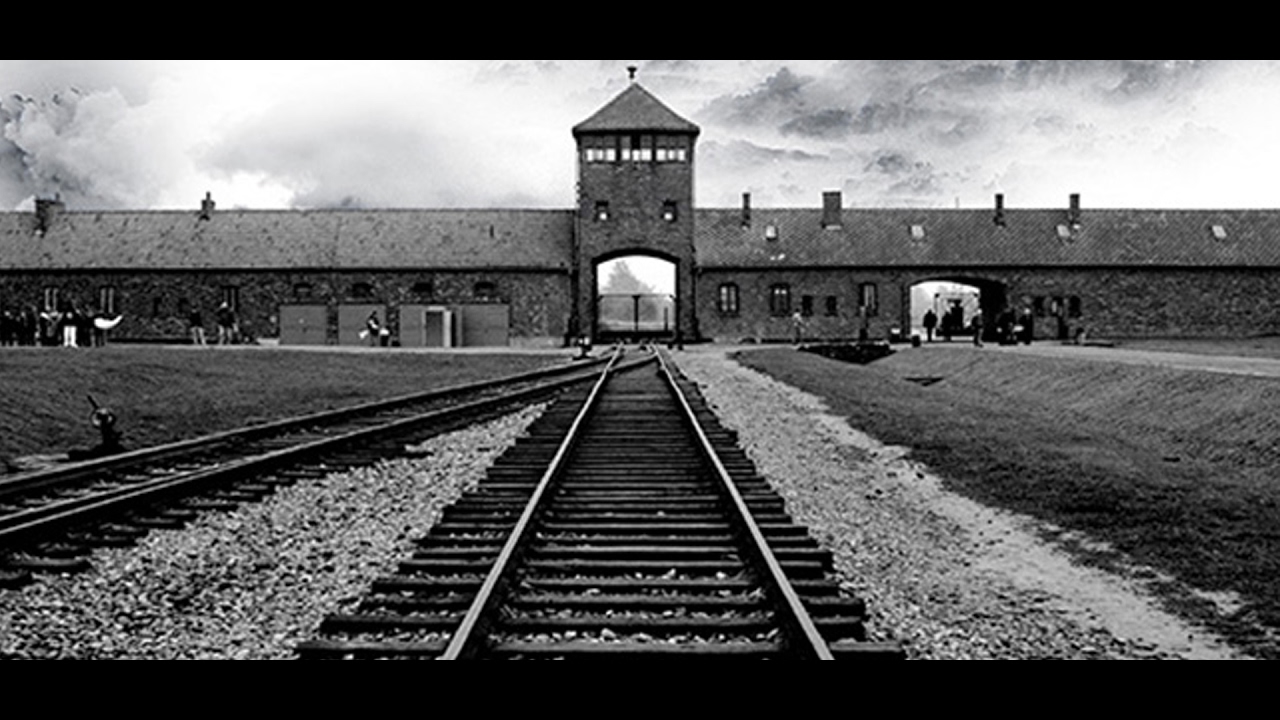
Kitty Hart-Moxon, a Holocaust survivor who was 17 years old when she arrived at Auschwitz-Birkenau in April 1943, returns to the camp to share her experiences with a new generation. Designed as a factory of death, Auschwitz was not intended for survival, yet Kitty made a commitment to describe its inhumanity to a world that was initially unwilling to listen. She brings two young women who are the same age she was during her time in the camp to show them the struggle for survival.
First Impressions of the Camp
Kitty describes her first impressions of Auschwitz, recalling the incredible mud and the sight of ghostlike figures with shaved heads and tattered clothes. These people were staggering around, screaming in various languages, and being beaten. She emphasizes the importance of her eyewitness account in ensuring that the intentionality of the perpetrators is clear and that the events cannot be denied. The muddy conditions made movement difficult, and the overall experience was one of profound inhumanity.
Escape Attempts and the Lublin Ghetto
Prior to the invasion, Kitty's father decided the family needed to escape. Her brother fled to the Russian side and joined the Polish Army within a Russian unit, eventually being killed in the Battle of Stalingrad. Kitty, her parents, and her grandmother boarded a train that took them to Lublin, where they were forced into the Lublin ghetto. Survival in Poland as a Jewish person required relying on others. Kitty's mother taught English to create relationships, which led to a priest offering assistance.
False Documents and Arrest
The priest provided Kitty and her mother with false documents to escape, but her father had to separate and work in a sawmill. Kitty and her mother were to mix with the Polish population being transported to work in factories in Germany. Despite the documents being in order, they were reported to the authorities and arrested for illegal entry into Germany. The Nazis, despite their ability to commit atrocities, insisted on processing them through the penal system.
Deportation to Auschwitz
Kitty and her mother were initially told they would be executed by firing squad, but their death sentence was commuted to life imprisonment in Auschwitz. They were transported in a specially converted train for 48 hours, arriving in darkness with no idea where they were. Upon arrival, they were met with barking dogs, women with whips, and orders to run. The stench of roasting meat filled the air, a grim foreshadowing of the horrors to come.
Quarantine and Initial Survival Strategies
Kitty and her mother were sent to Birkenau, the largest of the Auschwitz camps, and placed in quarantine. They were pushed into a wooden barrack and squeezed in to sleep. Kitty spent the night next to a German Gypsy who predicted her survival. The next morning, whistles blew, and everyone was ordered out. Kitty discovered the woman next to her had died and realized the necessity of taking everything from the dead to survive.
The Ramp and Selections
In 1943, Kitty was assigned to work on a new rail line into Birkenau called the ramp. In 1944, she witnessed the arrival of transports of Jews from Hungary. People arrived in cattle cars, sometimes with seven to ten trains arriving in 24 hours. The trains were often sealed for hours, and many died during the journey. Upon arrival, families were split, with women, children, and the elderly sent directly to their deaths, while the young and able-bodied were chosen for slave labor.
Processing and Dehumanization
New arrivals were taken to a processing area where they were stripped, smeared with green fluid, and had their hair shaved. The hair was used to create cloth and line submarines. They were then tattooed, marking the moment they lost their identity and became a number. Survival depended on the place of work, having shoes and a bowl, and adopting a tunnel vision focused on basic needs like an animal.
Daily Life in Auschwitz
Daily life in Auschwitz began with whistles at around 4:00 AM, followed by roll calls that were a source of great terror. The prisoners had to rush out of the barracks into a sea of mud. Selections were a daily occurrence, with anyone deemed no longer useful sent to the gas chamber. Hunger was a constant obsession, and the amount of nutrition received depended on one's position in line for food.
Living Conditions and Latrines
Living conditions were horrific, with eight people sharing a single straw mattress and blanket. People often died during the night, and survivors would take their clothes for warmth. There were no toilets in the barracks, only buckets, and prisoners had to judge when to use them to avoid being the one to empty them. Kitty worked in the latrines, a job she acquired to have access to the facility, despite the horrible conditions.
Dehumanization and Cold
The latrines were designed to dehumanize and degrade the prisoners, making them live in their own filth. This dehumanization made it easier for the Nazis to kill them. In the winter, the intense cold was a constant challenge, and prisoners huddled together for warmth, much like penguins. Standing still for hours in the cold with no shoes was a horrific experience.
Block 25: The Death Block
Block 25 was the place where inmates were sent to await death after being selected. The Nazis would collect hundreds of prisoners before dispatching them to the gas chamber. People kept away from Block 25 because selections took place there, and inmates had to undress and turn around in front of SS doctors. No one survived once they were sent to Block 25.
Language and Loss of Friends
Language was a significant problem, as the camp had its own slang combining German and Polish. This made it difficult for Greeks, Italians, and Hungarians to understand. Kitty lost friends constantly, which was devastating because friendships were crucial for survival. Friends could provide access to resources and help in difficult situations.
Survival Strategies and Mutual Support
The electric fences surrounding the camp were a constant threat, and many people committed suicide by touching them. "Organizing" was a universal term for getting hold of anything, whether bought, stolen, or found. Women often worked in groups of four, with each having access to different resources like the toilet, water, or clothes. This mutual support was vital for survival.
The Sick Bay and Dr. Mengele
Kitty often hid in the sick bay to conserve energy, and her mother, who worked there, would sometimes hide her. Kitty's mother used her knowledge of German to help others and psychologically tried to keep people alive. Kitty worked as a cleaner in the infirmary, bringing out bodies and hiding friends. However, the sick bay was a dangerous place due to frequent selections by SS doctors, including Dr. Mengele.
Canada: Sorting the Loot
Canada was the section where confiscated valuables were sorted and shipped back to Germany. Kitty joined Canada because her mother believed there would be food there. The scale of the operation was immense, with 30 sheds full of people's belongings. Kitty's job was sorting men's jackets, and she had to meet a certain quota. The jackets often contained jewelry, diamonds, and money, which had to be turned in.
The White House and Crematoria
Kitty recounts passing by the White House, where prisoners were shot in the neck and their bodies thrown into pits. She witnessed bodies being burned in pits when the crematoria were full. The area around the crematoria was eventually burned to erase traces of murder. Kitty worked in the Canada section right alongside crematorium number four, where Jews were being gassed daily.
The Gas Chambers
Kitty had a direct view into the gas chamber. Groups of people, including small children, were herded into the crematorium. They were told to remember where they hung their clothes, as they would get them back. The gas chamber was sealed, and an SS officer would throw in gas, causing screams and suffocation. The bodies were then taken to the ovens, and any valuables were removed.
The Uprising and Evacuation
On October 7, 1944, Kitty witnessed the uprising by Jewish prisoners who had been forced to operate the crematorium. They cut the electrified fence and tried to escape. Kitty and her friends threw themselves to the ground to avoid the shootout. Following the uprising, there was a huge inquiry, and Kitty was transferred back to the main camp because her mother had spoken to one of the commandants.
Liberation and Aftermath
After leaving Auschwitz-Birkenau in November 1944, Kitty and her mother went through six more camps and several death marches before being liberated in Salzwedel, Germany, on April 14, 1945. Liberation was bittersweet, as they had to confront the loss of family and communities. They had guarded themselves from feeling anything for years, and the feeling of emptiness was overwhelming.
Remembering the Holocaust
Kitty emphasizes the importance of remembering the Holocaust to prevent such atrocities from happening again. She is the ultimate proof of her survival, and her story serves as a reminder of the horrors of the past. She points out the water, which is the final resting place and the cemetery. Kitty's message is that she was there, this is what they did to her, this is how it was set up, but she prevailed.

