
Brief Summary
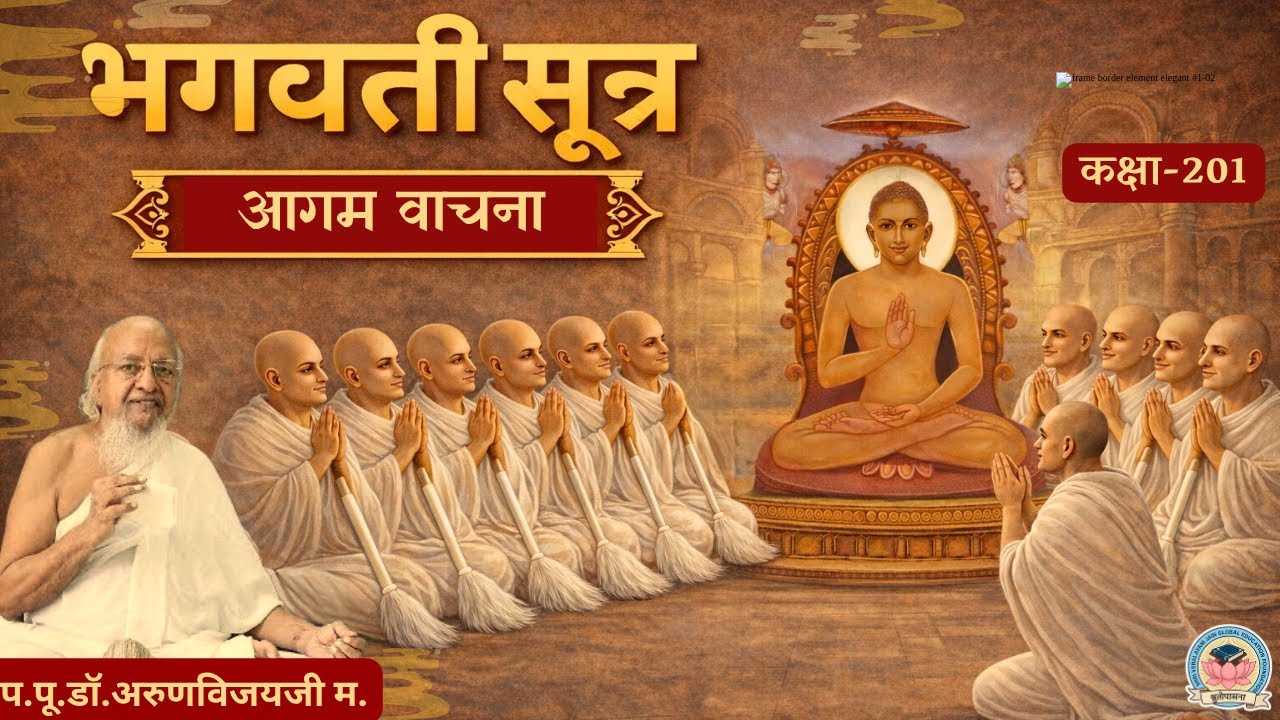
This video provides an in-depth explanation of the relationship between the soul and the body, focusing on the concept of karma and how it affects the soul's qualities. It explains the different types of bodies (physical, energetic, and karmic), the process of karmic bondage, and the role of influx (Asrava) in accumulating karma. The discussion also covers the unique characteristics of the soul's regions (Pradesh) and the nature of Pudgal Parmanu (matter particles) in relation to karmic accumulation.
- The soul is intrinsically linked to the body, with karmic particles influencing its qualities.
- Karmic bondage occurs through influx (Asrava), with 42 channels facilitating the accumulation of karmic particles.
- The soul's regions (Pradesh) remain constant, while karmic particles bind to them, obscuring the soul's inherent qualities.
Invocation
The video begins with a Jain prayer, invoking various spiritual figures and principles. This prayer sets a tone of reverence and prepares the audience for a discussion on Jain philosophy and spirituality.
Introduction to the Discourse
The speaker introduces the topic of the discourse, which is based on the Bhagwati Sutra Agam. The discussion revolves around the eighth Shatak and ninth Uddeshak, focusing on the subtle principles of the body and its bondage with the soul. It emphasizes the necessity of the body for any living being in the cycle of life and death, highlighting that without a body, a soul cannot exist in the world.
Types of Bodies and Karmic Influence
The speaker explains that the soul is bound to the body through the intake of Pudgal Parmanu, which forms the outer physical body. This body enables the soul to interact with the world through various activities. The discussion introduces two internal bodies: the Tejas body, responsible for energy and digestion, and the Karman body, which carries karmas. The Tejas body is essential for all living beings, while the Karman body influences the soul's qualities by covering them.
Tejas and Karman Bodies: Functions and Differences
The Tejas body, formed from Tejas Vargana, is responsible for metabolic processes, while the Karman body, formed from Karman Vargana, obscures the soul's qualities. The Tejas body supports the physical body by processing energy from food, whereas the Karman body directly affects the soul by veiling its inherent attributes. The speaker emphasizes that the Karman body, made of karmic particles, is unique because its sole purpose is to obscure, suppress, distort, or misrepresent the qualities of the soul.
The Nature of Karmic Bondage
The speaker explains that Karman Vargana becomes a Karman body only after it binds with the soul. Before binding, it remains external. This binding is essential for the soul to experience the consequences of its actions. The speaker clarifies that while the Tejas and Karman bodies are internal, they are not considered part of the physical body because they are directly connected to the soul's regions (Pradesh) and affect its qualities.
Necessity of Yoni for Body Formation
The speaker differentiates between the formation of the physical body and the Tejas and Karman bodies. The physical body requires a Yoni (source of origin) for its formation, whereas the Tejas and Karman bodies do not. The Tejas and Karman bodies are formed continuously as karmic particles attach to the soul's regions (Pradesh).
The Process of Influx (Asrava)
The speaker introduces the concept of influx (Asrava), which is the process by which karmic particles attach to the soul's regions (Pradesh). This process is continuous and results in the accumulation of karma. The speaker explains that there are 42 channels (gateways) through which karmic particles enter the soul, leading to bondage and obscuring the soul's qualities.
Why Vassa Vargana is Not Considered a Body
The speaker addresses why Vassa Vargana (speech particles) are not considered a body, even though they are taken in and used for communication. Unlike the physical body, Vassa Vargana cannot be stored or accumulated within the soul. The speaker explains that each Vargana has a specific function and cannot perform the function of another Vargana.
Distinct Functions of Different Varganas
The speaker emphasizes that each Vargana has a specific function and cannot perform the function of another Vargana. For example, Tejas Vargana cannot perform the function of Karman Vargana, and vice versa. This distinction is crucial in understanding how different types of karmic particles affect the soul.
The Role of Aasrav in Attracting Karman Vargana
The speaker explains that Karman Vargana does not attach to the soul automatically; it requires the soul to perform Aasrav (influx) through various activities. These activities include Yoga Aasrav (mental, verbal, and physical activities), Indriya Aasrav (sensory activities), and Kashaya Aasrav (emotional activities). The speaker details the 42 types of Aasrav, which act as gateways for karmic particles to enter the soul.
The 42 Gateways of Influx (Asrava)
The speaker elaborates on the 42 gateways of influx (Asrava), which include five types of sensory influx, four types of emotional influx (Kashaya), three types of Yoga influx, and five types of wrongful activities. These gateways facilitate the entry of Karman Vargana into the soul, leading to karmic bondage. The speaker suggests creating a visual representation of these 42 gateways to monitor and reduce influx.
The Process of Bondage (Bandha)
The speaker explains the process of bondage (Bandha), which occurs after the influx (Asrava) of karmic particles. Bondage involves four aspects: nature (Prakriti), region (Pradesh), intensity (Ras), and duration (Sthiti). These aspects determine the type, quantity, intensity, and duration of the karmic effect on the soul.
The Nature of Karman Body
The speaker clarifies that the Karman body is formed when karmic particles bind to the soul's regions (Pradesh), obscuring its qualities. This bondage is what gives rise to the Karman body, which is responsible for the soul's experiences in the cycle of life and death. The speaker emphasizes that the Karman body's primary function is to veil the soul's inherent qualities.
Bondage with Soul's Regions (Pradesh) vs. Qualities
The speaker clarifies that karmic particles bind with the soul's regions (Pradesh), not its qualities. This binding obscures the qualities inherent in each region of the soul. The speaker uses the analogy of water binding with flour to form dough, illustrating how karmic particles bind with the soul's regions (Pradesh) to form the Karman body.
Karma and Karman Body: Interchangeable Terms
The speaker explains that the terms "Karma" and "Karman body" can be used interchangeably. "Karman body" refers to the structure formed by the karmic particles, while "Karma" refers to the actions and their consequences. Both terms describe the same phenomenon of karmic influence on the soul.
The Process of Karma Formation
The speaker reiterates the process of karma formation, emphasizing the roles of nature (Prakriti), region (Pradesh), intensity (Ras), and duration (Sthiti) in shaping the karmic effect. This process is analogous to mixing water with flour to form dough, where each element contributes to the final product.
Why the Soul is Not Called a Body
The speaker addresses why the soul, despite having numerous regions (Pradesh), is not called a body. The reason is that the soul is a single substance and does not bind with another substance of opposing qualities to form a composite entity. The soul remains a distinct entity, even though karmic particles attach to its regions (Pradesh).
Conditions for Body Formation
The speaker explains that for a body to be formed, two substances with opposing qualities must bind together and become unified. This unification is what gives rise to a body. In the case of the soul, it remains a single substance and does not undergo this unification process, hence it is not called a body.
The Nature of Soul's Regions (Pradesh)
The speaker emphasizes that the soul's regions (Pradesh) are constant and do not diminish, even when the soul contracts. These regions (Pradesh) do not bind with each other; instead, karmic particles bind to them. The speaker uses the analogy of flour in a container to illustrate that the soul remains a single substance, even with numerous regions (Pradesh).
The State of Liberated Souls (Siddha)
The speaker discusses the state of liberated souls (Siddha), which do not accumulate karmic particles because they no longer perform influx (Asrava). Liberated souls lack sensory organs, mental faculties, and physical activities, preventing the accumulation of new karma. The speaker contrasts this with the state of souls in Nigod, which experience suffering due to their contracted state and the presence of karmic particles.
The Nature of Pudgal Parmanu (Matter Particles)
The speaker explains that only Pudgal Dravya (matter substance) can divide into individual particles (Parmanu). These particles then combine to form larger structures. This division and combination process does not occur in other substances like the soul. The speaker emphasizes that the soul's regions (Pradesh) do not divide into particles.
The Constancy of Soul's Regions (Pradesh)
The speaker reiterates that the soul's regions (Pradesh) are constant and do not divide or combine. This constancy is maintained even when the soul contracts or expands. The speaker contrasts this with the state of souls in Nigod, which experience suffering due to their contracted state and the presence of karmic particles.
The State of Souls in Nigod
The speaker describes the state of souls in Nigod, which are in a contracted state and experience suffering due to the presence of karmic particles. Despite being in a contracted state, the soul's regions (Pradesh) do not bind together. The speaker contrasts this with the state of liberated souls (Siddha), which are free from suffering.
The Process of Karmic Attachment
The speaker explains that karmic particles attach to the soul's regions (Pradesh) infinitely, leading to karmic bondage. This bondage obscures the soul's qualities and causes suffering. The speaker emphasizes that the Karman body is formed from the accumulation of these karmic particles.
The Function of Karman Body
The speaker clarifies that the Karman body's primary function is to obscure the soul's qualities. This obscuration is what causes the soul to experience suffering and remain in the cycle of life and death. The speaker emphasizes that each region of the soul has infinite qualities, and the Karman body veils these qualities.
The Nature of Soul's Qualities
The speaker emphasizes that each region of the soul has infinite qualities, and these qualities are consistent throughout the soul. The Karman body veils these qualities, causing the soul to act contrary to its true nature. The speaker explains that the soul's qualities are inherent and do not change, but the Karman body obscures them.
The Process of Transformation
The speaker explains that when karmic particles bind to the soul, the soul's state transforms. This transformation is due to the influence of the karmic particles, which obscure the soul's qualities. The speaker emphasizes that the Karman body is formed from the accumulation of these karmic particles.
The Qualities of the Soul
The speaker describes the qualities of the soul, including knowledge, perception, conduct, and bliss. These qualities are inherent in each region of the soul and are obscured by the Karman body. The speaker emphasizes that the soul's qualities are consistent throughout the soul.
The Karman Body as a Covering
The speaker uses the analogy of a covering to describe the Karman body. The Karman body covers the soul, obscuring its qualities. The speaker emphasizes that the Karman body is formed from the accumulation of karmic particles.
The Importance of Understanding Karma
The speaker emphasizes the importance of understanding karma and its effects on the soul. This understanding is crucial for spiritual progress and liberation. The speaker encourages the audience to study and reflect on the principles of karma.
The Nature of Pudgal and Soul
The speaker reiterates the difference between Pudgal (matter) and the soul. Pudgal has regions (Pradesh) only when it is in a combined state (Skand), while the soul always has regions (Pradesh). The speaker emphasizes that the soul's regions (Pradesh) do not divide into particles.
Conclusion
The speaker concludes the discourse by summarizing the key points and emphasizing the importance of understanding the relationship between the soul and karma. The speaker encourages the audience to continue studying and reflecting on these principles for spiritual growth. The video ends with a prayer, invoking spiritual figures and principles.

