
Brief Summary
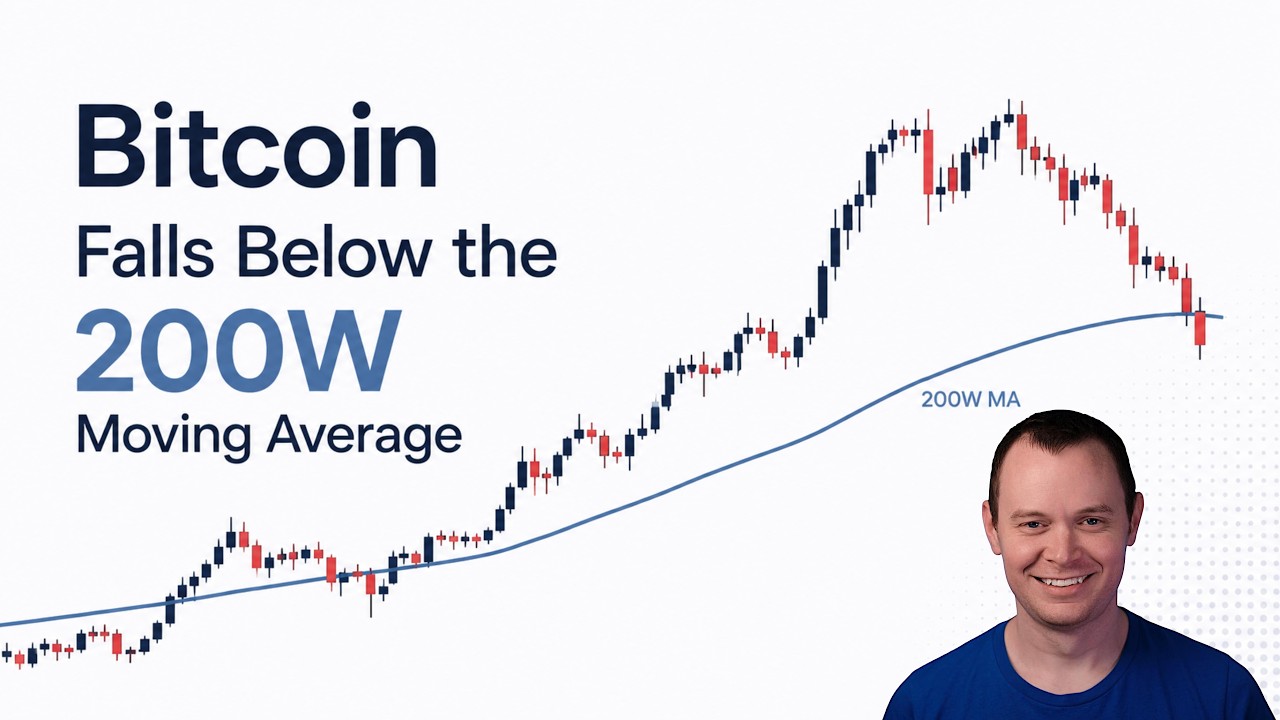
In this video, Benjamin Cowen discusses Bitcoin's recent decline below its 200-week moving average, analyzing its implications and historical context. He reflects on previous bear markets and potential future trends for Bitcoin, emphasizing the importance of time-based capitulation versus price-based capitulation.
- Bitcoin has closed below its 200-week moving average, a first for this cycle.
- Historical patterns indicate Bitcoin may form a low early in the summer, followed by a countertrend rally and another drop.
- The appearance of price-based capitulation could prompt a reevaluation of market predictions.
Bitcoin's Decline Below 200-Week Moving Average
Bitcoin has recently closed below its 200-week moving average for the first time in this cycle, recalling the last occurrence in June 2022. Cowen notes that while reactions may claim this cycle is different, similarities with past cycles persist. He highlights how Bitcoin typically performs leading into summer, often forming a low early followed by rallies before ultimately hitting market cycle bottoms.
Potential Events Impacting Bitcoin's Trend
Cowen discusses potential catalysts that could affect Bitcoin's trajectory, similar to events such as the FTX collapse or the pandemic's impact on the market in 2019. If no significant event occurs to trigger price-based capitulation, he maintains that the market will likely follow a more conventional pattern typical of mid-term bear markets.
Historical Comparisons and Market Behavior
He draws comparisons between current trends and previous years, noting distinct patterns in lows and rallies. In both 2018 and 2026, the market observed similar movements, such as lows in February and following rallies. Cowen emphasizes that, without realizations of major price-based capitulation, Bitcoin may continue to see lower lows before finding a bottom.
Investment Strategies in Current Market
Cowen suggests a cautious approach to investing in Bitcoin through Dollar-Cost Averaging (DCA) in the second half of mid-term years. He acknowledges the risks of DCA during a downturn but also points out the relevance of a long-term perspective in investing during these periods. He concludes that while typical movement patterns can be anticipated, investors should remain flexible and not be overly attached to any predictions.

