
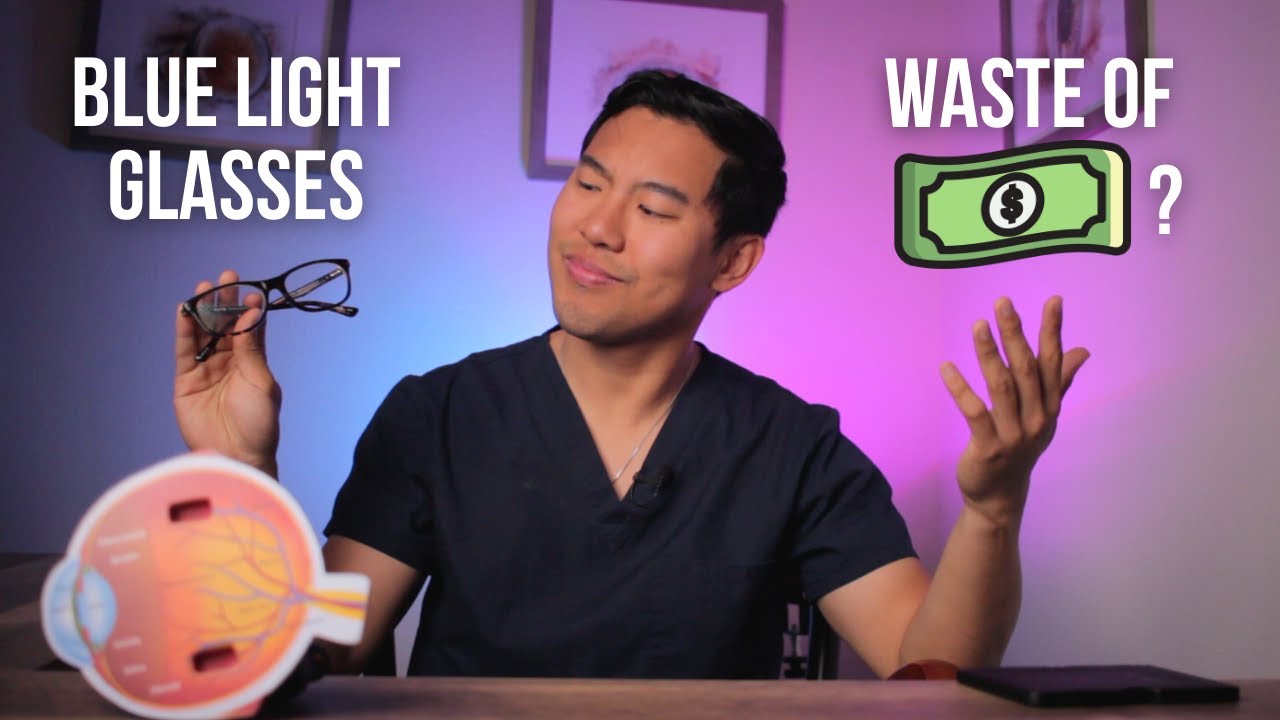
Brief Summary
Dr. Michael Chua discusses why blue light blocking glasses are often a waste of money and offers better, science-backed alternatives for protecting your vision. He addresses common claims about blue light causing retinal damage, digital eye strain, and circadian rhythm disruption, providing evidence-based insights and practical tips for eye health and sleep hygiene.
- Blue light blocking glasses are often marketed aggressively but lack solid clinical evidence to support their benefits for retinal health and digital eye strain.
- UV blocking sunglasses are essential for protecting against cataracts and skin cancers around the eyes.
- Simple habits like blinking frequently, following the 20-20-20 rule, and using artificial tears can effectively treat digital eye strain.
- Adjusting screen time and exposure to natural light can help regulate your circadian rhythm without needing blue light blocking glasses.
Introduction
Dr. Michael Chua introduces the topic of blue light blocking lenses, addressing their claims of protecting the retina and reducing digital eye strain. He aims to provide reasons why these glasses may not be worth the money, offering alternative, scientifically supported methods for vision protection. The video will examine common advertisements and claims made by blue light lens companies, such as assertions that blue light leads to macular degeneration, impaired performance, sleep cycle disruption, and various health issues like ADHD, obesity, and diabetes.
#1 Does blue light damage your retina?
The claim that blue light causes macular degeneration and retinal disease is addressed. Studies suggesting harmful effects of blue light were conducted on rats and cells in petri dishes, using stronger and more focused blue light than what humans encounter daily. Clinical studies on real-world blue light exposure and its effects on human eyes have not found solid evidence supporting the use of blue light blocking lenses for retinal health.
#2 Does blue light cause digital eye strain?
Digital eye strain, characterized by tired eyes, gritty sensation, and blurry vision, is a common concern. A study in the American Journal of Ophthalmology found that blue blocking glasses did not significantly reduce eye strain symptoms compared to clear glasses. The study involved 120 participants with digital eye strain, half wearing clear glasses and half wearing blue blocking glasses, without knowing which type they had. The results showed no difference in eye strain symptoms between the two groups, indicating that blue blocking lenses have no effect on digital eye strain.
#3 Does blue light affect your circadian rhythm?
It is acknowledged that blue light from digital devices can affect the sleep-wake cycle (circadian rhythm). Exposure to blue light at night can impact melatonin levels. However, the content being watched also plays a significant role, as stimulating or interesting content can affect the brain's attention network, leading to poor sleep habits, regardless of blue light exposure. Tips to improve sleep hygiene and regulate circadian rhythm will be provided later in the video.
Buy These Instead!
Instead of blue light blocking glasses, it's recommended to invest in ultraviolet (UV) blocking sunglasses that block 100% of UVA and UVB light. UV light is a proven risk factor for cataracts and certain cancers of the eyelids, such as squamous cell carcinoma, basal cell carcinoma, and melanoma. Sun exposure around the eyes can also cause loss of collagen and elasticity in the skin, leading to wrinkles.
How to treat digital eye strain
The most common cause of digital eye strain is dryness due to reduced blinking frequency while focusing on screens. Humans typically blink 15-20 times per minute, but this decreases to about five times per minute when using digital devices. Blinking is essential for coating the eyes with tears, and reduced blinking can cause the tears to evaporate, leading to irritation and strain. Reminding oneself to blink frequently is a simple yet effective treatment.
20-20-20 Rule
The 20-20-20 rule is recommended: every 20 minutes, relax your eyes for 20 seconds by looking at an object at least 20 feet away, while making a conscious effort to blink. Keeping artificial tears nearby and using them to lubricate the cornea can also alleviate irritation.
How to maintain your circadian rhythm
To maintain a healthy circadian rhythm, instead of using blue blocking glasses, activate the blue blocking mode on devices (Night Mode on Apple, Blue Filter on Android). Avoid screen time an hour or two before bed. Blue light during the day is beneficial, so spending time outside in the morning (7-11 am) can increase alertness. A 15-20 minute outdoor brisk walk or jog in the morning is beneficial for both cardiovascular health and circadian rhythm regulation.

