
Brief Summary
This video discusses how to build an uncopyable advantage in a competitive world. It argues that traditional advantages like skills, knowledge, and networks are easily replicated. The key is to develop a "proprietary positioning" based on the unique intersection of your lived experiences, contextual trust, and perspective arbitrage. This position makes competition irrelevant by occupying terrain so specific that no one else can credibly compete.
- Skills, knowledge, networks and capital can be copied.
- Proprietary positioning is the key to make competition irrelevant.
- The goal is to build a position so specific, so accumulated, so contextually embedded, that the people who might have been your competitors are instead your referrers, your collaborators, your advocates.
Why Everything You Were Told to Build Can Be Copied
The video challenges the conventional wisdom of building advantages based on skills, knowledge, networks, capital, and credentials, asserting that these are easily replicable. Skills, once a durable differentiator, can now be acquired rapidly through online education and AI-assisted learning. Knowledge is readily available through search engines, diminishing its competitive edge. Networks can be built by anyone with patience and strategic intent, while capital barriers to entry have significantly declined. Credentials, by definition, are replicable standards. Therefore, relying solely on these factors places individuals in a constant race to maintain their advantage, as others can easily acquire or replicate them.
The Asset Nobody Can Copy: Proprietary Positioning
The video introduces the concept of "proprietary positioning" as an uncopyable asset, stemming from the unique intersection of three elements: your lived experience stack, contextual trust capital, and perspective arbitrage. The lived experience stack is the specific combination of contexts, problems, failures, environments, and transitions accumulated in a particular sequence throughout your life, making it structurally unrepeatable. Contextual trust capital is the trust earned within a specific community or industry through demonstrated behavior over time, which cannot be transferred or shortcut. Perspective arbitrage is the ability to see value and opportunities that others cannot because of your unique vantage point, making your insights feel obvious to you but extraordinary to others.
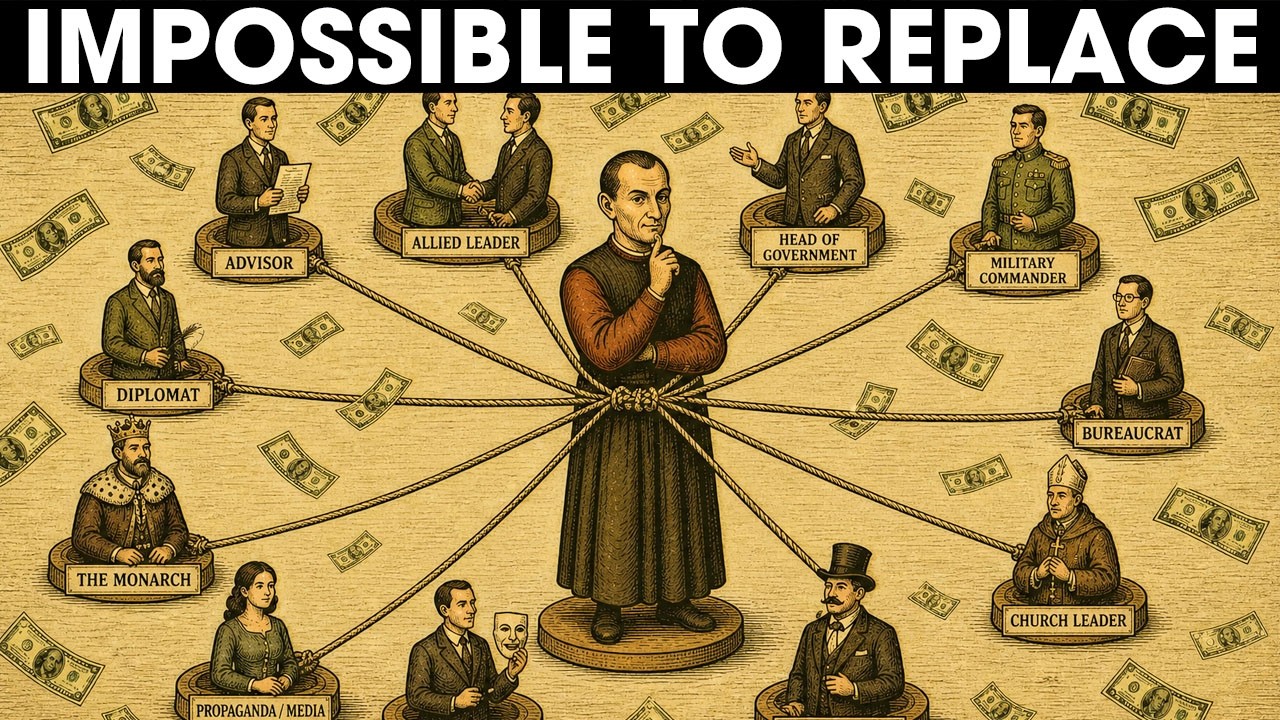
Machiavelli's Lens: The Fortress That Cannot Be Taken
The video draws parallels with Machiavelli's strategic thinking, emphasizing the importance of establishing a defensible position rather than relying on force. Machiavelli observed that the most enduring city-states were those with geographic advantages that made conquest prohibitively expensive. Similarly, in financial competition, proprietary positioning creates an economic fortress. It makes replication so costly that competitors will seek easier targets. Establishing a strong position early requires less effort to maintain over time, as each year of experience, reliability, and application deepens the advantage, making it more valuable and less attackable.
The 5 Signs You Are Building the Wrong Kind of Advantage
The video presents five signs that indicate you are building a copyable advantage: being replaceable by someone with the same title, having your rate determined by market research, experiencing decay in your advantage when you stop actively maintaining it, competing for the same opportunities as respected peers, and struggling to describe your specific value in one sentence without qualifications. These signs serve as a diagnostic tool to recognize whether your efforts are leading to a truly uncopyable position or simply interchangeable competence. Addressing these signs requires shifting focus from excelling at interchangeable skills to becoming uniquely positioned in a category of one.
Why Most People Never Build It
The video explores why most individuals fail to develop proprietary positioning, despite possessing the raw materials. The first reason is the legibility trap, where individuals perceive their experiences and perspectives as ordinary, overlooking their unique value. The second reason is the visible path problem, where institutional systems reward standardized advantages, making them attractive investment targets, while proprietary positioning lacks clear external validation. The third reason is combination avoidance, where individuals are discouraged from accumulating unusual combinations of experiences due to social feedback that favors specialization, hindering the construction of a unique and uncopyable position.
The Construction Blueprint: 4 Moves
The video outlines four moves to deliberately build proprietary positioning: excavate your experience stack, identify your perspective arbitrage, build the trust trail in one specific context, and make the position legible. Excavating your experience stack involves mapping your contexts, problems, communities, and transitions to identify the unique combination that produced your vantage point. Identifying your perspective arbitrage means recognizing the problems, opportunities, and connections that are invisible to others due to your specific combination of experiences. Building the trust trail requires consistent presence and demonstrated reliability in a specific community to establish contextual trust. Making the position legible involves articulating the specific problem you solve, the context you serve, and the vantage point your experience and trust have created in a clear and differentiating statement.
The End of Competition
The video describes the state beyond competition achieved through proprietary positioning, where the competitive frame dissolves. Instead of competing, individuals in adjacent roles become referral sources because they recognize you as the only credible solution for problems within your specific intersection. This position deters conflict, as the cost of competing exceeds the potential gain. The goal is to build a position so specific, accumulated, and contextually embedded that potential competitors become collaborators and advocates, as you are no longer playing the same game.

