
Brief Summary
This Crash Course Biology video explains cellular respiration, the process by which cells convert food and oxygen into energy in the form of ATP. It details the three main stages: glycolysis, the citric acid cycle, and oxidative phosphorylation, highlighting the importance of mitochondria in this process. The video emphasizes how ATP powers various cellular functions and the efficiency of ATP production within cells.
- ATP is the energy currency of the cell, powering essential processes like maintaining homeostasis.
- Cellular respiration involves three main stages: glycolysis, the citric acid cycle, and oxidative phosphorylation.
- Mitochondria are crucial for cellular respiration, particularly in the final stage of ATP production.
Introduction to Cellular Respiration
Mitochondria are essential organelles within cells that convert energy from food and oxygen into ATP, the fuel necessary for various bodily functions. Cellular respiration, a process that occurs behind the scenes, is vital for multicellular, oxygen-breathing organisms. This process breaks down food and oxygen to energize cells, enabling activities from simple tasks to complex biological functions.
The Role of ATP
Energy in our bodies is stored in the molecule ATP, or adenosine-triphosphate, which acts like a rechargeable battery. ATP powers crucial cellular processes, including maintaining homeostasis by regulating the body's internal balance. The human body constantly recycles ATP through cellular respiration, a process that requires oxygen for aerobic organisms to release energy from food and store it as ATP. Anaerobic respiration and fermentation are alternative processes that do not require oxygen, producing energy in organisms like bacteria and in the creation of foods like sourdough and kimchi.
The Three Stages of Cellular Respiration
Cellular respiration involves three main stages, starting with glycolysis, which occurs in the cell's cytoplasm. Glycolysis breaks down glucose into pyruvate through a series of enzymatic reactions, producing a net of two ATP molecules and NADH, a carrier molecule. The pyruvate then moves into the mitochondria for the second stage, the citric acid cycle (also known as the Krebs cycle).
Citric Acid Cycle
In the mitochondria, pyruvate is processed and oxidized, releasing carbon dioxide and producing more NADH and FADH2, another transport molecule. The citric acid cycle involves a series of reactions that regenerate the starting molecule, oxaloacetate, while producing ATP, NADH, and FADH2. This cycle occurs twice for every glucose molecule.
Oxidative Phosphorylation
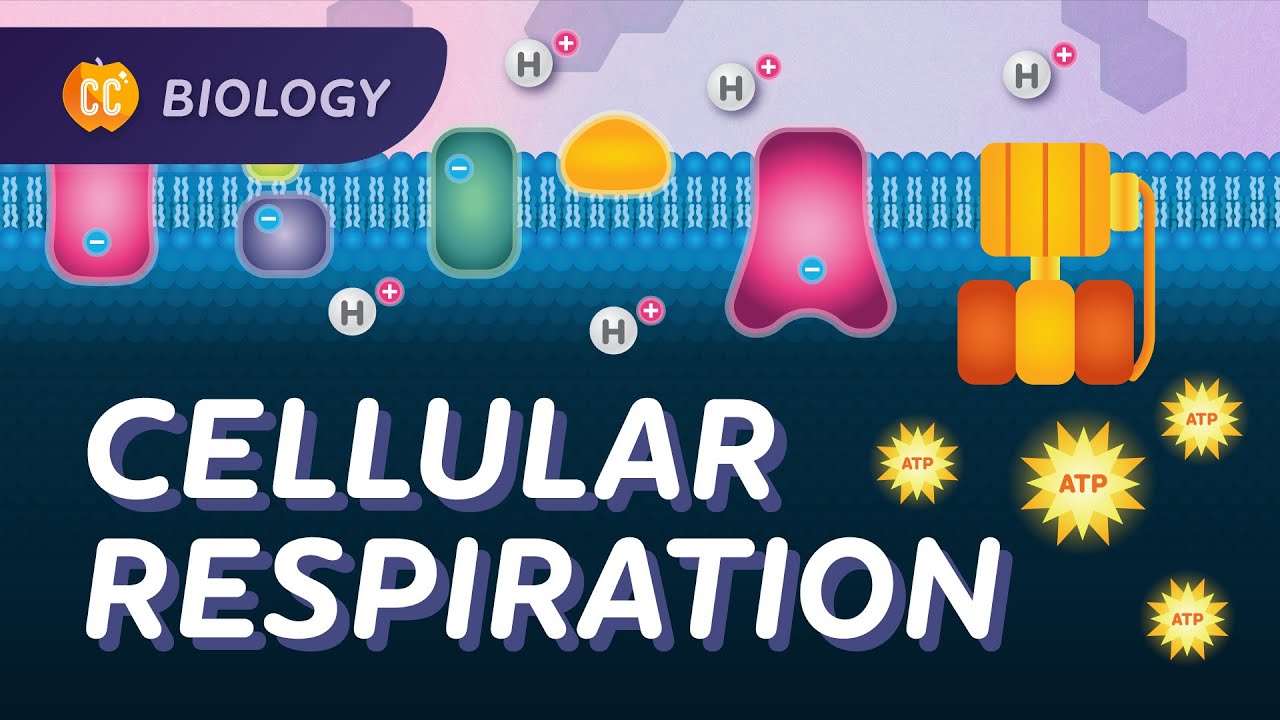
The final stage, oxidative phosphorylation, also takes place in the mitochondria, where most ATP is generated. The inner mitochondrial membrane houses the electron transport chain, which uses electrons from NADH and FADH2 to pump protons into the intermembrane space, creating a proton gradient. This gradient drives ATP synthase, an enzyme that produces around thirty ATP molecules for each glucose molecule.
Recap of Cellular Respiration
Cellular respiration begins with glycolysis in the cytoplasm, producing pyruvate, ATP, and NADH. Pyruvate then enters the mitochondria, where it is oxidized and enters the citric acid cycle, producing carbon dioxide, ATP, and more NADH. Electrons and protons are transported into the mitochondria via NADH and FADH2, powering the electron transport chain and creating a proton gradient. This gradient drives ATP synthase to produce a large amount of ATP, which powers cellular processes. The remaining electrons combine with oxygen to form water.
Conclusion
Cellular respiration is a complex but vital process that generates ATP, the energy currency for our bodies. Mitochondria are essential for this process, acting as the powerhouse of the cell. The efficiency and speed of ATP production are remarkable, with millions of ATP molecules generated per second in a single cell, highlighting the importance of mitochondria in sustaining life.

