
Brief Summary
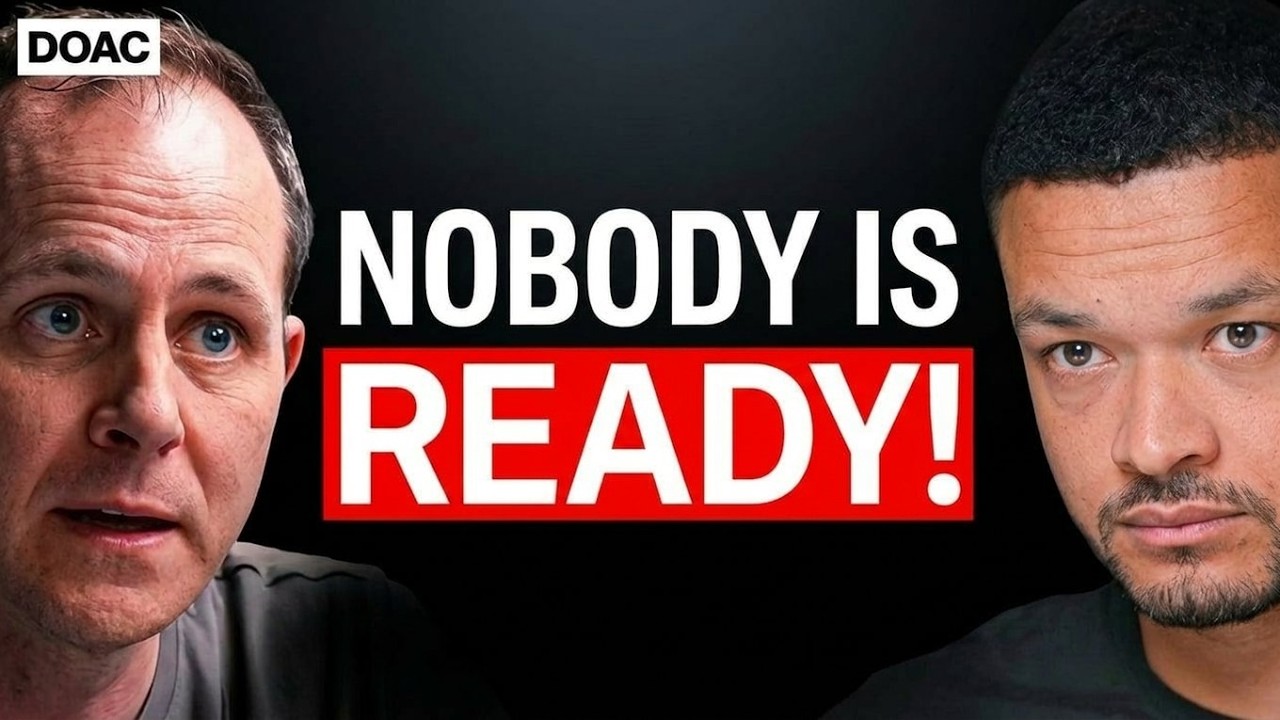
This episode of The Diary Of A CEO features a conversation with Chase, a behavior profiler, discussing human behavior, influence, and persuasion in the context of a rapidly changing world increasingly influenced by AI. They explore the PCP model (Perception, Context, Permission) as a framework for understanding and guiding human decision-making, the importance of authenticity, and how childhood experiences shape adult behavior. The conversation also touches on the impact of technology and the importance of human connection, empathy, and mental well-being.
- The PCP model is a three-step process of influence: Perception, Context, and Permission.
- Authenticity involves removing ego and being willing to risk social injury.
- Childhood experiences significantly shape adult behavior patterns.
- Novelty hijacks our brain and can be used to change beliefs or habits.
- Making people feel heard and seen is crucial for genuine human connection.
Intro
The host introduces Chase as an expert in human behavior and influence, highlighting the increasing importance of human skills in an AI-driven world. The episode aims to explore how to guide human decisions and have influential conversations, which are critical for various roles, from leadership to hostage negotiation. The discussion will cover techniques like negative dissociation and the childhood development triangle, emphasizing the PCP model as a key framework for understanding human influence.
Why The PCP Model Might Be Your Biggest Edge In An AI World
Chase introduces the PCP model, which stands for Perception, Context, and Permission, as a fundamental framework for understanding how humans are influenced. The first step, Perception, involves changing how someone views a situation by acknowledging their point of view before introducing a new perspective. Language should resonate with the person's feelings and guide them gently. The second step, Context, dictates permissible behavior, and setting the frame of a conversation is crucial for influencing its direction. The final step, Permission, is granted once the perception and context have been modified, allowing for a desired action or decision to occur naturally.
Why Breaking Social Scripts Changes How People See You
Calling out social scripts weakens their power by making people aware of the unspoken rules governing their behavior. By surfacing these scripts, one can change the perception of a situation and gain more influence. This involves openly stating the expected behavior, which gives permission to break away from it.
The Hidden Framework That Makes You Instantly More Persuasive
After shifting someone's perception, the next step is to change the context to make the desired behavior an automatic response. Setting the frame of every interaction and openly stating it at the beginning is essential. Context provides the final piece, permission, which allows someone to do something they normally wouldn't.
How To Get People To Open Up (Without Forcing It)
Negative dissociation is a technique used to encourage open-mindedness by making a small observation about the world that implies the other person is not closed off or rigid in their beliefs. This covertly gets them to agree that they are open-minded, hacking into their identity and making them more committed to being open throughout the conversation.
Why Precommitment Quietly Controls Your Future Decisions
Pre-commitment involves getting someone to commit to something, aligning with their identity, before asking them to take a specific action. This can be used on oneself to achieve goals by making public social commitments. Studies show that pre-commitment, even in small ways, significantly increases the likelihood of following through with a desired behavior.
How To Reduce Anxiety By Resolving Cognitive Dissonance
Influence involves building two walls: anxiety and cognitive dissonance, with the relief from these being the desired outcome. Cognitive dissonance arises when someone's actions are inconsistent with their stated identity. Hacking one's own behavior involves aligning actions with identity, making deviations feel wrong and motivating a return to alignment.
What Your Leadership Style Reveals (And What It’s Costing You)
Everyone's leadership style needs to be front and center, and it's important to develop authority with confidence, discipline, leadership, gratitude, and enjoyment. There are three types of authority channels: the president, the professor, and the artist. The cost of inauthenticity in leadership detracts from one's level of authority and overall happiness.
What Real Authenticity Actually Looks Like (And Why Most Get It Wrong)
Authenticity is often a costume of childhood beliefs and patterns. True authenticity involves removing ego and being willing to risk social injury. Authentic brands and individuals are willing to cause social injury in the near term for something they believe in the long term.
The Childhood Triangle That Secretly Shapes Your Behavior
The childhood development triangle consists of what a child had to do to make and keep friends, feel safe, and get rewards. These scripts are carried into adulthood and govern much of our behavior. Recognizing these patterns and hearing them as a child's voice can help in understanding and modifying them.
How Your Childhood Still Controls You - And How To Break Free
To break free from limiting childhood patterns, one must identify the pattern, recognize it as belonging to a child, and understand how the child wrote the contract. Creating a motivational wallpaper that exaggerates the limiting belief can increase awareness and help to change the behavior. It's important to accept that these patterns may always be present but can be managed.
How To Rewire Your Brain Without Realizing It
Micro compliance, similar to hypnosis or cult recruiting, involves small, regular wins that hardwire the brain to achieve goals. Novelty is key to hijacking the brain and creating focus. Changing one's environment, wardrobe, or routine can introduce novelty and facilitate change.
Why This Ad Break Might Be More Strategic Than You Think
This section contains advertisements for Stanto and LinkedIn.
The Most Dangerous Persuasion Skill (And Who’s Using It On You)
The most dangerous persuasion skill involves giving someone pieces of information without explicitly connecting them, allowing the person to feel clever by making the connection themselves. Ideas that seem to originate from one's own mind are difficult to resist. This technique is often used in media and can be highly effective in courtrooms.
Why The “Rich = Bad” Narrative Is More Complicated Than It Seems
The stereotype of rich people being evil is deeply ingrained in media and culture, dating back to ancient fairy tales. This archetype influences how we perceive powerful and successful individuals, often leading to negative preconceptions.
How Psychology Wins Court Cases Behind the Scenes
In court cases, understanding the archetype of the case and subtly reinforcing it can influence the jury. This involves using keywords and scenarios that evoke the desired narrative, such as David and Goliath. The goal is to get the jury to complete the archetype story, leading them to a predetermined conclusion.
How To Actually Apply These Skills In Everyday Life
Archetypes can be used as a profiling tool to understand how people predict their future and respond to conflict. By identifying the movie or story someone is in, one can anticipate their behavior. To persuade someone, it's important to understand their hero's journey and frame the offer as the next logical step in their story.
How Changing Your Perspective Can Transform Your Mental Health
Many psychological problems stem from perspective issues. Psychedelics can rewire PTSD by changing the perspective through which traumatic events are viewed. Perspective is key to overcoming confidence issues and other mental challenges.
What A DMT Experience Really Feels Like (And Why It Sticks)
DMT is described as peeling out of reality into another realm, which feels more real than this one. Scientists studying DMT do not believe it is a hallucination. DMT experiences often involve encountering the same entities and places, a phenomenon consistent across thousands of years.
Are We Living In A Simulation? What The Evidence Suggests
The discussion explores the idea of whether our reality is a simulation, referencing the hermetic principles and the concept that "all is mind." Dreams are used as an analogy to illustrate how our perceived reality might be a construct of our minds. The illusion of separation is identified as a fundamental lie, and psychedelics can help to dissolve this separation.
How DMT Changes the Way You Think About Religion
DMT experiences can shift one's perspective from religious performance to genuine spirituality. It fosters empathy and reduces the need for ego-driven displays of virtue. Certainty is seen as an enemy, and a sense of wonder and uncertainty is embraced.
Inside The DMT Waiting Room: What Happens Before The Trip
Some individuals report being banned from using DMT, experiencing a "locked out of hyperspace" phenomenon where the drug ceases to produce the expected effects. This includes encountering a waiting room wall, getting stuck in the initial phase, or experiencing a "hyperslap" where entities reject their presence.
What If Consciousness Isn’t In Your Body At All?
The new theory is that consciousness is external to our body. Our brains act as a receiver and a filter for consciousness and not a creator of consciousness. DMT pops that filter off and allows us to experience full consciousness.
Why Feeling Seen And Heard Is More Powerful Than You Think
Making people feel heard and seen is crucial, as AI can never replace human connection on a social level. The need for belonging cannot be fulfilled through electronic means. Loneliness and division are significant issues, with division being manufactured and loneliness being a byproduct.
How Your Insecurities Shape Your Reality (Without You Noticing)
Everyone shares similar insecurities, and recognizing this can help to stop hiding from others. The number one regret on people's deathbeds is not treating life more like a game.
Why Life Is Supposed To Be Fun (And Where We Go Wrong)
Life is supposed to be fun, and it's important to remember this and not take things too seriously. Alan Watts' quote emphasizes that much of man's misery comes from taking what God made for fun too seriously.
How Expanding Your Skill Set Might Be The Key To Happiness
The guest's question is answered by saying that developing the ability to celebrate wins is a skill that needs to be cultivated better. Happiness is when your expectations of how your life are supposed to be going are met. Gratitude is a proxy for realizing that expectations are being met and exceeded. It's important to practice forced gratitude and lower expectations to fully enjoy accomplishments.

