
Brief Summary
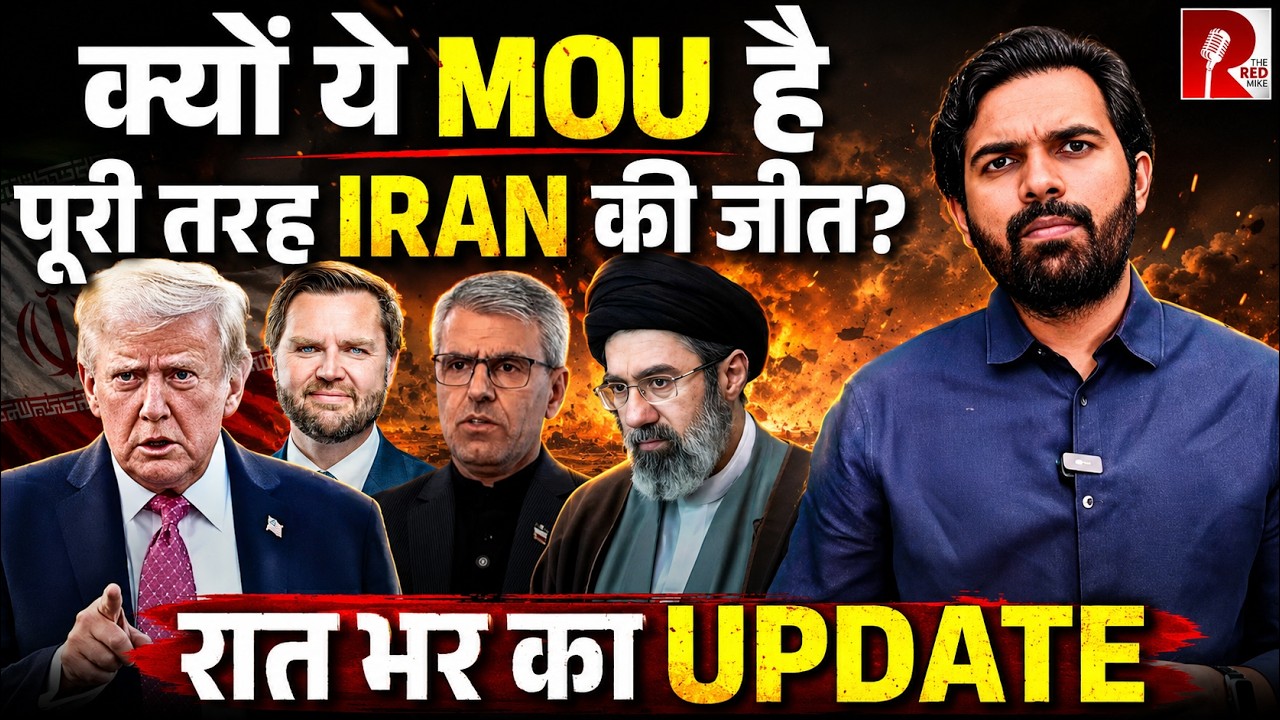
This video discusses the implications of a recent agreement involving Iran, detailing how it represents a significant victory for Iran and a setback for the United States. Key points include Iran receiving $300 billion in war damages, the establishment of a ceasefire in Lebanon, control over the Strait of Hormuz, and the lifting of sanctions which will enable Iran's economic recovery.
- Iran is set to receive $300 billion in war damages from the U.S.
- A ceasefire in Lebanon has been established, signaling Iran's influence.
- Control of maritime routes in the Strait of Hormuz is assigned to Iran and Oman.
- The U.S. is moving toward lifting sanctions on Iran.
Iran's Victory and America's Defeat
The video opens with the host, Saurabh Shukla, introducing the topic as a significant shift away from discussions of violence to the implications of an agreement between Iran and the U.S. Shukla emphasizes the journalistic approach to presenting the facts about how this agreement marks a considerable defeat for the United States.
Details of the Agreement
The speaker highlights an interview given by J.D. Vance on CBS News, where he disclosed that the U.S. and its allies would provide Iran with $300 billion in war damages. This is a pivotal point as it showcases the financial benefits Iran stands to gain from the agreement, which is set to be formally signed on a specified date in Geneva.
Ceasefire in Lebanon
Despite efforts by Israel to sabotage the agreement through military actions, a ceasefire in southern Lebanon has successfully been established. This marks a significant achievement for Iran, who has not only managed to secure substantial financial aid but also exerted influence over regional peace processes.
Iran's Control Over Hormuz
The speaker discusses Iran's strategic control over the Strait of Hormuz, with an acknowledgment that Iran and Oman will manage the passage through this vital maritime route. While not imposing tolls, Iran will charge fees for navigation and maritime services, which implies a means of revenue generation for the nation.
Israel's Reactions
The Israeli minister, Ben Gvir, expressed dissatisfaction, asserting that the agreement does not bind Israel, further indicating Israel's intention to remain sovereign and resistant to U.S. influence, especially regarding the reported deal.
Implications for Sanctions
The lifting of sanctions is a significant facet of the agreement, as it enables Iran to restart its oil sales, leading to potential economic prosperity despite previous restrictions. The speaker emphasizes Iran's comparatively advanced infrastructure, contrary to common perceptions of the nation under sanctions.
Global Economic Impact
The economic ramifications of the agreement and the broader war are discussed, highlighting that America’s global standing has diminished. The video asserts that this deal will revamp Iran's position in the world, effecting changes in the global economic order.
Future Prospects for Iran
Looking ahead, the video describes the potential for enhanced trade and interactions between Iran and other nations, which would dismantle previous misconceptions and revive Iran's economic capabilities. The capacity to access previously frozen funds and engage in international trade positions Iran to emerge as a more robust player on the global stage.
Final Thoughts
The speaker concludes by reiterating that the agreement stands as a testament to Iran's resilience and strategic acumen, emphasizing that the potential lifting of sanctions and greater economic autonomy showcase a perceived victory for Iran against U.S. policies. The significance of these developments will be closely monitored as they unfold.

