
Brief Summary
This video introduces fundamental concepts and terms related to urbanization, essential for understanding its various aspects and its connection to development and other fields of study. It covers definitions of urbanization, urban areas, towns, cities, mega-cities, metropolises, suburbs, urban sprawl, and peri-urban areas. The video also explores how different disciplines like sociology, geography, economics, and criminology perceive urbanization, providing a comprehensive overview of the topic.
- Urbanization is defined as the increase in the population of people living in towns and cities, the transformation of sparsely populated areas into densely occupied cities, and a process through which cities grow.
- An urban area is defined by population size and economic activities, with different countries setting different population thresholds.
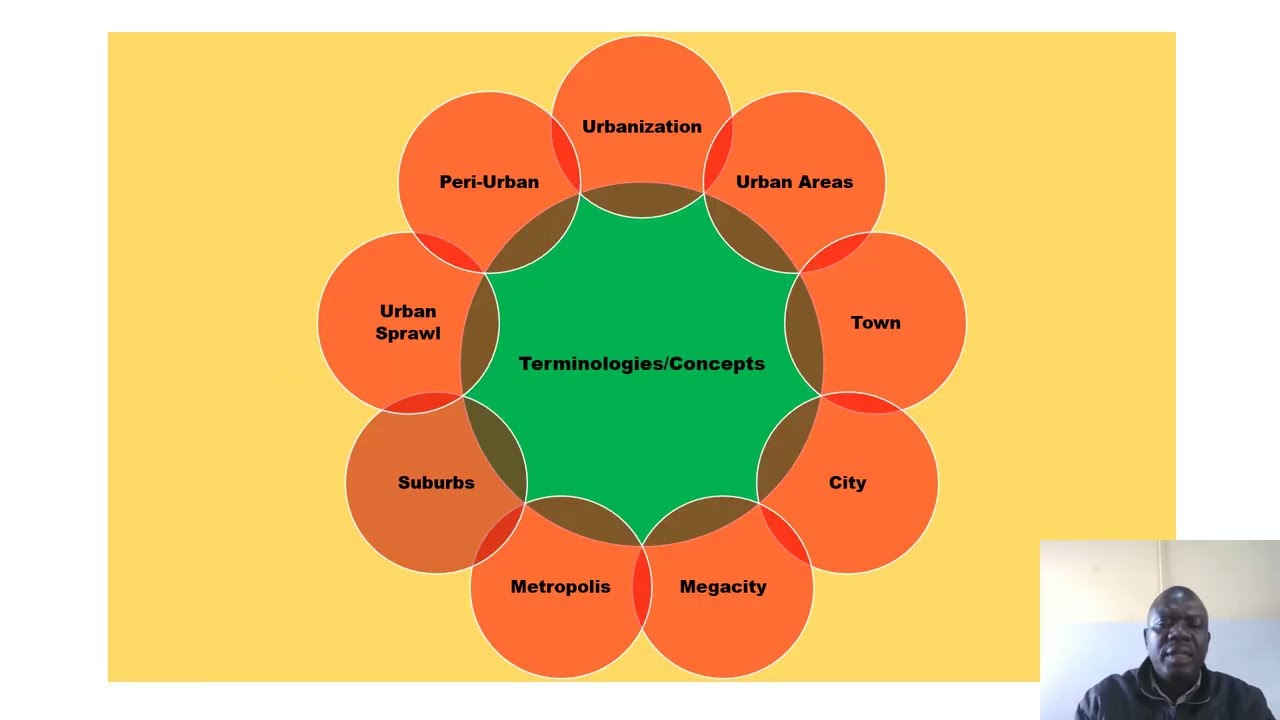
- Key terms such as town, city, mega city, metropolis, suburbs, urban sprawl and peri-urban areas are defined and explained with examples.
Introduction to Urbanization
The video introduces the topic of urbanization and the importance of understanding common terms and concepts related to it. This foundational knowledge is crucial for an in-depth analysis of urbanization and its relationship to broader development issues. The presenter welcomes viewers to an initial exploration of urbanization, focusing on key concepts that will be encountered throughout the course.
Key Terms and Concepts
Several basic and fundamental terms and concepts are often discussed under the topic of urbanization. These include urbanization itself, urban area, town, city, mega city, metropolis, suburbs, urban sprawl, and peri-urban areas. Grasping these concepts is essential for students interested in understanding various aspects of urbanization.
Understanding Urbanization
Urbanization is understood in different ways, all relating to the increase in the population of people living in towns and cities. It involves the transformation of previously unoccupied areas into densely populated cities. Urbanization is also a process through which cities grow, with a higher percentage of the population living in them, driven by social, economic, and technological factors.
Urbanization in Different Fields of Study
Urbanization is understood differently across various fields of study, including sociology, geography, economics, and criminology. Sociology views urbanization as the process of cities growing larger and more populated due to people moving from rural to urban areas, leading to demographic shifts and densely populated settlements. Geography understands it as a demographic process where a country's urban population increases, leading to city growth and urban environment development. Economics sees urbanization as a population shift from rural to urban areas, driven by economic factors like industrialization, affecting both urban and rural areas. Criminology views urbanization as cities growing larger and more numerous, leading to dense, heterogeneous populations and associated issues like social disorganization and increased criminal opportunities.
Understanding Urban Areas
An urban area can be understood from two perspectives: population size and economic activities. Different institutions and countries define an area as urban based on meeting a certain population threshold. For example, the UN Habitat considers an area with a concentration of 5,000 people as urban, while the United States uses a threshold of 2,500. Economically, an urban area is one where the major occupation and source of livelihood are non-agricultural activities.
Town vs. City
A town is a built-up area with a name, defined boundaries, and a local government. It typically features a main street and a town center with shops, businesses, and essential services. A city, on the other hand, is an area where a large number of people live fairly close together and represents an advanced development from a town. Cities often have their own separate governments and systems for maintaining utilities and transportation.
Mega City and Metropolis
A mega city is a very large city, typically with a population of more than 10 million people. There are currently 30 mega cities around the world, with the majority located in Asia. A metropolis is a large city that is a significant economic, political, and cultural center for a country or region, serving as an important hub for regional and international commerce and communication. Nairobi is an example of a metropolis due to its economic and political significance in Kenya.
Suburbs, Urban Sprawl, and Peri-Urban Areas
Suburbs are residential areas within or near a city where people live and often commute to the city for work. Urban sprawl is the outward expansion of a city into surrounding undeveloped or rural land, driven by population growth and the demand for housing. Peri-urban areas are areas between rural and urban areas, possessing characteristics of both village and urban life, forming a bridge between the city and the town.

