
Brief Summary
This YouTube video transcript features a discussion about Indonesian politics, focusing on the alleged manipulation of power by Prabowo Subianto through the use of "3 Os": muscle (power of the military and police), brain (political strategy and alliances), and cost (financial resources). The speakers analyze Prabowo's actions, such as strengthening the police and military, forming a broad coalition, and exploiting economic resources, to consolidate his power and potentially revert to an authoritarian regime. They also propose reforms to break this cycle and promote a more inclusive and democratic political system.
- Analysis of Prabowo's political strategies using the "3 Os" framework.
- Discussion of potential reforms to dismantle authoritarian tendencies and promote democracy.
- Examination of the role of political parties, elections, and civil society in shaping Indonesia's future.
Introduction
The video opens with casual banter among the speakers, setting the stage for a deeper discussion about Indonesian politics. They mention various personal activities and express anticipation for the upcoming film, "Dirty Vote 2," hinting at further revelations about political manipulation.
Lecturer's Perspective
One of the speakers, a lecturer, shares his experiences teaching at the Faculty of Law, UGM, and contributing to mass media. He emphasizes the correlation between teaching and research, suggesting that his academic work informs his analysis of current events.
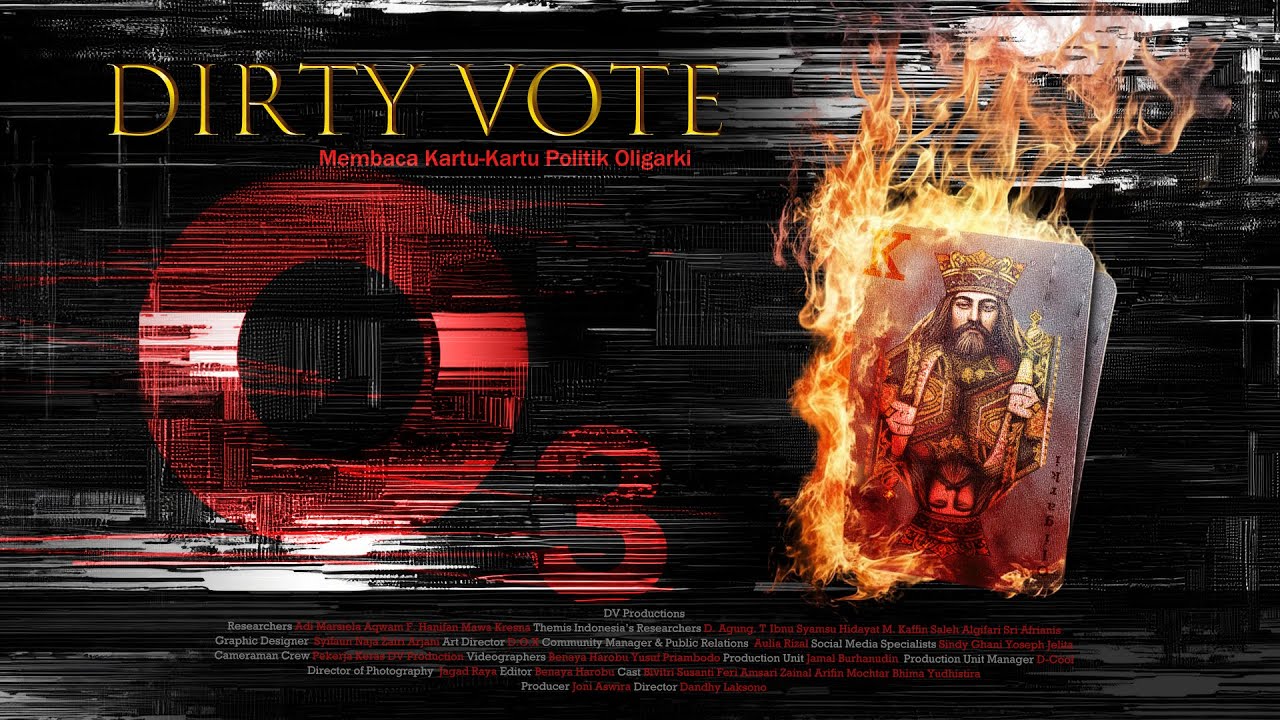
Dirty Vote 2: The 3 O's
The speakers introduce the concept of "Dirty Vote 2," which focuses on Prabowo and Gibran's alleged fraud in the election. They outline the "3 Os"—muscle, brain, and cost—as key elements in Prabowo's strategy to win the election, control interests through guided capitalism, and potentially revert to a Constitution 45-style New Order. The "muscle" refers to strengthening the police and restoring militarism, the "brain" involves embracing political parties to eliminate opposition, and the "cost" entails using pork barrel politics for oligarchic elites.
Breaking the Vicious Circle
The speakers discuss the need to break the vicious circle of political manipulation. They propose three key reforms: police reform, TNI reform, and overhaul of the political system. These reforms aim to restore the function of the state in serving the people and create a more inclusive political system.
Low Legitimacy and Insecurity
The speakers analyze Prabowo's victory in the election, noting that despite a high approval rate, there is a sense of insecurity reflected in various controversial policies and public reactions. They cite examples such as the VAT increase, LPG redistribution issues, TNI's rejection of the draft law, and public outcry over increased land and building tax (PBB). Prabowo's response to criticism, including insinuations against foreign parties and the use of the phrase "let the dogs bark, the caravan goes on," is interpreted as a sign of insecurity.
Strengthening the Muscle: Police and TNI
The discussion shifts to how Prabowo is strengthening the "muscle" aspect of his power, focusing on the police and TNI. For the police, this involves closely controlling leadership, allowing concurrent positions, and strengthening authority through the draft law on the National Police. For the TNI, it includes expanding authority, increasing the defense budget, and forming reserve components. The speakers express concern over the expansion of the TNI's role into non-military areas such as food management and social affairs.
The Brain: Building a Large Coalition
The speakers analyze Prabowo's strategy of building a large coalition to eliminate opposition. This involves fattening the cabinet, maintaining relations with the previous President, and potentially engaging in political revenge against opponents. The absence of restrictive rules in the Constitution allows Prabowo to have the most ministers since the reform era.
The Cost: Economic and Political Financing
The discussion moves to the "cost" aspect, focusing on the economic and political financing required to maintain power. This includes grassroots initiatives like the Red and White Village Cooperative, free nutritious meals, and elite-level financing through Danantara and Patriot Bonds. The speakers highlight the potential for corruption and the involvement of conglomerates in supporting Prabowo's programs.
The Culmination of Anger and the 3 O's
The speakers discuss how the "3 Os" are used to win elections and ensure the continuation of guided capitalism. They analyze the distribution of social assistance by the police ahead of regional elections, the involvement of the military in non-defense matters, and the potential for the police and military to be used as political tools.
Guided Capitalism and Constitution 45
The speakers discuss Prabowo's two obsessions: guided capitalism and the recovery of Constitution 45. They analyze how these goals are pursued through political muscle power, influence over voters, and the potential for authoritarianism. The role of the police in distributing social assistance and the military in non-defense matters is highlighted.
The Brown Party and the Military
The speakers discuss the increasing role of the military and police in Indonesian politics. They analyze the expansion of the military's role into non-defense matters, the addition of new military commands, and the potential for the military to be used for internal security purposes.
Economic Wealth and Elite Pockets
The speakers discuss the sources of wealth that will go into elite pockets, including nickel mining, fuel imports, and natural gas. They analyze the role of the Red Village cooperative and the potential for it to be used for political purposes.
Prabowo's Admiration for China
The speakers discuss Prabowo's admiration for China and his desire to emulate its economic and political model. They analyze the conditions required to become like China, including a coalition of major parties, a strong army, and consolidation of capital.
Authoritarianism and Foreign Policy
The speakers discuss the spread of authoritarianism in various countries, including China, Russia, and the United States. They analyze Prabowo's foreign policy, noting his relationships with both autocratic leaders and Western powers.
Democracy as Expensive, Messy, and Exhausting
The speakers discuss Prabowo's discomfort with democracy, citing his past statements and actions. They analyze the Gerindra Party's desire to return to the initial text of Constitution 45 and the potential for this to lead to greater control of politics.
The Vicious Circle and the Need for Reform
The speakers reiterate the vicious circle of power, apparatus, politics, money, and wealth. They emphasize the need to break this cycle and propose reforms to restore muscle function to state interests, build a more inclusive political system, and ensure that the political system serves the people.
Police Reform
The speakers discuss the need for police reform, citing examples of police violence, impunity, and corruption. They analyze the internal and external oversight mechanisms for the police and propose reforms to strengthen these mechanisms and ensure accountability.
TNI Reform
The speakers discuss the need for TNI reform, focusing on the military's involvement in non-military matters and the potential for abuse of power. They analyze the foundations and businesses associated with the military and propose reforms to limit the military's role to national defense.
Overhaul of the Political System
The speakers discuss the need to overhaul the political system, focusing on the role of political parties, elections, and civil society. They analyze the dominance of political elites, the lack of substantive representation, and the potential for corruption.
Political Parties and Elections
The speakers discuss the need for political party reform, including democratization, transparency, and accountability. They analyze the challenges faced by new parties and propose reforms to create a more level playing field. They also discuss the need to overhaul the election system, including the proportional system and the selection of election administrators.
Representation and Aspiration
The speakers emphasize the importance of representation and aspiration in the political system. They propose reforms to ensure that political parties are connected to the people and that the voices of ordinary citizens are heard.
Conclusion
The speakers conclude by emphasizing the need for collective action to break the vicious circle of political manipulation. They encourage young people, civil servants, and all citizens to push for reform and create a more just and democratic society.

