
Brief Summary
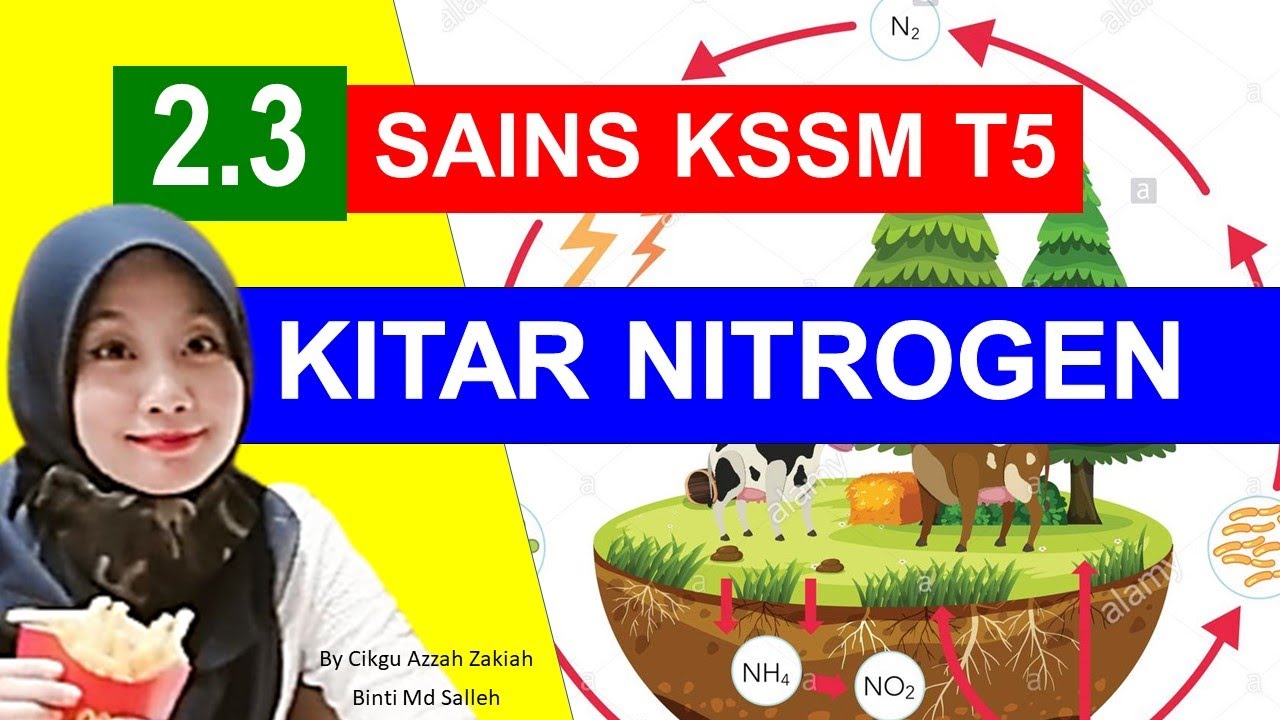
This video explains the nitrogen cycle, its steps, and its importance. It details how nitrogen is converted into usable forms for plants and animals, the roles of bacteria and lightning in this cycle, and the significance of maintaining nitrogen levels for environmental health and agricultural productivity.
- Nitrogen cycle involves converting nitrogen into usable forms for plants and animals.
- Bacteria and lightning play key roles in nitrogen fixation and conversion.
- Maintaining nitrogen levels is crucial for environmental health and agricultural productivity.
Introduction
The video introduces a lesson on the nitrogen cycle for Form 5 students, starting with a recitation of Surah Al-Fatihah. The learning objectives include outlining the four steps of the nitrogen cycle and understanding the importance of the nitrogen cycle.
The Nitrogen Cycle
The video addresses the question of which gas is most abundant in the air, clarifying that nitrogen makes up 78% of the atmosphere, much more than oxygen (21%). Plants and animals cannot directly absorb nitrogen from the air, necessitating the nitrogen cycle to convert it into usable forms. The nitrogen cycle is a natural process that cycles nitrogen among plants, animals, the atmosphere, soil, and water.
Steps of the Nitrogen Cycle
The video describes the first step, nitrogen fixation, where bacteria in the roots of leguminous plants convert atmospheric nitrogen into ammonia. These bacteria, such as Rhizobia, take nitrogen from the air and convert it into a form that plants can use. Plants can only absorb nitrogen in the form of nitrates, which are essential for forming plant proteins.
Steps 2 and 3 of the Nitrogen Cycle
The video explains that animals obtain nitrogen by consuming plants, converting plant proteins into animal proteins. When animals die, decomposition by bacteria converts their remains into ammonium through a process called ammonification. Bacteria then convert the ammonium into nitrites and then into nitrates through nitrification, which plants can absorb. Lightning oxidizes atmospheric nitrogen, forming nitrogen oxides that dissolve in rainwater and enter the soil as nitrates, which plants can then absorb.
Step 4 of the Nitrogen Cycle
The video details the fourth step, denitrification, where bacteria convert excess nitrates back into atmospheric nitrogen. This process helps maintain a balance of nitrogen levels.
Adding and Removing Nitrates
The video summarizes that nitrates are added to the soil through nitrogen fixation, nitrification, and lightning. Nitrates are removed from the soil through denitrification and plant absorption. The process of leaching also removes nitrates as they dissolve in water and flow into rivers and groundwater.
Importance of the Nitrogen Cycle
The video highlights that the nitrogen cycle maintains the balance of nitrogen gas in the air, sustains soil fertility, increases crop productivity, supports the continuous supply of plant and animal proteins, and reduces environmental pollution.
Review Questions
The video reviews the lesson with a quiz, asking about the definition of the nitrogen cycle and the processes that add and remove nitrates from the soil. The nitrogen cycle is defined as the natural cycle of nitrogen among plants, animals, the atmosphere, soil, and water. Processes that add nitrates include nitrogen fixation, nitrification and lightning, while processes that remove nitrates include denitrification, absorption by plants, and leaching.
Additional Questions and Answers
The video explains how planting leguminous plants increases soil fertility due to the nitrogen-fixing bacteria in their roots, which convert atmospheric nitrogen into nitrates. During the rainy season, nitrate levels in the soil decrease as nitrates dissolve in rainwater and are carried away into rivers, groundwater, and the sea.

