
Brief Summary
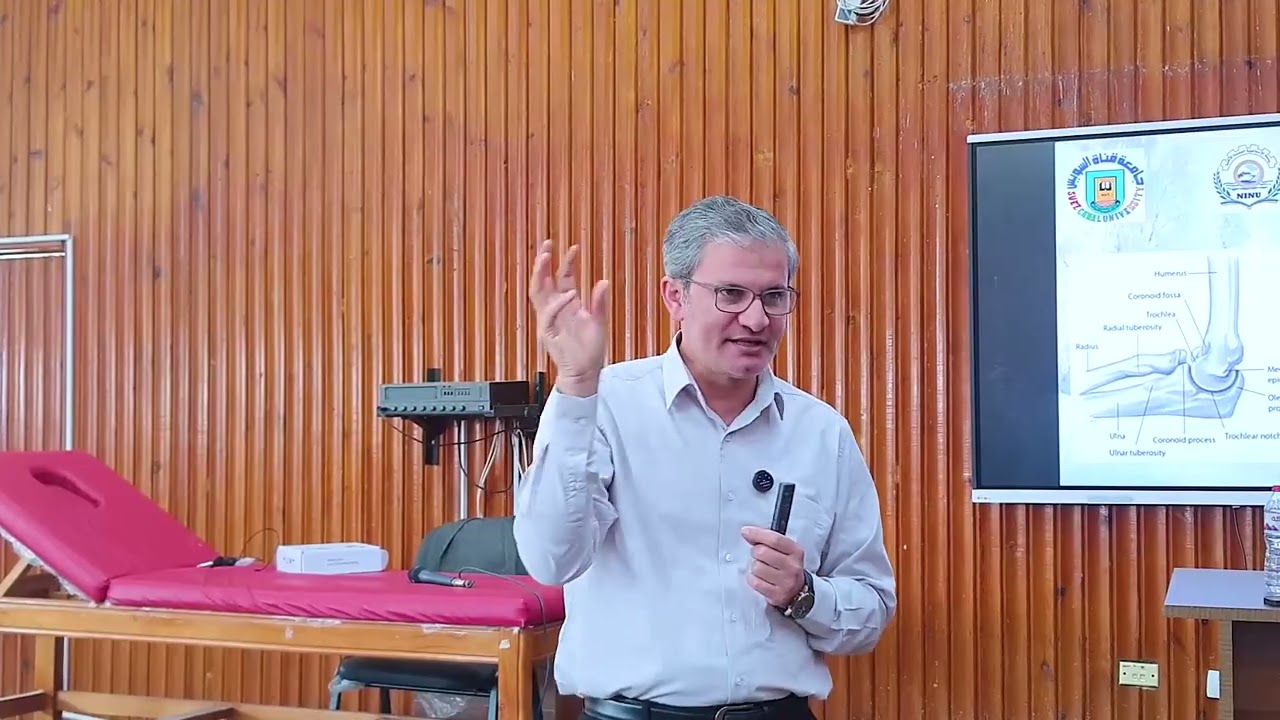
This video provides a comprehensive guide on therapeutic exercises for the elbow joint, emphasizing the importance of understanding the joint's anatomy, kinematics, and appropriate assessment techniques. It stresses the significance of using the textbook as the primary resource, not just summaries or presentations, to gain a deep understanding of the material. The lecture covers key concepts such as mobility, stability, range of motion, stretching, mobilization, and strengthening exercises, tailored to the elbow joint.
- Importance of textbook study over summaries.
- Focus on elbow joint anatomy and kinematics.
- Detailed explanation of therapeutic exercises.
- Emphasis on proper assessment and treatment techniques.
Introduction to Therapeutic Exercises
The lecture emphasizes the importance of studying from the textbook, specifically Caroline's book, rather than relying on summaries or PowerPoint presentations. The textbook provides a deeper understanding and serves as a lifelong reference. The therapeutic approach involves understanding range of motion, stretching, mobilization, and strengthening, which are covered in separate chapters for each joint, including the shoulder, elbow, wrist, and hand.
Basic Science and Therapeutic Application
The initial lectures by Dr. Hind, Dr. Mena, and Dr. Samar provide an introduction to the four chapters. The speaker emphasizes that therapeutic exercises for specific areas like the shoulder, elbow, wrist, and hand should be studied from their respective chapters. The content in Caroline's book is advanced and focuses on clinical and therapeutic aspects of pathological conditions like impingement and arthroplasty, which are beyond the scope of basic science. The current focus is on learning therapeutic exercises and basic science principles.
Study Approach and Chapter Structure
The recommended approach is to read each chapter section by section, focusing on range of motion, stretching, mobilization, and strengthening for each joint. This method allows for a comprehensive understanding without being overwhelmed by the extensive content in the textbook. For example, the shoulder section might consist of about five pages covering these aspects, while the elbow section might be even shorter, with only a few techniques for stretching and mobilization.
Textbook vs. Summaries and Future Learning
The speaker advises against reading entire chapters on the elbow or wrist from Caroline's book at this stage, as it may be too complex. The current curriculum is designed to provide the foundational knowledge needed to understand the textbook later, possibly in the fourth year or during an internship. The textbook remains the primary resource, while lectures and summaries are merely aids to facilitate learning.
Knowledge Retention and Exam Expectations
The speaker clarifies that the goal is not to memorize every detail but to understand the information and its location within the textbook. Exams will focus on assessing whether students know the information and can apply it, rather than testing rote memorization. The purpose of reading the textbook is to understand the underlying principles, such as why stretching modulates pain or how mobilization works, which are not detailed in lectures.
Deeper Understanding and Research
Reading the textbook allows for a deeper understanding of the material. As students progress, they can refer back to the textbook to understand the reasons behind different therapeutic techniques. The textbook provides references to research papers, allowing students to trace the origins of the information and understand the research behind it. This approach is essential for future professionals who will need a solid foundation of knowledge.
Competition and the Importance of Knowledge
The speaker emphasizes that the job market is competitive, and success depends on having a strong knowledge base. Relying solely on PowerPoint presentations and summaries will not differentiate individuals. True distinction comes from in-depth knowledge and the ability to understand the origins and reasons behind therapeutic techniques. This knowledge allows professionals to excel and secure better job opportunities.
Accessing Original Information
The speaker encourages students to seek original sources of information to expand their knowledge. Understanding the reasons behind techniques, such as why stretching or mobilization is performed, requires going back to the original research and understanding the methodologies used. This approach opens up new avenues of learning and provides a comprehensive understanding beyond what is available on platforms like Google or ChatGPT.
Transition to Elbow Joint Exercises
Having completed the discussion on the shoulder, the lecture transitions to the elbow joint. The fundamental principles of therapeutic exercise remain the same, focusing on mobility and stability. Mobility consists of range of motion, stretching, and mobilization, all of which fall under the umbrella of intervention techniques. The elbow, like the shoulder, wrist, and hand, is approached with an understanding of its biomechanics and kinesiology.
Elbow Joint Osteology and Arthrokinematics
The elbow joint's osteology includes the humerus, ulna, and radius. The arthrology consists of three true joints: the humero-ulnar, humero-radial, and superior radio-ulnar joints. The inferior radio-ulnar joint also participates but is primarily associated with the wrist. These joints are enclosed within a single capsule. The motions at the elbow include flexion, extension, pronation, and supination.
Congruent Motion of the Elbow
The elbow joint exhibits congruent motion, where multiple movements occur simultaneously. For example, when reaching for a cup, the elbow flexes, supinates, and abducts. Conversely, when lowering the arm, the elbow extends, pronates, and adducts. This coordinated movement ensures complete range of motion, requiring full supination and abduction for flexion, and complete pronation and adduction for extension.
Muscles Responsible for Elbow Movement
The primary muscle responsible for flexion is the brachialis, assisted by the biceps brachii. Supination and pronation are mainly controlled by the superior radio-ulnar joint, with assistance from the humero-radial joint. Understanding which muscles contribute to each movement helps in targeted therapeutic interventions.
Elbow Joint Capsule and Common Issues
The elbow joint consists of three true joints within one capsule: the humero-ulnar, humero-radial, and superior radio-ulnar joints, with the distal radio-ulnar joint assisting in supination. The most common problems at the elbow joint involve these articulations. The arthrokinematics of the elbow primarily involve similar directional movements, except for the superior radio-ulnar joint, which is responsible for supination and pronation.
Arthrokinematics and Joint Movement
The humero-ulnar joint's arthrokinematics involve a concave ulna moving on a convex humerus, while the humero-radial joint also follows a concave-on-convex pattern. The superior radio-ulnar joint, however, involves a convex radius moving on a convex ulna. This understanding is crucial for performing effective joint mobilizations.
Ligaments and Congruent Motion Review
The elbow joint's stability is maintained by medial and lateral collateral ligaments. The medial collateral ligament has three bands: anterior, posterior, and transverse. The lateral collateral ligament consists of components connecting the humerus to the radius and ulna. The congruent motion of the elbow involves coordinated movements like flexion with supination and abduction, and extension with pronation and adduction.
Mulligan Techniques and Joint Mobilization
Mulligan techniques aim to enhance joint movement by understanding the congruent motions of the elbow. These techniques involve applying external forces to facilitate abduction during flexion and adduction during extension. The goal is to improve range of motion by addressing the underlying biomechanics of the joint.
Capsular Pattern and Closed-Packed Position
Understanding the capsular pattern, closed-packed position, and open-packed position is essential for effective joint management. The closed-packed position maximizes tension on the ligaments and prevents intra-articular adhesions, reducing the risk of arthrofibrosis. The capsular pattern indicates the specific limitations within the joint capsule, guiding the need for mobilization.
Open-Packed Position and Post-Operative Care
The open-packed position is used for joint mobilization, allowing for optimal movement. In post-operative care, the goal is to restore the elbow's function while respecting the surgical repairs. This involves understanding the anatomy, physiology, biomechanics, and the specifics of the surgery to avoid complications.
Surgical Considerations and Range of Motion
Post-surgical rehabilitation requires careful consideration of the surgical procedure. For example, after a lateral collateral ligament repair, complete extension should be avoided initially to prevent tension on the repaired ligament. The rehabilitation program must be tailored to the individual case, balancing the need for mobility with the protection of the surgical site.
Capsular Pattern of the Elbow Joint
The capsular pattern of the elbow joint involves specific limitations in range of motion. For the humero-ulnar joint, flexion is more limited than extension. The humero-radial joint shows limitations in flexion, extension, supination, and pronation. The superior radio-ulnar joint primarily limits supination and pronation. Understanding these patterns helps in identifying the affected joint and guiding treatment.
Joint-Specific Limitations and Pain
Specific limitations in range of motion indicate which joint is primarily affected. For example, if supination and pronation are limited, the superior radio-ulnar joint is likely involved. Pain at the extreme range of motion, especially during supination, suggests involvement of the distal radio-ulnar joint. These distinctions guide the selection of appropriate mobilization techniques.
Assessment and Active Physiological Movements
Assessment involves active and passive physiological movements to determine the limitations and pain points. The goal is to restore the joint to its optimal closed-packed position. This includes achieving zero extension, 90 degrees of flexion, and five degrees of supination.
Closed-Packed Position Targets
The closed-packed position targets for the elbow joint are zero degrees of extension for the humero-ulnar joint, 90 degrees of flexion for the humero-radial joint, and five degrees of supination for the superior radio-ulnar joint. Achieving these positions is essential for optimal joint function and stability.
Range of Motion Targets and Surgical Considerations
The range of motion targets should be achieved while respecting the surgical procedure and anatomical considerations. The goal is to reach zero extension, 90 degrees of flexion, and five degrees of supination. This ensures that the elbow joint is in its most stable and functional position.
Elbow Joint Components and Closed-Packed Positions
The elbow joint consists of the humero-ulnar, humero-radial, superior radio-ulnar, and inferior radio-ulnar joints. The closed-packed positions for these joints are full extension for the humero-ulnar, 90 degrees of flexion and five degrees of supination for the humero-radial, and five degrees of supination for the superior radio-ulnar joint.
Capsular Patterns and Joint Mobilization
The capsular patterns guide joint mobilization techniques. If flexion is more limited than extension, the humero-ulnar joint is targeted. If flexion, extension, supination, and pronation are limited, the humero-radial joint is addressed. If only supination and pronation are limited, the superior radio-ulnar joint is the focus.
Open-Packed Positions for Joint Assessment
The open-packed positions are used for joint assessment and mobilization. The humero-ulnar joint's open-packed position is 70 degrees of flexion and 10 degrees of supination. The humero-radial joint's open-packed position is full extension. The superior radio-ulnar joint's open-packed position is 70 degrees of flexion and 35 degrees of supination. The distal radio-ulnar joint's open-packed position is 10 degrees of supination.
Open-Packed Positions and Joint Movement
The open-packed positions facilitate joint movement and assessment. For the humero-ulnar joint, 70 degrees of flexion and 10 degrees of supination allow for optimal mobilization. The humero-radial joint benefits from full extension, while the superior radio-ulnar joint requires 70 degrees of flexion and 35 degrees of supination. The distal radio-ulnar joint is best assessed and mobilized at 10 degrees of supination.
Clinical Significance and Common Fractures
The elbow joint is commonly affected by fractures, particularly around the elbow. Understanding the anatomy and biomechanics of the elbow is crucial for managing these injuries. Aggressive mobilization should be avoided to prevent complications like myositis ossificans, where muscle tissue turns into bone.
Gentle Mobilization and Joint Awareness
Gentle mobilization techniques are essential for elbow joint rehabilitation. It is better to allow the joint to heal naturally than to aggressively mobilize it, which can cause further damage. Understanding the open-packed position, closed-packed position, and capsular pattern is crucial for effective and safe mobilization.
Joint-Specific Mobilization and Assessment
Mobilization techniques should be specific to the affected joint. If the humero-ulnar joint is being mobilized, it should be in 70 degrees of flexion and 10 degrees of supination. If the patient has limitations in supination and pronation, the superior radio-ulnar joint should be targeted. Pain at the extreme range of motion indicates involvement of the distal radio-ulnar joint.
Capsular Patterns and Joint-Specific Issues
The capsular pattern helps identify the specific joint involved. If flexion is more limited than extension, the humero-ulnar joint is the primary issue. If there are limitations in flexion, extension, supination, and pronation, the humero-radial joint is the focus. These patterns guide the selection of appropriate mobilization techniques.
Post-Operative Rehabilitation Targets
In post-operative rehabilitation, the targets are to achieve the closed-packed positions: full extension for the humero-ulnar joint, 90 degrees of flexion and five degrees of supination for the humero-radial joint, and five degrees of supination for the superior radio-ulnar joint. These positions promote joint stability and prevent stiffness.
Prioritizing Extension and Joint Movement
For hinge joints like the elbow, it is essential to prioritize extension before flexion. If the elbow is flexed but cannot be fully extended, it limits function. Therefore, the primary goal is to achieve full extension, followed by flexion. This ensures that the joint can perform its full range of motion.
Functional Considerations and Joint Closure
The functional importance of extension is highlighted. If the elbow is fully extended but cannot flex, it still allows for some function. However, if the elbow is flexed but cannot extend, it severely limits function. Therefore, achieving full extension is crucial for overall functionality.
Common Elbow Fractures and Limitations
The most common elbow fracture is a radial head fracture, which accounts for 33% of elbow fractures. These fractures often lead to limitations in extension and pronation. Understanding the specific limitations associated with different fractures helps in tailoring the rehabilitation program.
Radial Head Fractures and Joint Mechanics
Radial head fractures often result in limited extension and pronation because the humero-radial joint is affected. The closed-packed position of the superior and inferior radio-ulnar joints involves five degrees of supination. Therefore, achieving this position is essential for restoring full function.
Post-Immobilization and Soft Tissue Changes
After immobilization, several changes occur, including reduced soft tissue extensibility, soft tissue contractures, muscle atrophy, and loss of motion. Therapeutic exercises aim to prevent these changes by maintaining flexibility, strength, and range of motion.
Arthrofibrosis and Joint Adhesions
Arthrofibrosis involves the formation of fibrous tissue within the joint, either inside or around the joint capsule. To prevent arthrofibrosis, it is essential to achieve the closed-packed position, which includes zero extension, 90 degrees of flexion, and five degrees of supination. This minimizes the risk of adhesions and maintains joint mobility.
Closed-Packed Position and Joint Mobility
Achieving the closed-packed position is crucial for preventing arthrofibrosis. This involves reaching zero extension, 90 degrees of flexion, and five degrees of supination. By restoring the joint to this position, the risk of adhesions and stiffness is minimized.
Joint-Specific Closed-Packed Positions
The closed-packed positions for different joints are summarized: zero extension for the humero-ulnar joint, 90 degrees of flexion for the humero-radial joint, and five degrees of supination for the superior radio-ulnar joint. These positions serve as targets for rehabilitation.
Hinge Joints and Prioritizing Extension
For hinge joints like the elbow, prioritizing extension is essential. If the joint is flexed but cannot extend, it limits function. Therefore, the primary goal is to achieve full extension before focusing on flexion.
Fracture Types and Expected Limitations
Different fracture types lead to specific limitations. For example, a supracondylar fracture often results in limited extension and flexion, while a radial head fracture leads to limited extension and pronation. Understanding these patterns helps in tailoring the rehabilitation program.
Joint Assessment and Mobilization Techniques
Joint assessment involves active and passive physiological movements, as well as passive accessory movements. The goal is to identify the limitations and pain points. Mobilization techniques are then applied based on the assessment findings, targeting the specific joint and direction of movement.
Mobilization and Joint Movement
Mobilization techniques aim to improve joint movement by addressing the underlying biomechanics. The techniques should be performed in the open-packed position, with the correct direction of force. The goal is to restore the joint to its optimal function.
Joint Mobilization and Patient Comfort
Joint mobilization should be performed with the patient in a comfortable position. The therapist should also be comfortable and relaxed to effectively feel the joint movement. The goal is to improve joint function without causing pain.
Strengthening Exercises and Muscle Balance
Strengthening exercises are essential for restoring muscle balance around the elbow joint. These exercises target the flexors, extensors, supinators, and pronators. The goal is to improve strength and stability.
Elbow Joint Summary
The elbow joint consists of three true joints within one capsule: the humero-ulnar, humero-radial, and superior radio-ulnar joints. The key aspects to consider are the capsular pattern, open-packed position, and closed-packed position. Understanding these elements is crucial for effective rehabilitation.
Clinical Application and Joint Mobilization
The elbow joint is frequently treated with mobilization techniques. It is essential to understand the open-packed position and the correct direction of force. The goal is to restore joint function and reduce pain.
Joint-Specific Mobilization and Assessment
Joint-specific mobilization techniques are essential for effective treatment. If the humero-ulnar joint is being mobilized, it should be in 70 degrees of flexion and 10 degrees of supination. If the patient has limitations in supination and pronation, the superior radio-ulnar joint should be targeted.
Rehabilitation Targets and Joint Function
The rehabilitation targets are to achieve zero extension, 90 degrees of flexion, and five degrees of supination. These positions promote joint stability and prevent stiffness. The goal is to restore the elbow joint to its optimal function.
Passive Physiological Movements and Joint Assessment
Passive physiological movements are used to assess joint function. These movements include flexion, extension, supination, and pronation. The goal is to identify the limitations and pain points.
Passive Accessory Movements and Joint Glide
Passive accessory movements assess the joint glide. These movements are performed in the open-packed position. The goal is to restore the joint's normal arthrokinematics.
Joint Glide and Mobilization Techniques
Joint glide is assessed and restored using mobilization techniques. These techniques are performed in the open-packed position. The goal is to improve joint function and reduce pain.
Joint Mobilization and Patient Positioning
Joint mobilization should be performed with the patient in a comfortable position. The therapist should also be comfortable and relaxed to effectively feel the joint movement. The goal is to improve joint function without causing pain.
Joint Mobilization and Direction of Force
Joint mobilization techniques require the correct direction of force. The goal is to restore the joint's normal arthrokinematics. The techniques should be performed in the open-packed position.
Joint Mobilization and Patient Comfort
Joint mobilization should be performed with the patient in a comfortable position. The therapist should also be comfortable and relaxed to effectively feel the joint movement. The goal is to improve joint function without causing pain.
Joint Mobilization and Patient Positioning
Joint mobilization should be performed with the patient in a comfortable position. The therapist should also be comfortable and relaxed to effectively feel the joint movement. The goal is to improve joint function without causing pain.
Joint Mobilization and Direction of Force
Joint mobilization techniques require the correct direction of force. The goal is to restore the joint's normal arthrokinematics. The techniques should be performed in the open-packed position.
Joint Mobilization and Patient Comfort
Joint mobilization should be performed with the patient in a comfortable position. The therapist should also be comfortable and relaxed to effectively feel the joint movement. The goal is to improve joint function without causing pain.
Joint Mobilization and Direction of Force
Joint mobilization techniques require the correct direction of force. The goal is to restore the joint's normal arthrokinematics. The techniques should be performed in the open-packed position.
Joint Mobilization and Patient Comfort
Joint mobilization should be performed with the patient in a comfortable position. The therapist should also be comfortable and relaxed to effectively feel the joint movement. The goal is to improve joint function without causing pain.
Joint Mobilization and Direction of Force
Joint mobilization techniques require the correct direction of force. The goal is to restore the joint's normal arthrokinematics. The techniques should be performed in the open-packed position.
Joint Mobilization and Patient Comfort
Joint mobilization should be performed with the patient in a comfortable position. The therapist should also be comfortable and relaxed to effectively feel the joint movement. The goal is to improve joint function without causing pain.
Joint Mobilization and Direction of Force
Joint mobilization techniques require the correct direction of force. The goal is to restore the joint's normal arthrokinematics. The techniques should be performed in the open-packed position.
Joint Mobilization and Patient Comfort
Joint mobilization should be performed with the patient in a comfortable position. The therapist should also be comfortable and relaxed to effectively feel the joint movement. The goal is to improve joint function without causing pain.
Joint Mobilization and Direction of Force
Joint mobilization techniques require the correct direction of force. The goal is to restore the joint's normal arthrokinematics. The techniques should be performed in the open-packed position.
Joint Mobilization and Patient Comfort
Joint mobilization should be performed with the patient in a comfortable position. The therapist should also be comfortable and relaxed to effectively feel the joint movement. The goal is to improve joint function without causing pain.
Joint Mobilization and Direction of Force
Joint mobilization techniques require the correct direction of force. The goal is to restore the joint's normal arthrokinematics. The techniques should be performed in the open-packed position.
Joint Mobilization and Patient Comfort
Joint mobilization should be performed with the patient in a comfortable position. The therapist should also be comfortable and relaxed to effectively feel the joint movement. The goal is to improve joint function without causing pain.
Joint Mobilization and Direction of Force
Joint mobilization techniques require the correct direction of force. The goal is to restore the joint's normal arthrokinematics. The techniques should be performed in the open-packed position.
Joint Mobilization and Patient Comfort
Joint mobilization should be performed with the patient in a comfortable position. The therapist should also be comfortable and relaxed to effectively feel the joint movement. The goal is to improve joint function without causing pain.
Joint Mobilization and Direction of Force
Joint mobilization techniques require the correct direction of force. The goal is to restore the joint's normal arthrokinematics. The techniques should be performed in the open-packed position.
Joint Mobilization and Patient Comfort
Joint mobilization should be performed with the patient in a comfortable position. The therapist should also be comfortable and relaxed to effectively feel the joint movement. The goal is to improve joint function without causing pain.
Joint Mobilization and Direction of Force
Joint mobilization techniques require the correct direction of force. The goal is to restore the joint's normal arthrokinematics. The techniques should be performed in the open-packed position.
Joint Mobilization and Patient Comfort
Joint mobilization should be performed with the patient in a comfortable position. The therapist should also be comfortable and relaxed to effectively feel the joint movement. The goal is to improve joint function without causing pain.
Joint Mobilization and Direction of Force
Joint mobilization techniques require the correct direction of force. The goal is to restore the joint's normal arthrokinematics. The techniques should be performed in the open-packed position.
Joint Mobilization and Patient Comfort
Joint mobilization should be performed with the patient in a comfortable position. The therapist should also be comfortable and relaxed to effectively feel the joint movement. The goal is to improve joint function without causing pain.
Joint Mobilization and Direction of Force
Joint mobilization techniques require the correct direction of force. The goal is to restore the joint's normal arthrokinematics. The techniques should be performed in the open-packed position.
Joint Mobilization and Patient Comfort
Joint mobilization should be performed with the patient in a comfortable position. The therapist should also be comfortable and relaxed to effectively feel the joint movement. The goal is to improve joint function without causing pain.
Joint Mobilization and Direction of Force
Joint mobilization techniques require the correct direction of force. The goal is to restore the joint's normal arthrokinematics. The techniques should be performed in the open-packed position.
Joint Mobilization and Patient Comfort
Joint mobilization should be performed with the patient in a comfortable position. The therapist should also be comfortable and relaxed to effectively feel the joint movement. The goal is to improve joint function without causing pain.
Joint Mobilization and Direction of Force
Joint mobilization techniques require the correct direction of

