
Brief Summary
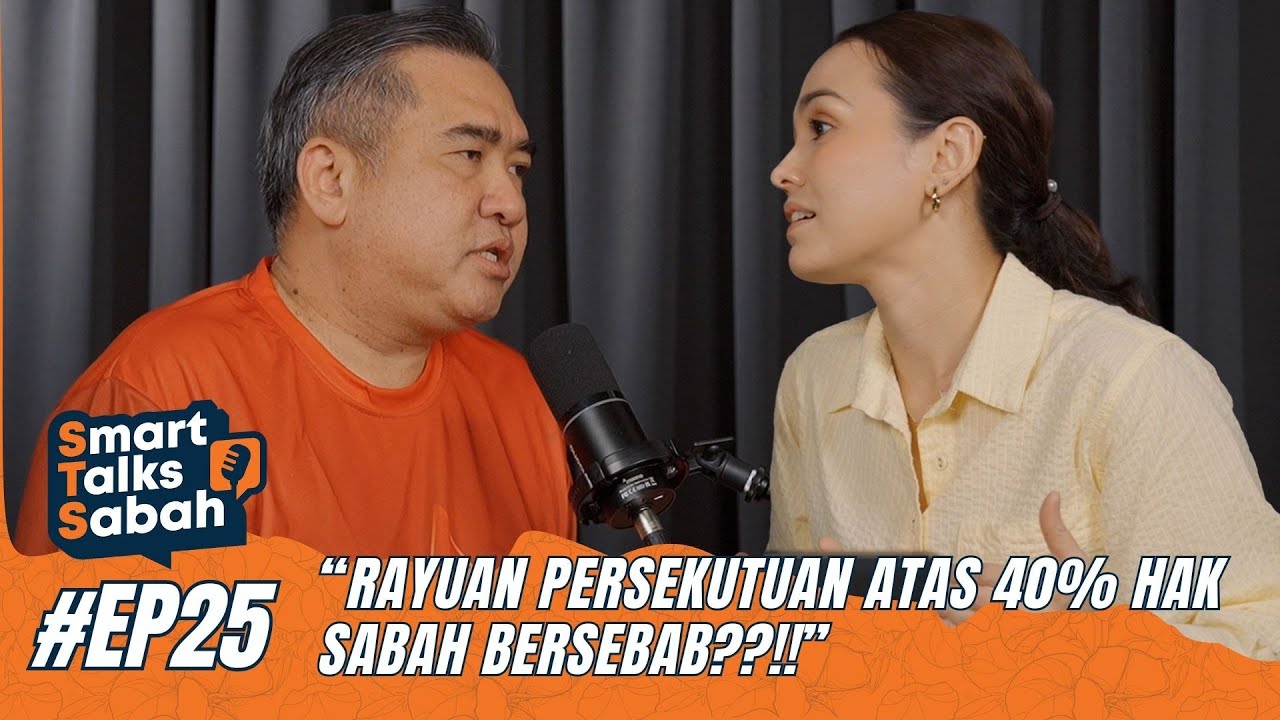
This episode of Smart Talk Sabah features an interview with Minister of Transport and Secretary General of the Democratic Action Party (DAP), YB Anthony Loke, focusing on DAP's approach to the upcoming Sabah state election, addressing political fatigue, leadership, transportation issues, and the contentious 40% revenue entitlement for Sabah.
- DAP is prioritizing young, women, and diverse candidates in Sabah, emphasizing their ability to deliver results and represent the population.
- Political fatigue is acknowledged, but Loke stresses the importance of political engagement and informed decision-making, especially in the age of misinformation.
- The Fly Siswa program, funded through special plate numbers, aims to alleviate the financial burden on Sabahan students studying in West Malaysia.
- DAP aims to play a strategic role in Sabah politics by complementing local-based parties and fostering cooperation between the federal and state governments.
- Loke defends the federal government's appeal regarding the 40% revenue entitlement, clarifying that it is based on legal grounds and does not question Sabah's entitlement.
Introduction and DAP's Candidate Strategy in Sabah
The host introduces YB Anthony Loke, Minister of Transport and Secretary General of the Democratic Action Party (DAP), highlighting the significance of his perspective as Sabah defines its political trajectory with upcoming state polls. The discussion begins with DAP's candidate selection in Sabah, which prioritizes young, women, and diverse individuals, with almost 50% women candidates and an average candidate age of 39. Loke explains that including more women candidates has been a long-term aspiration for DAP, with the party already having institutionalized a 30% leadership quota for women. He emphasizes that the goal is not just tokenism but to ensure women win and perform well, bringing a unique perspective to governance.
Addressing Political Fatigue and the Role of Leadership
The conversation shifts to the issue of political fatigue among Sabahans and Malaysians, particularly among young voters. Loke acknowledges that political apathy has always existed but emphasizes the importance of engaging people and demonstrating that politics is about governance and building the country. He stresses that politics defines how the country is run and affects people's lives, urging citizens to take an interest and analyze issues critically, especially in the age of misinformation. Loke also touches on the importance of generational change in politics, noting that some young people do not relate to older politicians who have been in power for decades. He believes politicians must know when to step aside and pass the baton to the next generation.
YB's Personal Approach to Politics and Credibility
The host asks about YB's personal approach to politics, noting his steady and non-dramatic demeanor. Loke emphasizes the importance of sticking to the facts, avoiding playing to the gallery, and being objective. He believes it is essential to admit when one is wrong and acknowledge opponents, even though politics often discourages such behavior. Loke stresses that politicians should not try to please everyone but should make decisions, take responsibility, and explain themselves to the public.
Fly Siswa Program and Transportation Initiatives for Sabahans
The discussion transitions to Loke's portfolio as Minister of Transport, focusing on initiatives benefiting Sabahans, particularly students. He explains the Fly Siswa program, which provides vouchers to students to alleviate the burden of expensive air tickets, especially during festive seasons. Loke details how he secured funding for the program through special plate numbers, negotiating with the Ministry of Finance to allocate half of the revenue generated to the initiative. The program now provides 400 ringgit annually to Sabahan and Sarawakan students studying in public universities. Loke also mentions a special initiative by Air Asia to offer fixed fares during the election period and expresses his ministry's willingness to support airlines in adding more flights with cheaper fares.
Sabah-Based Parties and DAP's Role in Sabah Politics
The conversation shifts to the political landscape in Sabah, with a focus on the rise of local-based parties. Loke clarifies that DAP is a national party with a presence in every part of the country, not a peninsula-based party. He emphasizes that DAP is only contesting eight seats out of 73 and is not aiming to form the state government but rather to complement local-based parties and play a strategic role in Sabah politics. Loke believes DAP can act as a bridge between the federal and state governments, fostering cooperation and delivering the aspirations of Sabah. He acknowledges the fragmented nature of Sabah politics and hopes that DAP can contribute to forming a stable and functioning state government.
Autonomy of DAP Sabah and Representation
The host questions the autonomy of DAP representatives in Sabah and whether they are allowed to disagree with the national leadership. Loke affirms that DAP Sabah has its own way of doing things and takes its own decisions on Sabah issues. He cites the example of the 40% revenue entitlement, where DAP Sabah immediately took a position asking the federal government not to appeal, which was then adopted by the national leadership. Loke emphasizes that DAP has adapted to Sabah's political landscape through its representatives, who understand local sentiments and inform the party's positions.
Speculations of Chinese Voters and DAP's Value Proposition
The discussion addresses speculations about Chinese voters in Sabah and whether they are showing a stronger interest in local-based parties. Loke argues that DAP's leaders are Sabahans who understand the sentiments and aspirations of Sabahans. He points out that many Warisan Chinese leaders were previously from DAP and that voters have choices, and it is DAP's responsibility to convince them of the value of their vote. Loke highlights DAP's track record, its ability to bring tangible results as part of the federal government, and its commitment to delivering infrastructure and economic progress to Sabah.
Coalition Dynamics and Political Confusion in Sabah
The conversation touches on the coalition dynamics in Sabah, with DAP contesting under the flag of PH and having a loose understanding with GRS. Loke acknowledges the confusion among Sabahans regarding who is friends with whom, given the various alliances and minor collisions. He clarifies that while DAP is part of the federal government with GRS and other parties, everyone is fighting each other at the state level. Loke emphasizes the difficulty of achieving an electoral understanding in Sabah and the need to explain DAP's policies and values to voters.
40% Revenue Entitlement for Sabah and Federal Government's Sincerity
The discussion centers on the 40% revenue entitlement for Sabah, with the host questioning the sincerity of the federal government. Loke affirms DAP's support for the 40% entitlement, as it is enshrined in the constitution. He highlights a special cabinet meeting called by the Prime Minister to deliberate on the matter and the federal government's open commitment to acknowledging Sabah's entitlement. Loke explains that the appeal is based on legal grounds related to the grounds of judgment and not the entitlement itself. He emphasizes the need to separate the issue of entitlement from the legal implications of the judgment.
Moving Forward and the Importance of a Progressive Malaysia
The conversation shifts to how to move forward and create a more progressive Malaysia. Loke expresses disappointment with a fellow politician for choosing to enter the election with a positioning that he is a hero, rather than working from within the system as a federal minister. He emphasizes the importance of younger politicians being more progressive and objective. Loke reiterates that he sees the host as a fellow Malaysian and wants to see Sabah progress. He shares his actions as Minister of Transport to deliver legislation to surrender back the bindu port authority to Sarowak, stating that if Sarawak succeeds, Malaysia succeeds.
Coalition Politics and the Opportunity for Negotiation
Loke emphasizes that the best opportunity to come to a better deal or better negotiation is now, due to the coalition-based nature of Malaysian politics. He notes that the seats in Sabah and Sarowak are very important in terms of representation and political capital. Loke highlights that the current Prime Minister is someone who can discuss and is open to negotiation. He concludes by stating that Malaysia cannot succeed if Sabah and Sarowak are not in tandem with the development.
Conclusion and Call for Strategic Thinking
The host concludes the interview, thanking YB Anthony Loke for his time and insights. Loke reiterates his plea for Sabahans to be more strategic and not fall into sentiments and rhetoric. He emphasizes that DAP is offering its service and sincere positioning to achieve progress together.

