
Brief Summary
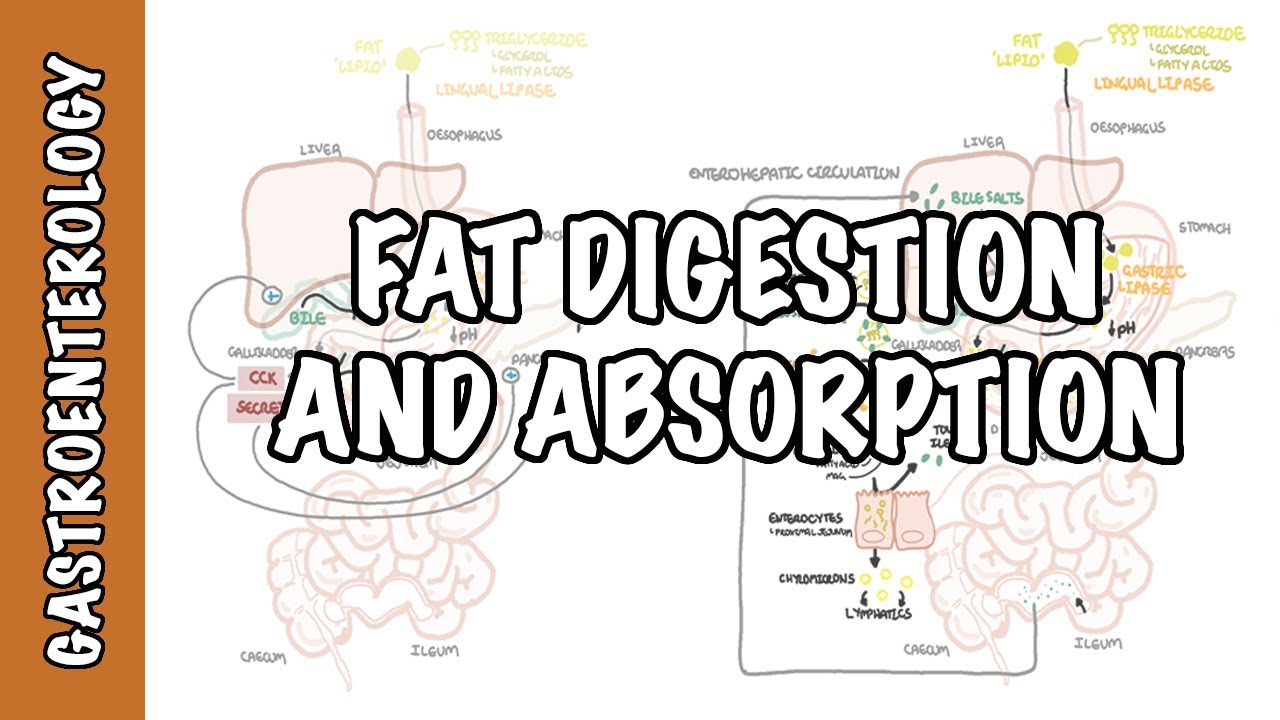
This video explains the process of fat digestion and absorption in the body. It begins with the breakdown of triglycerides into fatty acids and monoglycerides through the action of lingual and gastric lipases, continuing in the small intestine with the help of bile salts and pancreatic lipase. The resulting micelles are absorbed in the jejunum, while bile salts are recycled via enterohepatic circulation. Finally, fatty acids and monoglycerides are packaged into chylomicrons for transport into the general circulation via the lymphatic system. The video also highlights the importance of fat for the absorption of fat-soluble vitamins (A, D, E, and K).
- Fat digestion starts in the mouth and stomach with lingual and gastric lipases.
- Bile salts and pancreatic lipase in the small intestine further break down fats for absorption.
- Fatty acids and monoglycerides are absorbed in the jejunum and packaged into chylomicrons.
- Bile salts are recycled through enterohepatic circulation.
- Fat is essential for the absorption of fat-soluble vitamins (A, D, E, K).
Introduction to Fat Digestion
The video introduces the topic of fat digestion and absorption, emphasizing the importance of fat in our diet. Fat, primarily in the form of triglycerides, serves both protective functions and can contribute to heart disease depending on the type of fat consumed. Triglycerides consist of three fatty acids attached to a glycerol backbone, and the body must break down this structure into its building blocks for absorption and utilization.
Initial Breakdown of Fats
The breakdown of fats begins in the mouth with lingual lipase and mastication. Lipase hydrolyzes lipids, breaking them down. These partially digested lipids then travel to the stomach, where they encounter gastric lipase, which further breaks them down. The lipids are still in triglyceride chunks as they move into the duodenum, accompanied by acidity from the stomach.
Hormonal Stimulation in the Small Intestine
The presence of fat droplets and acidity in the duodenum stimulates the small intestinal cells to produce two key hormones: cholecystokinin (CCK) and secretin. CCK stimulates the production and secretion of bile, as well as the release of pancreatic enzymes (pancreatic juice). Secretin, on the other hand, stimulates bicarbonate secretion from the pancreas to raise the intraluminal pH to approximately 6.5, which is optimal for fat digestion.
Emulsification and Micelle Formation
Upon entering the small intestine, lipids are exposed to bile and pancreatic enzymes. Bile salts aid in the emulsification of lipids, essentially coating them to facilitate digestion by pancreatic lipases. Pancreatic lipase further breaks down triglycerides into fatty acids and monoglycerides, which then form micelles. Micelles are composed of bile salts, fatty acids, monoglycerides, cholesterol, and phospholipids.
Absorption in the Jejunum and Enterohepatic Circulation
In the form of micelles, monoglycerides and fatty acids are transported and absorbed across the apical membrane of enterocytes, primarily in the proximal two-thirds of the jejunum. Bile salts, however, are not reabsorbed in the jejunum; instead, they reach the terminal ileum, where they are actively reabsorbed and enter the portal circulation to the liver. This cycle is known as enterohepatic circulation, where bile salts are recycled and re-secreted into bile for reuse.
Chylomicron Formation and Lymphatic Transport
The fatty acids and monoglycerides absorbed in the jejunum are packaged into fully mature chylomicrons within the cells. These chylomicrons bind to the basolateral membrane and are transported to the intestinal lymphatics. From there, they enter the general circulation to be transported throughout the body.
Role of Fat in Vitamin Absorption
Fat is essential for the absorption of fat-soluble vitamins, including vitamins A, D, E, and K (ADEK), in the jejunum. In contrast, vitamins B and C are water-soluble and do not rely on fat absorption or digestion.
Summary of Fat Digestion and Absorption
The video concludes by summarizing the key steps of fat digestion: it begins with lingual and gastric lipase, continues in the small intestine with bile salts and pancreatic lipase, and results in the absorption of fatty acids and monoglycerides in the jejunum. Bile salts are recycled via enterohepatic circulation, and fats are packaged as chylomicrons for transport into the general circulation via the lymphatics.

