
Brief Summary
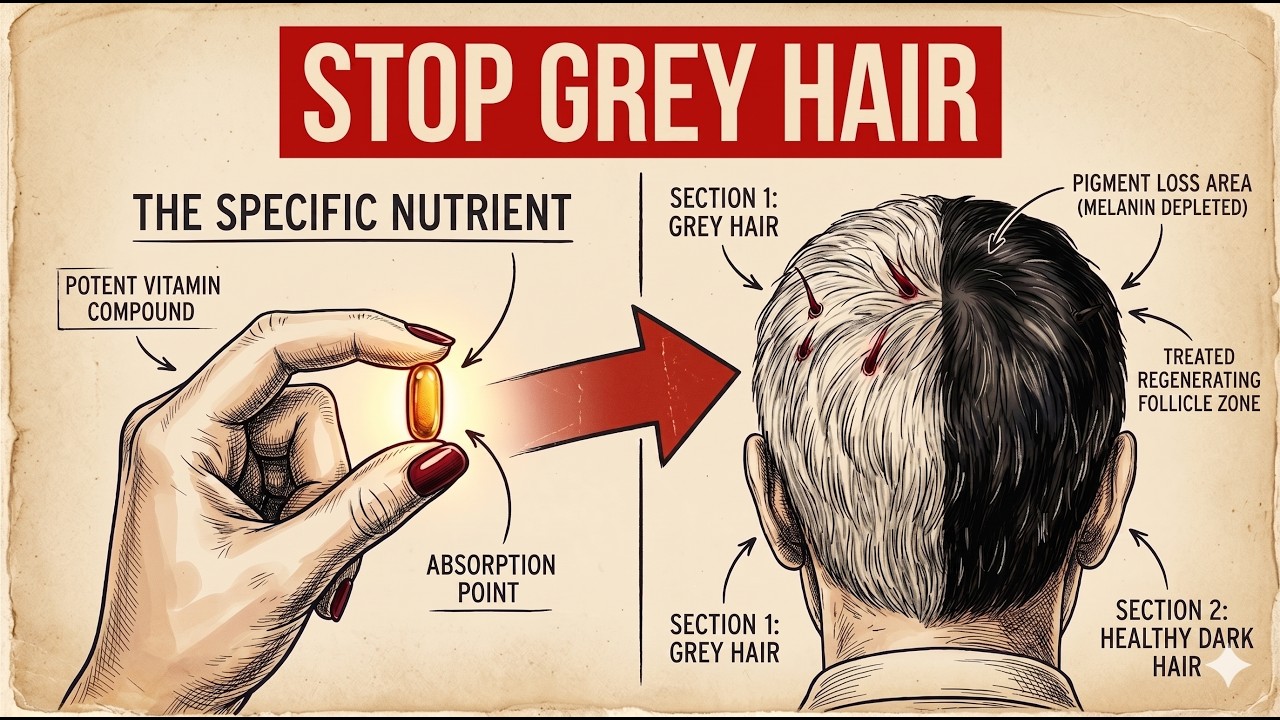
This video discusses how graying hair, often attributed to genetics and aging, can be a sign of nutrient deficiencies. It identifies three key nutrients necessary for maintaining natural hair color: catalase, copper and folate, and vitamin B12 (methylcobalamin). The video emphasizes the importance of obtaining these nutrients through whole foods and specific supplement forms to support melanocyte function and natural pigment production.
- Graying hair can be a sign of nutrient deficiencies, not just genetics.
- Catalase, copper and folate, and vitamin B12 are crucial for hair pigmentation.
- Proper supplement forms and timing are essential for effectiveness.
Introduction
The video addresses the common misconception that gray hair is solely due to genetics and aging. It suggests that a hidden nutrient deficiency may be the actual cause of fading hair color in older adults. The melanocytes, responsible for hair color, might not be dead but starving due to lack of specific nutrients. By replenishing these nutrients, it may be possible to support the body's natural pigment production. The video aims to rank the top three nutrients needed to revitalize hair follicles, emphasizing the importance of using the correct forms of these nutrients for optimal results.
The Hidden Cause of Graying Hair
While genetics play a role in graying hair, the digestive system's changes with age also contribute significantly. Reduced stomach acid and medications can impair the absorption of essential nutrients. This leads to a deficiency in melanocytes, the cells in hair follicles that produce melanin. These cells become dormant due to lack of core building blocks, resulting in gray hair. Addressing this root cause by providing the necessary nutrients may help reactivate these cells and support natural pigment production, rather than just covering it up with dyes.
Nutrient #3: Catalase-Supporting Foods
Catalase is the third most important nutrient for hair health, and it can be supported by eating foods like sweet potatoes, broccoli, cabbage, and apples. As people age, hydrogen peroxide accumulates in hair follicles, leading to internal bleaching. Catalase, an enzyme, breaks down hydrogen peroxide into water and oxygen, protecting hair follicles. While eating catalase-supporting foods provides the raw materials for this enzyme, it is not enough to restore hair color if melanocytes are starved of other essential nutrients. Catalase supplements are ineffective because stomach acid destroys the enzyme before it reaches the scalp.
Nutrient #2: Copper and Folate
Copper and folate are activators essential for melanin synthesis. Copper is required for tyrosinase, an enzyme responsible for melanin production, while folate supports DNA synthesis and cellular division within hair follicles. A deficiency in these nutrients can hinder the production of natural hair color. High-dose zinc supplements, commonly taken by older adults for immune support, can interfere with copper absorption, potentially leading to a copper deficiency. Copper can be obtained from foods like cashews, sunflower seeds, and mushrooms, and folate from dark leafy greens like spinach and lentils.
Nutrient #1: Vitamin B12 (Methylcobalamin)
Vitamin B12, specifically methylcobalamin, is the most critical nutrient for hair follicles, acting as the master switch for melanin production. It is essential for DNA synthesis and maintaining healthy melanocyte function. B12 deficiency is common in older adults due to decreased intrinsic factor production, which is necessary for B12 absorption. Standard blood tests may not accurately reflect cellular B12 levels, leading to misdiagnosis. Supplementation with sublingual methylcobalamin, which bypasses stomach absorption issues, is recommended in dosages of 1,000 to 2,000 micrograms daily, along with incorporating B12-rich foods like salmon, sardines, and grass-fed beef.
Common Mistakes to Avoid
Several common mistakes can sabotage the effectiveness of the nutrient protocol. These include taking vitamins with hot liquids, swallowing sublingual tablets instead of letting them dissolve, using processed supplements with synthetic vitamins, and having unrealistic timelines. Additionally, it's important to consider how current prescriptions, such as proton pump inhibitors and metformin, can affect B12 absorption. It's crucial to consult with a doctor to optimize B12 levels while continuing necessary medical treatments. Severe nutritional deficiencies should not be taken lightly, and medical help should be sought immediately for serious symptoms.
Implementation Plan and Timeline
To effectively support hair follicles, a structured daily routine is necessary. This includes taking sublingual methylcobalamin in the morning before coffee or breakfast, incorporating copper and folate-rich foods into afternoon snacks and lunch, and including catalase-supporting foods in dinners three to four times a week. While internal benefits like improved mental clarity and energy levels may be noticed within days, visible changes in hair color may take 3 to 6 months due to the slow growth rate of hair. Consistency is key, and consulting with a doctor is essential for those taking daily medications or with chronic medical conditions.

