
Brief Summary
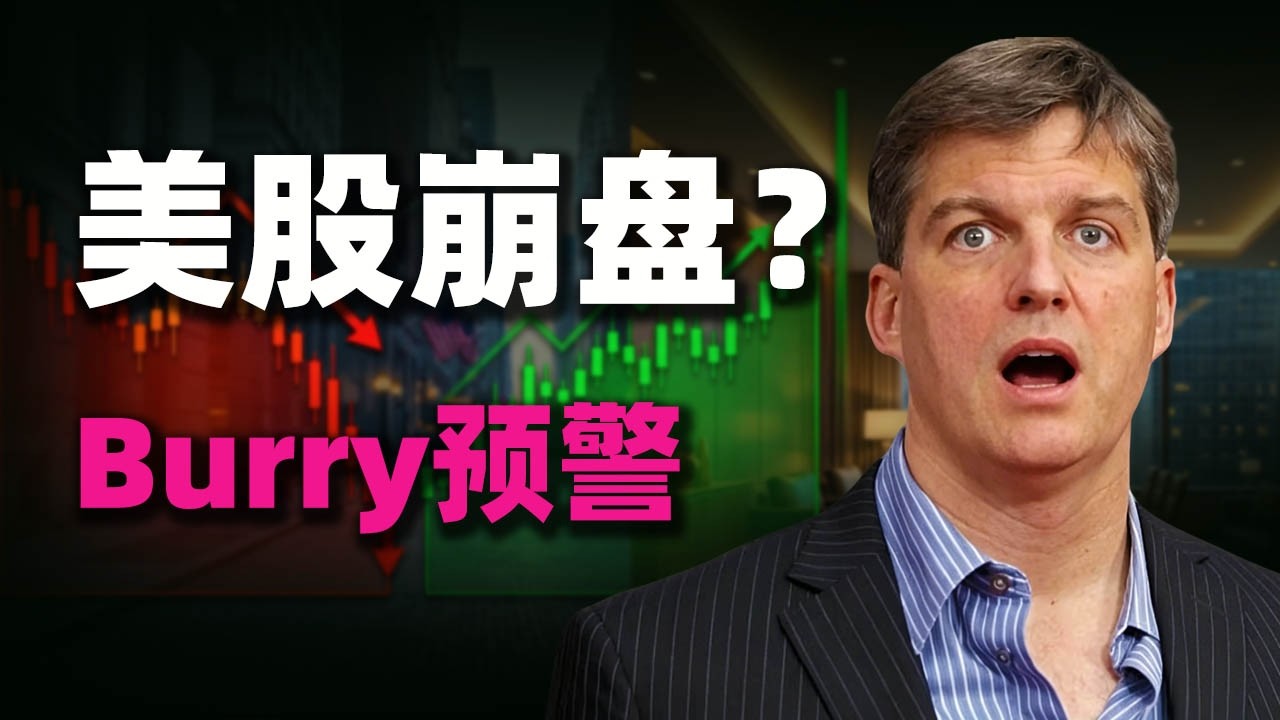
This video discusses the current state of the U.S. stock market, highlighting the conflicting viewpoints of Wall Street experts. It examines arguments from both bearish and bullish perspectives, along with a pragmatic approach from Goldman Sachs, and considers the potential impact of geopolitical risks. The video aims to provide viewers with a comprehensive understanding of the market's complexities, encouraging informed investment decisions amid uncertainty.
- Michael Burry warns of a tech stock bubble mirroring 2000, advising against shorting due to high costs.
- Bullish analysts, like Yardeni, predict continued market growth based on strong corporate earnings and the AI revolution.
- Goldman Sachs suggests embracing the bubble, emphasizing trend-following over fighting market momentum.
- Geopolitical risks, particularly in the Middle East, pose a significant threat to the market's stability and inflation control.
Historical Mirror
Michael Burry, known for predicting the 2008 financial crisis, warns that the current tech stock market resembles the peak before the 2000 internet bubble burst. He focuses on the rapid rise of the Philadelphia Semiconductor Index, which has increased by nearly 70% in a short period. Burry points out that such a deviation from the 200-day moving average has only occurred twice before: in 1995 during the PC revolution and in March 2000, just before the Nasdaq crash. He notes that while Wall Street analysts estimate the Nasdaq 100's price-to-earnings ratio (P/E) at around 30, his calculations, based on underlying financial reports, show it's actually 43, indicating overvaluation due to analysts overestimating the earnings potential of top tech companies by over 50%. Despite his bearish outlook, Burry advises against shorting the market due to the high cost of put options in a long-term bull market and the potential for irrational market behavior to exceed rational investors' limits. Instead, he holds a portfolio of undervalued stocks, aiming to profit from short covering.
The Roaring Twenties
Yardeni Research's chief investment strategist, Ed Yardeni, represents the bullish view, increasing his year-end target for the S&P 500 index to 8,250 points and projecting it will reach 10,000 by the end of 2029, potentially sooner. His optimism stems from strong first-quarter corporate earnings, with S&P 500 companies showing an overall earnings surprise of 17.8% and Nasdaq 100 companies an even higher 29%. Yardeni believes these earnings surprises, exceeding analysts' expectations, demonstrate companies' ability to generate revenue and manage costs effectively. He has also revised his earnings per share (EPS) forecasts, raising the S&P 500's full-year EPS estimate from $310 to $330 and the 2027 EPS forecast from $350 to $375. Yardeni attributes this growth to the AI revolution, which is fundamentally reshaping the profit margins of American companies. Other strategists, such as those from HSBC, share this positive outlook, predicting the S&P 500 could surpass 8,000 points.
Goldman Sachs' Surrender
Goldman Sachs, through partner Rich Przeworski, adopts a pragmatic approach, acknowledging the potential for a tech stock bubble similar to 2000 but advising against trying to time the market's peak. Przeworski argues that attempting to short the market before the bubble bursts is futile. Instead, investors should follow the trend and embrace the bubble. He points to the increasing role of AI and the growing demand for computing power as key factors driving the market. However, he also raises concerns about the potential for open-source large language models (LLMs) and lightweight models to reduce the demand for high-end semiconductors, which could challenge the high valuations of semiconductor companies. Despite these concerns, Przeworski maintains that the current strategy should be to embrace the bubble, as market logic often bows to capital flows and trading structures. He warns that opposing the trend prematurely can be costly due to the self-reinforcing nature of the market, driven by passive index funds and quantitative trend-following strategies.
Technical Aspects
The video shifts to technical analysis, noting that market indicators are signaling overbought conditions. Sam Stovall, chief investment strategist at CFRA Research, highlights the S&P 500's 14-day Relative Strength Index (RSI) reaching 75, indicating significant overbuying. This suggests the market's emotional engine is running at high capacity, increasing the risk of a correction. The overbought conditions are not isolated, with the Nasdaq 100 and S&P 500's information technology and communication services sub-indexes also triggering overbought alerts. Despite these signals, Wall Street's reaction is calm, influenced by the market's resilience earlier in the year. Stovall suggests that while a tactical pullback is needed, it doesn't signal the end of the bull market. Instead, it could provide an opportunity for sidelined investors to enter the market.
Macroeconomic Factors
The video emphasizes the importance of considering global macroeconomic factors, particularly geopolitical risks, which the stock market seems to be ignoring. It highlights the ongoing tensions in the Middle East between Washington and Tehran, with no substantial agreement to end the conflict in sight. Former President Trump has acknowledged the fragility of the U.S.-Iran ceasefire framework. This geopolitical instability poses a significant threat to the global energy market, with oil prices remaining high due to geopolitical premiums. Ed Yardeni warns that a full-blown conflict in the Middle East could disrupt the current market narrative, leading to rising inflation and forcing the Federal Reserve into a difficult position. The video also discusses the risk of stagflation, where economic growth stagnates while inflation remains high, which would be detrimental to the stock market.
Investment Strategies
The video concludes by offering investment strategies for navigating the current market conditions. It advises against blindly following either the bearish or bullish viewpoints, instead advocating for a resilient trading system that balances participation in the AI-driven market rally with risk management. Investors should control the concentration risk in high-valuation sectors, convert some gains into cash flow, and allocate a portion of their portfolio to inflation-resistant assets. The video emphasizes the importance of remaining curious about new technologies while maintaining a healthy respect for the market's destructive potential.

