
Brief Summary
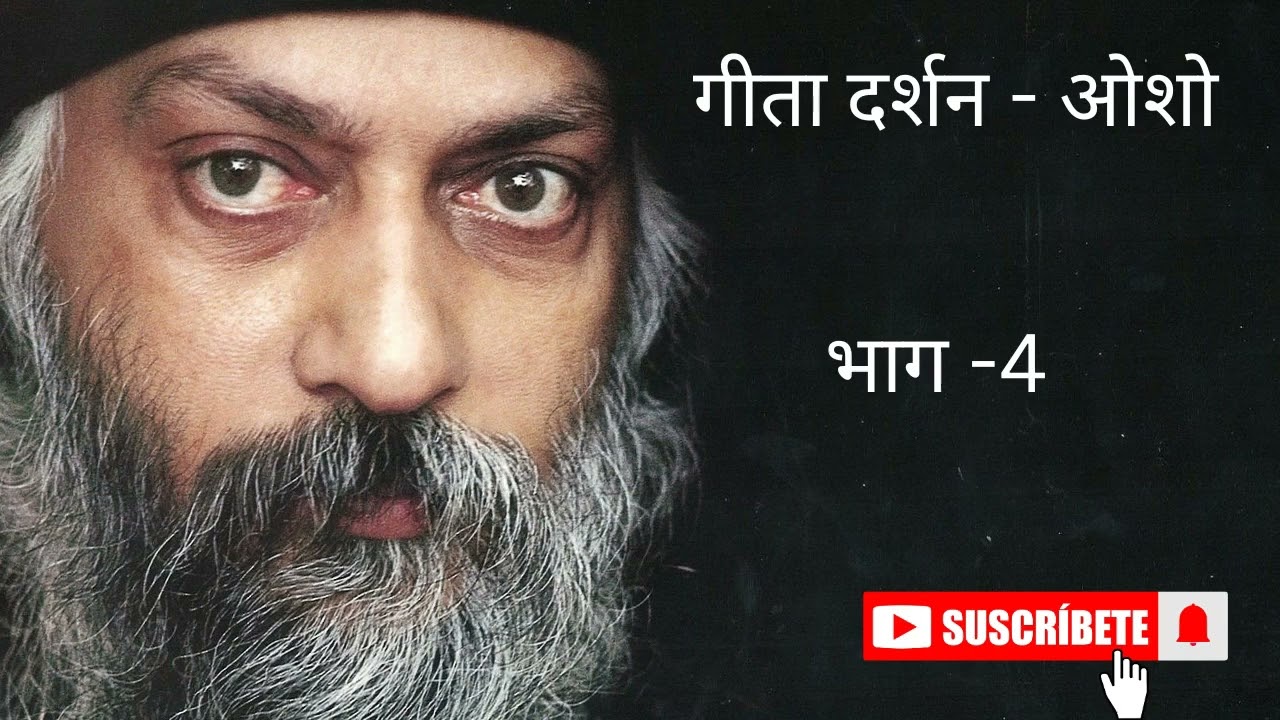
This YouTube video transcript features a discussion on spirituality, psychology, and the interpretation of scriptures like the Gita. It explores the limitations of language in expressing spiritual experiences, the nature of thought and contemplation, and the complexities of moral decision-making in times of crisis. The conversation also touches on telepathic communication, the concept of time, and the use of mental imagery.
- Spirituality transcends expression and thought.
- Scriptures are pointers, not the destination.
- Arjuna's dilemma highlights the conflict between rigid rules and thoughtful contemplation.
- The Gita's wisdom arises from Arjuna's internal conflict and questioning.
- Telepathic communication and altered perceptions of time are explored in relation to spiritual experiences.
Introduction
The discussion begins with Acharya Sh Swami Maharaj talking about spiritual science and scriptures. It emphasizes that scriptures are not spirituality itself but rather pointers towards it. Psychological gestures and expressions are also distinct from true spirituality, which is an experience beyond thought and expression.
The Nature of Spiritual Experience
The conversation explores why spiritual experiences are difficult to express. It is because these experiences often occur without thought, making it challenging to convey them through language. Scriptures, like milestones, point towards spirituality but are not the destination themselves. Buddha's reluctance to answer certain questions and his emphasis on personal experience are mentioned to illustrate the limitations of verbal expression in spiritual matters.
Geeta and Psychology
The discussion distinguishes Geeta's psychology from conventional psychology, asserting that Geeta points beyond the mind towards the soul and ultimate existence. While psychology is rooted in the mind, Geeta transcends it, offering a path towards spirituality. The conversation clarifies that Geeta's psychology is not akin to behaviorism or limited to the physical body but extends to the realm beyond the intellect.
Manu's Words and Social Order
The conversation shifts to Manu's teachings and their relevance to social order. It is clarified that Manu's words primarily concern social customs and behavior rather than spirituality. Arjuna's contemplative nature is highlighted, emphasizing that his thoughts extend beyond ordinary considerations of social policy.
Arjuna's Dilemma and Contemplation
Arjuna's internal conflict is examined, focusing on his contemplation of the consequences of war. It is emphasized that Arjuna's predicament is unique, as he is not driven by personal animosity but by a deep concern for the moral implications of his actions. The rigid rules of society are contrasted with the complexities of Arjuna's situation, highlighting the limitations of applying simple rules to profound moral dilemmas.
The Value of Thinking and Questioning
The discussion underscores the importance of thinking and questioning, even in times of crisis. Arjuna's ability to raise questions amidst the chaos of war is presented as a testament to his extraordinary intellect. It is suggested that the Gita emerged from Arjuna's churning and contemplation, emphasizing the value of thoughtful inquiry over blind acceptance of rules.
Arjuna's State of Mind
Arjuna's state of mind is explored, highlighting his internal conflict and rationalization. It is suggested that Arjuna is torn between his duty as a warrior and his moral qualms about the war's consequences. The conversation emphasizes that Arjuna's questions stem from a genuine desire to understand the purpose and meaning of his actions.
Rationality and Justification
The discussion examines the nature of rationality and how individuals often seek to justify their actions. It is suggested that Arjuna, like many people, is trying to find rational reasons to support his pre-existing inclinations. The conversation highlights the human tendency to construct arguments that align with one's desires or fears.
The Double Mind of a Thoughtful Man
The concept of the "double mind" is introduced, suggesting that thoughtful individuals often experience internal conflict and dialogue. Arjuna's internal debate is presented as a characteristic of his contemplative nature. The conversation emphasizes that this internal conflict is a source of both his anguish and his wisdom.
Telepathic Communication and the Gita
The possibility of telepathic communication between Krishna and Arjuna is explored. Examples from various spiritual traditions and scientific experiments are cited to support the idea that communication can occur beyond the realm of ordinary language. The conversation suggests that the Gita may have been transmitted through a deep, inner dialogue rather than a conventional conversation.
Time Scale in Silent Communication
The discussion addresses the issue of time scale in telepathic communication, suggesting that experiences can occur instantaneously even if they take a long time to describe or write down. Analogies are drawn to dreams and altered states of consciousness to illustrate how the perception of time can be subjective and variable.
The Story of Narada
The story of Narada is recounted to illustrate the concept of Maya (illusion). Narada's experience of living a full life within a brief moment is used to demonstrate how time can distort our perception of reality. The story emphasizes that the world, when viewed through the lens of time, can appear illusory, while transcendence offers a glimpse of true reality.
Arjuna's Concerns and the Nature of Hell and Heaven
Arjuna's concerns about the consequences of war, such as the destruction of family and the distortion of dharma, are examined. The conversation explores the nature of hell and heaven, suggesting that they are not geographical locations but rather mental states. The use of mental imagery and pictorial language in religious and spiritual traditions is discussed.
Arjuna's Motives and Krishna's Perspective
The discussion delves into Arjuna's underlying motives, suggesting that his concerns about dharma and family are, in part, rationalizations for his desire to escape the war. It is suggested that Krishna is aware of Arjuna's true motives and is guiding him towards a deeper understanding of himself and his duty.
The Uselessness of Ancestor Worship
The conversation touches on the practice of ancestor worship and its potential for exploitation. It is suggested that Arjuna's concerns about the fate of his ancestors are based on beliefs that are not necessarily true or helpful. The discussion emphasizes the importance of individual spiritual journeys and the limitations of relying on external rituals or beliefs.
Cross Breeding and Genetic Diversity
The topic of cross-breeding is addressed, challenging Arjuna's concerns about the mixing of castes. It is suggested that genetic diversity can lead to superior offspring and that the mixing of different cultures and traditions can be beneficial. The conversation emphasizes the importance of embracing diversity and challenging outdated beliefs.
The Kshatriya and the Brahmin
The discussion concludes by contrasting the roles of the Kshatriya (warrior) and the Brahmin (priest). It is suggested that Arjuna, as a Kshatriya, is ultimately bound by his duty to fight, even if he has intellectual or emotional reservations. The conversation emphasizes the importance of embracing one's destiny and acting with courage and conviction.

